Systems | Development | Analytics | API | Testing

The $500B AI Gamble: Will APIs Unlock America's Next Tech Revolution?

The United States is investing $500 billion into AI infrastructure, aiming to lead the global AI race. This initiative, backed by OpenAI, SoftBank, and Oracle, focuses on building data centers, chips, and scalable systems. But here's the catch: APIs are the key to making this investment work. APIs are the backbone of this effort, and their success will determine whether this $500 billion gamble pays off.

What AI code editors means for API development

AI-powered code editors are speeding up API development by automating repetitive tasks, improving security, and optimizing performance. Developers now spend 55% less time on API creation, focusing more on design and business logic instead of boilerplate code. These tools reduce errors, generate real-time documentation, and enhance scalability, making API development faster and more efficient.

Technical Underpinnings of Apache Iceberg

Modern data systems demand flexibility, tool interoperability, and strong data integrity. Legacy formats often create barriers with rigid schemas, inefficient partitioning, and weak transactional guarantees. Apache Iceberg overcomes these limitations with a modular design that decouples metadata from data storage, enabling smooth-schema changes, efficient query pruning, and ACID compliance across engines. This article explores Iceberg’s technical foundations.

11 Best Boomi Alternatives for 2024 | Dreamfactory

Boomi, previously known as Dell Boomi, is a well-known software provider for enterprise integration. It manages all the information and data that needs to flow between different companies, systems, and applications. Boomi products are designed to offer the best possible performance with the lowest possible latency. However, not everyone can afford or has room in their budget for this particular product.

The 10 Best APIs for Start-ups in 2025

If your startup is planning to build an app, you're going to need an Application Programming Interface, better known as an "API." The role of an API is to give your app a set of directions so it can get all the information it needs to interact with your business. APIs are extremely valuable, but they can also be difficult to navigate. Here's a look at the 10 best APIs for start-ups that will ensure your business has the fundamental technology needed to be successful in 2025.

Why Iceberg Is Shaking Up the Data Warehousing World

Apache Iceberg is transforming how organizations hanle data by solving key challenges in traditional data warehousing. It offers schema evolution without downtime, automated partitioning, ACID compliance, and time travel for historical data access. Its open table format separates storage and compute, enabling scalability, flexibility, and cost efficiency.

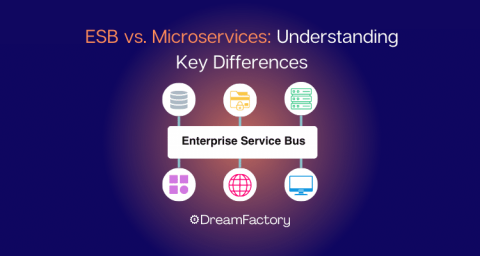
ESB vs. Microservices: Understanding Key Differences

Microservices are an approach to building applications that focuses on breaking down monolithic applications into independent, but loosely-connected “microservices.” ESBs and microservices are both architectural approaches for integrating applications, but they have different strengths and weaknesses. ESBs are better suited for integrating monolithic applications, while microservices are better suited for building scalable and resilient applications.

When to Use an API Proxy Over an API Gateway

The need for APIs has increased exponentially as the world becomes more technologically connected. Companies now look to how an API proxy can protect their data and create workflow efficiencies. But what are they, and why do you need one? Read on to discover more about API proxies, how they work, and whether you should use them in your business. The key takeaways from this article are.