Systems | Development | Analytics | API | Testing

Modern Software Development For Today's Systems & Applications




Speedscale Launches proxymock OpenClaw Skill on ClawHub
We’re excited to announce that Speedscale’s proxymock is now available as an OpenClaw skill on ClawHub, bringing powerful API traffic replay capabilities directly into your Claude workflows.


Why Your AI Code is Breaking (And How to Fix It) #speedscale #aicoding #aiagents #code #devops
New data from CodeRabbit shows AI makes 70% more errors than humans—mostly in logic. Stop shipping "AI Vibes" to production. Use the new Testing Pyramid: Deterministic (Validation) Record & Replay (Mocking) Probabilistic (Vibes) Don't let your agents break prod.
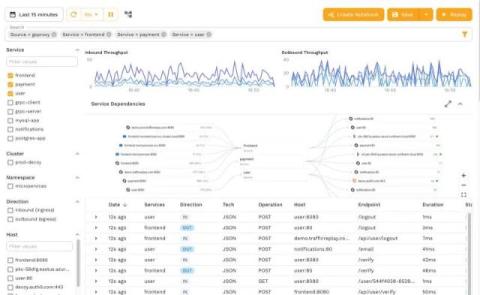
The 6 Best Performance Testing Tools Guide
In software development, load testing plays a critical role in ensuring that applications perform optimally under any imaginable load condition. To do this, developers subject applications to several types of load tests, including scalability, spike, endurance, and stress testing. The ultimate goal of these performance tests is to pinpoint potential bottlenecks and ensure the reliability of the overall system where the software application runs before reaching production.
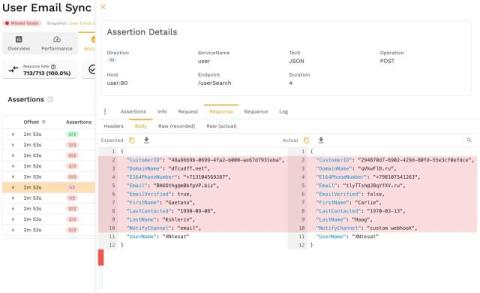
Runtime Validation vs Static Analysis: Why You Need Both
Runtime validation does not replace static analysis. They solve different problems. Static analysis catches structural defects in code before it runs. Runtime validation catches behavioral failures by testing code against real production traffic. Enterprise teams adopting AI coding tools need both layers because AI-generated code introduces a new class of defects that neither layer catches alone.
Oracle JDK to OpenJDK: A Guide to Reliable Migration Testing
One of the most common infrastructure changes Java developers and operators are dealing with today is the migration from Oracle Java to OpenJDK. The reason is the licensing changes made by Oracle and the maturity of the OpenJDK distributions. The migration process is quite simple: replace the JDK, recompile the code, and redeploy the application. However, the differences between the two runtimes can lead to unexpected issues that are not caught by unit tests.
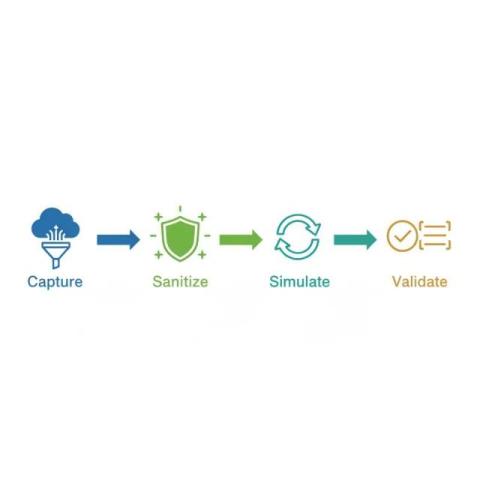
Speedscale Named in Gartner Market Guide for API Testing
In the highly dynamic environment of modern engineering, an appropriate strategy for API quality is more important than ever. We are pleased to announce that Speedscale has been named in the latest “Market Guide for API and MCP Testing Tools” report from Gartner. As software development is shifting towards complex distributed architectures, integrating Model Context Protocol (MCP) for AI-based workflows, the need for realistic testing has never been higher.

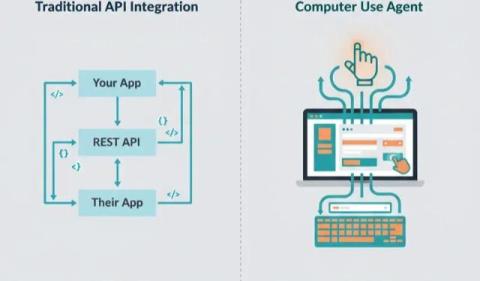
Why Your Company Will Be Running OpenClaw Next Year
You’ve probably heard of OpenClaw. Maybe you’ve seen the demos where an AI agent opens a browser, navigates to your CRM, fills in a form, and files a support ticket. No API required. Maybe you thought “that’s cool but I’d never run that at work.” Your employees already are. According to Permiso’s research, 22% of enterprise customers have employees running OpenClaw without IT approval.
How AI Coding Is Breaking Synthetic Data Generation
Traditional synthetic data generation approaches, still called “Test Data Management” (TDM) by legacy vendor, were designed for a world where applications were monolithic, databases were the center of gravity and change happened slowly. The world looks a lot different now. Modern systems are distributed, often times event-driven, and increasingly powered by streaming data and AI agents. In this environment, batch-oriented synthetic data generation fails to capture how systems actually behave.
DLP, Traffic Replay, and the Missing Link to Software Quality
In Part 1 and Part 2 we explored why testing modern software is so difficult. Production data is the most valuable input for testing, but it’s locked away because it contains PII and sensitive context. Traditional Synthetic Data Generation (SDG) was built for batch databases, not streaming systems. And AI coding agents amplify every weakness in existing test strategies because they need current, realistic data or they generate buggy code based on outdated assumptions.
Sponsored Post

What AI Has Never Seen: The Context Gap in Code Generation
Your AI coding assistant has read the entire internet. It knows every programming language, every framework, every best practice documented in Stack Overflow answers and GitHub repositories. It can generate a REST API handler in seconds that looks perfect with clean code, proper error handling, following all the patterns. But here's what it's never seen: your production traffic. Data from a real API request. Someone filling out a form with messed up or incomplete data. AI is changing how we write and test code, but there's a fundamental gap between training data and production reality.
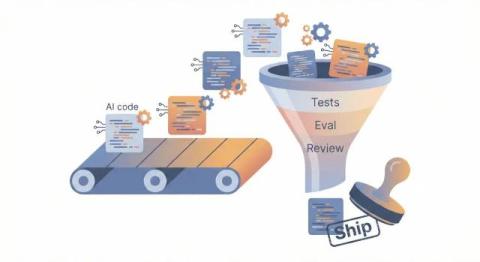
Silent Failures: Why AI Code Breaks in Production
You ship a small “safe” change on Friday. The diff is tiny, the tests are green, and the AI assistant was confident. An hour after deploy, your on-call channel lights up. A downstream service is rejecting responses that look fine in code review. Now you’re rolling back and rewriting a fix that should have been obvious if you had real traffic in the loop. This isn’t a hypothetical.

My AI Agent Stole My Crypto #speedscale #openclaw #aicoding #codingagent #security
I thought I found the ultimate coding shortcut: an autonomous AI agent. Turns out, I just bought a one-way ticket to a digital nightmare. A friendly reminder to my fellow devs: Validation isn't optional—it's survival. Your laptop shouldn't have a higher calling than your production environment. Validate now: speedscale.com.

The Dangerous Power of Local AI Agents. #speedscale #proxymock #aiagents #openclaw #localai
I’ve been testing OpenClaw, a fully autonomous agent that lets you remote control your entire system via Signal. It’s incredibly powerful to text your computer from a coffee shop and have it execute tasks, but you’re essentially handing the keys to your digital kingdom to an LLM. The Golden Rule: Trust, but verify. I’m using Proxymock to sniff every single API call going in and out of the agent. If there’s a data leak or a "hallucination" that tries to wipe my drive, I see it first.

10 Benefits of automated testing
After spending hours or even days manually testing your software, you may be wondering whether or not there’s a better way. The good news? There is.