Systems | Development | Analytics | API | Testing

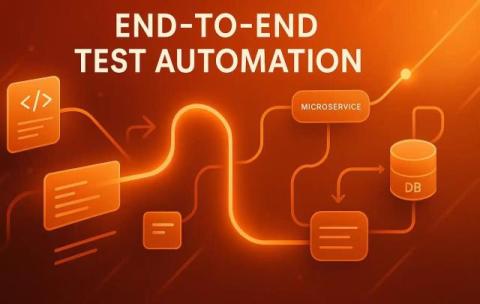
End-To-End Test Automation: How It Works And Why It Matters

One of the most critical ways to validate real user journeys across any application is through end-to-end testing. Modern software stacks have grown so distributed that manual E2E testing grows increasingly hard to maintain and nearly impossible to scale. This is where automation in end-to-end testing helps engineering teams with the reliability, speed, and confidence during every release.
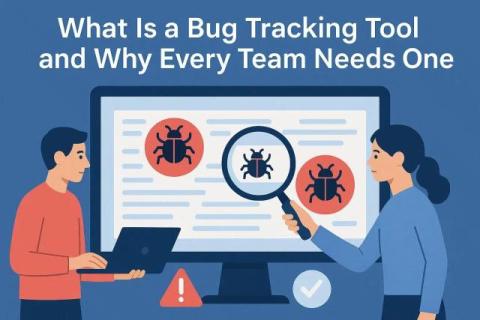
What Is A Bug Tracking Tool And Why Every Team Needs One

Do you find yourself questioning why popular apps sometimes crash or act unusually? Regardless of how hard software is crafted, bugs are a huge obstacle for teams, often resulting in unhappy users, lost revenue, or even product release delays. Most organizations are unable to track these bugs effectively and so they often use a mix of spreadsheets, or scattered scribbled notes and lose them in the shuffle—causing confusion, repeated work, and issues that aren’t resolved.

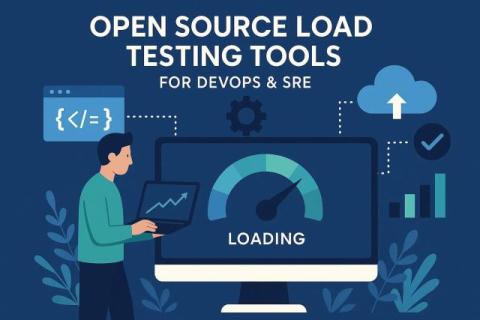
Open Source Load Testing Tools: A Modern Guide For Devops & Sre

Have you ever observed an application that was completely functional, and suddenly it starts lagging at peak usage? Most teams are concerned with functionality first and performance under load second. Open source load testing tools expose your application’s bottlenecks before your users notice them. In this blog, we explain how these tools work, compare their features, and discuss best practices.

Ai Testing: A Complete Technical Guide To Intelligent Software Quality

Testing is a very important and necessary step in the SDLC, but most teams ignore it or don’t care much about it, while some teams spend most of their time on testing instead of building features. AI is really changing the way we write code, but most people use it mainly for writing test cases, and we still end up doing it manually. So in this blog, let’s see what AI testing is, how AI helps in testing our software, what AI tools are available, and which tools help with which part of testing.

What Is A Test Script In Software Testing?

Have you ever considered that even with intensive software testing and effort, important software bugs can still get through? The issue, in most cases, isn’t that you didn’t put in enough effort, but that testers evidently lack the knowledge of a proper process to follow. A test script in software testing provides very precise instructions, step by step, to manage tester consistency, use proper test data, and confirm the expected results.

Scenario Testing: A Complete Guide For QA And Software Teams

In contemporary software engineering, it is not sufficient to simply confirm that software applications function perfectly across all features – they also need to behave correctly with real users in real worlds. In this context, scenario testing has a significant role to play. Scenario testing fills the gap between functional testing and real user experience based on validating software by simulating end-to-end user journeys.

How To Use Coverlet Coverage For Improved Code Quality In Testing?

Have you ever considered how well-tested your.NET code simply is? Many teams feel their test suite is complete until a bug makes its way into production. The hard part is not just writing tests, but determining if tests cover critical paths. When using standard coverage tools, coverage can seem convoluted and unrelated to how you write code. This is where Coverlet coverage comes in – a simple to use, open source library for measuring test file coverage, and improving test coverage.

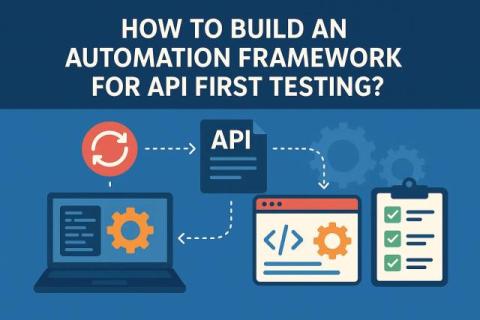
How To Build An Automation Framework For Api First Testing

As modern applications grow more complex and API-driven, maintaining test stability becomes increasingly challenging. Many QA teams struggle to manage scattered test scripts and inconsistent environments, leading to inefficiency and missed defects. The real solution lies in adopting a structured automation framework that brings order, scalability, and speed to the testing process. In an API-first setup, it helps teams validate functionality continuously and collaboratively.

What Is A Test Environment? A Complete Guide For Developers

A test environment is a controlled setting that includes software, hardware, network configuration, test data, and testing tools, where applications can be set up and validated before they are delivered to real users. It can be understood as a safe space for developers and QA engineers to do an assessment of how an application performs under expected real-world usage conditions.

Test Recorder: The Fast-Track To Codeless Ui Test Automation

Software teams today are routinely under pressure to release features more quickly, while keeping quality in check, in today’s fast-paced digital ecosystem. Automation testing enables teams to develop this balance; however, most teams find that writing and maintaining test scripts becomes a heavy burden with technical complexity, and takes time away from building features. This is where a Test Recorder is of great assistance.

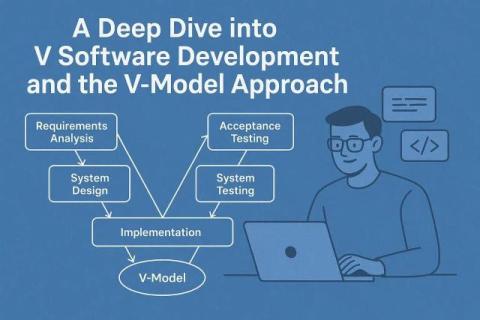
A Deep Dive Into V Software Development And The V-Model Approach

In the high-speed world of software development, the label V Software Development can suggest two distinct but connected concepts. On one hand, it denotes software development with the contemporary V programming language—a language intended for simplicity, efficiency, and security. On the other hand, it can symbolize the V-Model Software Development life cycle, a traditional model of software development that is characterized by structure, order, and verification at every phase.

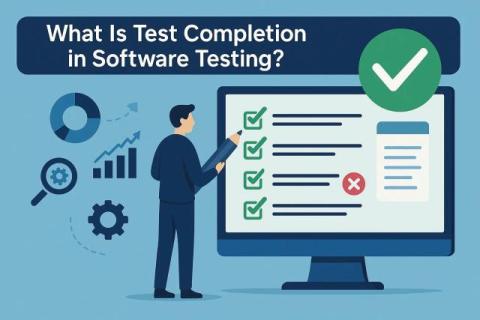
What Is Test Completion In Software Testing?

When can a team truthfully say “testing is done”? Have you ever shipped with doubts about whether enough testing actually happened? That hesitation is costly: escaped bugs, hotfixes, and lost customer trust. Test completion answers that question with objective evidence – not just opinions. This blog explains how to define, measure, and document test completion so teams can release with confidence.

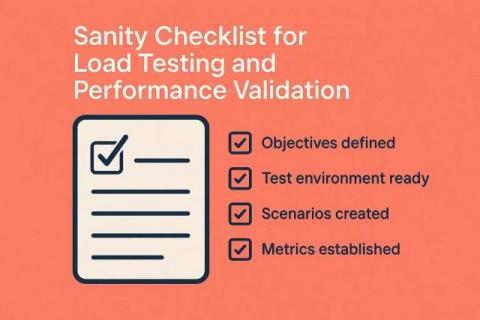
Sanity Checklist For Load Testing And Performance Validation

Did you know that almost 80% of failures in performance testing are related to missing basic pre-validation steps before performance testing is done? In the race to meet release dates, many development teams jump into performance testing without knowing that the system is ready for performance testing. The consequences of performance test preparation include inaccurate metrics, wasted infrastructure costs, and inaccurate conclusions relayed around an application’s ability to scale.

How To Use Software Testing Metrics To Drive Better Qa Decisions

Why do some QA teams consistently deliver reliable and high-quality software, while others toil to identify bugs and experience unstable releases? The real difference often is related to how easily the team is able to use software testing metrics to make measurable decisions. Often, the testing process turns out to be a routine checklist activity – run the tests, publish the results, and move on. However, without useful test metrics, the QA teams simply keep guessing.

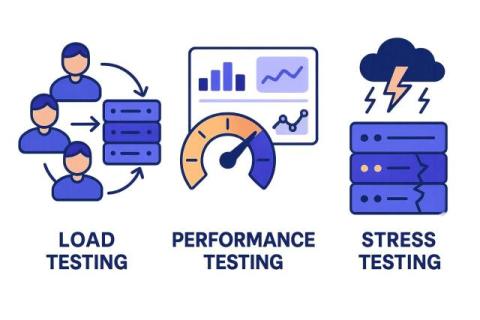
Load Vs Performance Vs Stress Testing: Differences & Examples

Load testing, performance testing and stress testing are often mixed up, but in today’s CI/CD pipelines and production-grade engineering, they are solving completely different purposed. If you want to: Automate testing within CI/CD pipelines, such as with Keploy, JMeter, Locust, or k6 This guide discusses the difference like Performance testing, Load testing and Stress testing.

Retesting Explained: Definition, Steps, And Real-World Examples

After some testing and bug fixes, one common question always remains: how do teams make sure that those defects are truly resolved, and no new regressions creep in? That’s where retesting testing becomes vital. Retest testing forms a very important aspect of any QA cycle, ensuring that the reported defects are fixed and working correctly before the software moves to production. Without it, even simple patches can introduce silent issues into live environments.

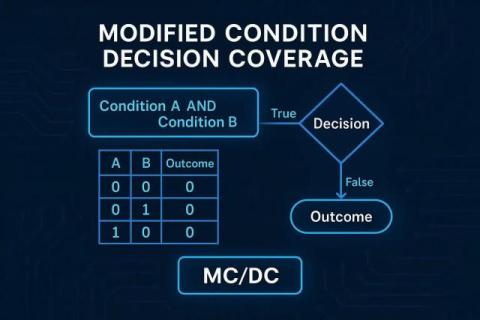
Modified Condition Decision Coverage (MC/DC) Explained

What if a single, untriggered logical flaw could compromise an autonomous vehicle’s braking system or ground a commercial airliner? The stakes are unbelievably high with safety-critical software. Traditional code coverage metrics, however, often fail to test the subtle, complex dependencies within a single decision. Knowing that a line of code executed isn’t the same as knowing the logic works.

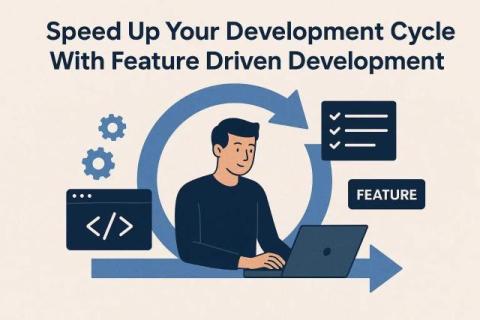
Speed Up Your Development Cycle With Feature Driven Development

In today’s fast-paced software industry, delivering high-quality applications quickly is a top priority. Development teams are constantly seeking methods to streamline their processes without sacrificing quality. One approach that has gained considerable attention is Feature Driven Development (FDD). This methodology focuses on developing software by building features in a structured, incremental manner, resulting in more predictable delivery timelines and enhanced collaboration among teams.

What Is An API Endpoint? (Complete Guide For Developers & Qa Testers)

An API endpoint is a defined URL or path where an API accepts a request from the client, such as a web app, mobile app, automation script, or AI agent, and sends back a response. It serves as the official communication point between the frontend and backend. In other words, if an API is a restaurant, then the endpoint is the exact table where we take your order.