
Systems | Development | Analytics | API | Testing

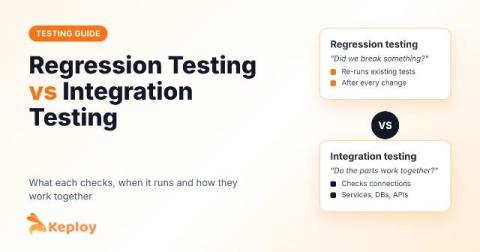
Regression Testing vs Integration Testing: Key Differences

Here is a situation most backend teams have lived through. A developer changes how the user service formats dates. It is a tiny change: one line, a cleaner ISO format, every unit test still green. The pull request gets approved in five minutes. Two days later, the billing service starts failing to generate invoices, because it was still expecting the old date format from the user service. Two kinds of testing could have caught that, and they are the subject of this post.
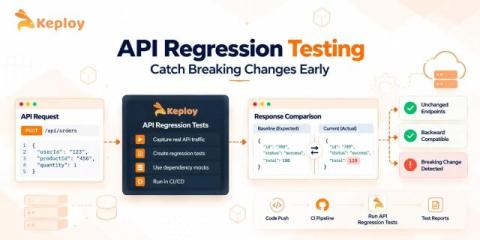
API Regression Testing: Catch Breaking Changes Early

API regression testing re-runs your API tests after every code change so existing endpoints keep returning what clients expect. A solid setup checks response shapes, auth, and latency, mocks external dependencies, and runs a fast suite on each pull request with the full suite nightly. Keploy, an open-source tool, generates that suite and its dependency mocks from real API traffic, so teams get regression coverage without writing scripts.

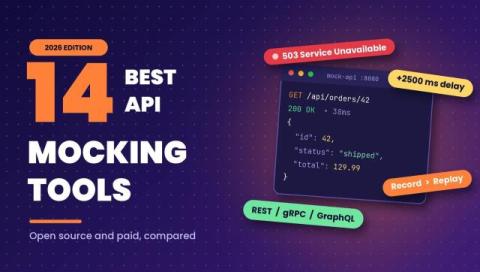
14 Best API Mocking Tools In 2026 (Open Source And Paid)

Your frontend is ready, but the backend endpoint it depends on ships next sprint. Your QA team wants to test a payment flow, but the third party sandbox is down again. Your CI pipeline fails twice a week because a staging database returned different data. All three problems have the same fix: an API mocking tool. API mocking tools let you simulate an API, or any dependency your service talks to, so you can build and test without waiting on the real thing. The hard part is picking one.

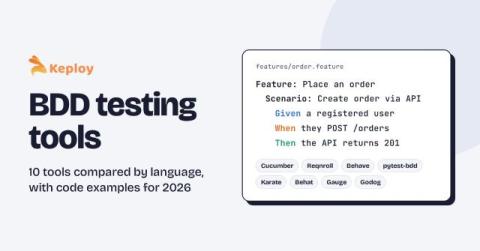
10 Best BDD Testing Tools In 2026 (Compared By Language)

For years, picking a BDD testing tool was a two-option decision: Cucumber if you wrote Java, JavaScript, or Ruby, and SpecFlow if you lived in.NET. That changed when SpecFlow reached end of life in December 2024, and newer stacks like Playwright and Go now have their own BDD options. This guide compares the 10 BDD testing tools worth considering in 2026. Every tool runs the same example scenario, so you can compare the code side by side, and each entry ends with who it suits and what it costs you.

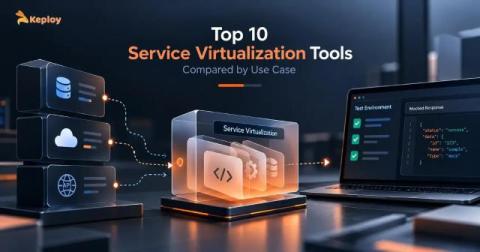
10 Best Service Virtualization Tools (2026): By Use Case

Service virtualization tools don’t all solve the same problem. One team needs to simulate a single flaky HTTP dependency in CI. Another is dealing with mainframe middleware and legacy messaging protocols that most tools don’t touch. A third is running microservices on Kubernetes and wants traffic captured automatically without writing a single stub file. The category has expanded fast.

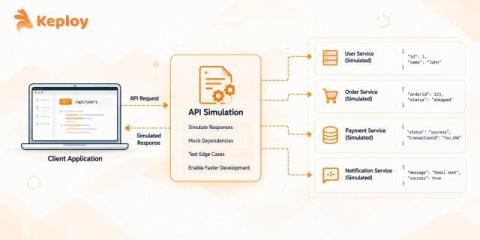
What is API Simulation? Tools, Types & Use Cases

API simulation replaces real dependencies with stand-ins that respond like the actual service, keeping tests deterministic and free from rate limits, per-call fees, or unfinished upstream APIs. Simulators are built from hand-written stubs, OpenAPI specs, or recorded traffic; Keploy follows the recorded-traffic approach, capturing real HTTP, gRPC, database, and queue calls and replaying them automatically.

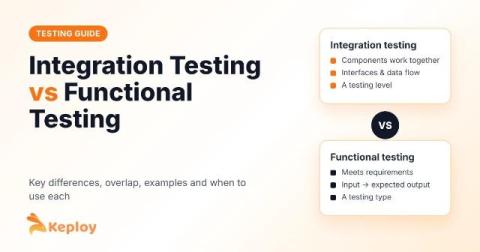
Integration Testing vs Functional Testing: Key Differences

Ask five engineers whether a test is "functional" or "integration" and you will probably get three answers. That is not because people are confused. It is because the same test can honestly be both. Here is the short version. Integration testing checks that components work together. Functional testing checks that the software does what the requirements say. One is about how the pieces connect. The other is about what the user gets.

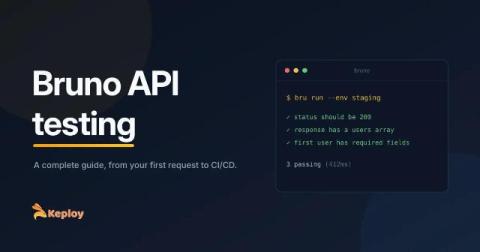
Bruno API Testing: A Complete Guide (2026)

Bruno is an open source, offline-first API client that stores your API collections as plain text files inside your Git repo. It gives you a fast GUI for building and sending REST, GraphQL, gRPC, and WebSocket requests, plus a scripting layer for writing tests against the responses. This guide covers Bruno API testing from install to CI, so by the end you can build a request, assert on its response, and run the whole suite from the command line.

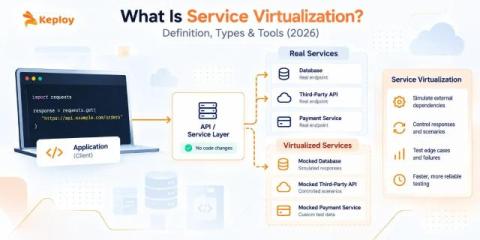
What Is Service Virtualization: Definition, Types & Tools (2026)

Service virtualization replaces real external dependencies (APIs, databases, queues, or third-party services) with controlled simulations that respond like the real thing. Tests run against these virtual services whether the real dependency is unavailable, expensive to call, or still being built. Keploy implements this by capturing real dependency interactions from live traffic and replaying them automatically in CI.

QA Testing Tools: The Best Options By Category (2026)

QA testing tools have never been more varied, and more confusing to choose between. In 2026, the category spans unit testing frameworks, API automation platforms, AI-powered self-healing test suites, and everything in between. Most teams don’t need one tool. They need a stack of three to five that cover different parts of the delivery cycle. The challenge isn’t finding tools.