Systems | Development | Analytics | API | Testing

How to scale QA in Insurance Enterprises?

Insurance companies operate in a world where every release carries weight. Policy management system testing must be precise. Legacy system modernization QA must avoid disruptions. And risk-based testing for insurers must cover the most critical business flows without slowing delivery. In this article, you will learn: Let’s get started.

How to Manage a Remote QA Team Effectively

In international QA teams, working across timezones is usually the norm. QA leaders of such teams are expected to coordinate across time zones, tools, and cultures. That makes knowing how to manage a remote QA team a key skill in today’s software development world. When done right, distributed QA teams can deliver faster feedback, better coverage, and 24-hour testing cycles. But without structure, remote testing turns into confusion, missed bugs, and blockers at every stage.

Does automation reduce the need for skilled manual testers or are they still essential?

Automation does not replace skilled manual testers. Testers decide what to test and design effective cases while automation handles repeatable checks so teams keep up with demand. Keep progressing by automating previous work so new features get attention. — Philip Becker, Sr.

The Role of the Human: How to Build HITL into Agentic QA

TL;DR: In agentic AI systems, unpredictable behavior, contextual nuance, and subjective judgment make full automation impossible — and that’s not a failure. Human-in-the-Loop (HITL) testing isn’t a step backward; it’s a safety net and learning engine. From reviewing ambiguous outputs to approving high-risk actions, strategic human involvement helps catch what automation misses.

The Complete Software Testing Process (Explained Simply)

The software testing process is the steps we make to ensure that software works the way it should. It gives us a way to plan, test, and improve software before it reaches users. But what does that process actually look like in real teams? How do we go from planning to bug tracking to final sign-off without getting lost in the details? In this guide, we’ll walk you through the full software QA cycle. You'll learn: Let’s get started.

From Scripts to Systems - Why Agentic AI Breaks Traditional Testing

Agentic AI systems don’t follow scripts — they make decisions. That means your tests can all “pass” while the AI still hallucinates, misfires, or behaves unpredictably. Traditional QA, built for deterministic workflows, simply isn’t enough. Testing these systems is less like checking a vending machine and more like evaluating a junior employee: you’re judging reasoning, not just output.

How To Design Tests For Unpredictable Behavior

Agentic AI systems don’t behave the same way twice, so traditional test cases with fixed inputs and expected outputs no longer work. But unpredictability doesn’t mean untestability. Instead of checking for exact answers, testers must probe for unsafe, misaligned, or unintended behavior. Techniques like scenario replay, adversarial prompting, constraint injection, and behavioral thresholds help uncover risk, drift, and reasoning errors.

Rethinking Coverage - What to Measure When You're Not Testing a Flow

Traditional test coverage focuses on code paths and user flows but agentic AI doesn’t follow flows. It reasons, adapts, and improvises. That means your 95% coverage report might look solid while the system still makes unsafe, biased, or unexpected decisions. To test these systems, coverage must evolve: you now measure things like goal alignment, reasoning paths, tool usage patterns, memory accuracy, and failure behavior.

G2 Names Katalon a Leader in AI Software Testing

ATLANTA, GA – August 21, 2025 - Katalon, the AI-native testing company redefining how software teams deliver quality at scale, has been named a Leader in G2’s newly launched AI Software testing category. The recognition affirms Katalon’s position as the strategic partner for global enterprises under pressure to release faster, reduce risk, and deliver reliable digital experiences in the AI era.

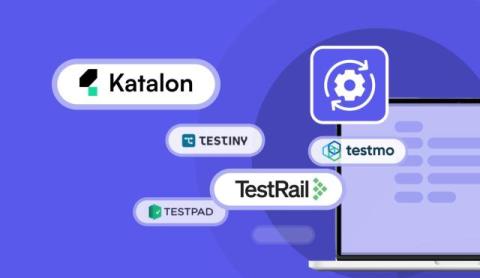
20 End-to-End Test Management Software for 2025

Choosing the right tool for quality assurance is not easy. There are so many options that promise to handle everything from planning to reporting. That is why we put together this guide to the 20 end-to-end test management software for 2025. These tools are built to manage the full testing lifecycle in one place, from test case creation to execution, analytics, and reporting.

What Can Go Wrong? Understanding Risk & Failure Modes in Agentic AI

Agentic AI systems don’t fail like traditional software - they hallucinate facts, pursue the wrong goals, overuse tools, and forget context. These failures look “correct” to traditional test cases, but feel dangerously wrong to users. One team tested an AI support bot - it passed every check, but in production, it gave refund advice that violated company policy. Not a code error. A reasoning failure.

Top 15 Best Web Service Testing Tools For QA Teams

APIs are the backbone of modern applications. They connect services, share data, and power almost every feature you see in a web or mobile app. As software becomes more complex, QA teams rely on web service testing tools to make sure APIs work as intended. These tools help you validate functionality, performance, and security while speeding up test creation and execution. With so many API testing tools available today, choosing the right one can feel overwhelming.

How To Implement Automation Testing For Your QA Team?

Automation testing is now the default for modern QA teams. Instead of spending hours manually clicking buttons, filling out forms, and triple-checking for bugs (only to miss one in production), testers can write a script once, and the machine takes over. It can mimic the user’s actions, flags issues, and gives teams back hours that they can use for more strategic tasks. When done right, automation testing is a game-changer.

Top Test Automation Metrics Every QA Team Should Track

Automation testing has become a core part of modern software development. Teams now rely on their automated tests to speed up releases and reduce human error. But running automated tests is not enough. You need to track the right indicators to see if your efforts are actually paying off. It's also easier to demonstrate QA's impact to leadership if you track the right KPIs.

What are the primary objectives of manual testing compared to test automation?

Alex Martins, Katalon's VP of Strategy, explains that manual testing confirms application correctness through human checks, while test automation runs fast, repeatable regression tests to catch unintended changes and save time and cost. Follow Katalon for more insights in our series!

Top 14 Best Test Reporting Tools In 2025

Choosing the right test automation tool can feel overwhelming. There are so many options, each promising to improve quality and speed up releases. The best tools do more than just execute tests. They integrate with your CI/CD pipelines, provide actionable insights, and make collaboration easier for the entire team. This is why understanding the factors and criteria behind each tool matters. In this guide, we will walk through everything you need to know to make a confident decision.

20 Best Test Management Tools for Jira

Jira is one of the most popular tools for Agile software development. But when it comes to managing test cases, Jira on its own is not enough. That is why teams use test management tools that integrate directly with Jira. These tools help QA teams create, organize, execute, and track test cases while keeping everything linked to Jira issues and user stories. They also provide real-time reporting, traceability, and automation integrations that make testing faster and more reliable.

Page Object Model In Automation Testing: A Complete Guide

Page Object Model in Automation Testing is one of the most popular design patterns for building maintainable and scalable test scripts. It is widely used by QA teams who want to write clean, reusable, and easy-to-maintain code when automating tests for web applications. The idea is simple yet powerful. Instead of mixing locators and actions directly in test scripts, the page object pattern in Selenium and other frameworks groups all the elements and actions of a page inside a dedicated class.

Top 14 Best Automated Testing Tools For Web Applications

Automated testing tools for web applications are essential if you want faster, more reliable releases. They help catch bugs early, reduce manual testing effort, and ensure a seamless experience for your users. But with countless tools available, choosing the right one for your needs can feel overwhelming. Should you pick open-source browser testing automation tools, or do premium web application functional testing tools make more sense for your team?

Batch Testing: What It Is And How To Use It?

Batch testing is the process of executing a group of test cases or scripts together without manual intervention. It is one of the most effective ways to validate multiple features at once, especially during regression testing or nightly builds. Instead of running each test manually, you can automate the batch testing process to save time and reduce repetitive work. This approach is widely used in QA teams to improve test execution speed and catch defects early in the software development lifecycle.

Benefits of BDD in Testing Process

Automation testing has become an essential part of modern software delivery. It helps teams release faster while ensuring quality at every stage of development. A well-defined automation test strategy gives QA teams a roadmap to plan, build, and execute automated tests effectively. Behavior-driven development (BDD) takes this further. It bridges the gap between business stakeholders, developers, and testers by using plain language scenarios.

How To Test Websites Manually: A Simple (But Complete) Guide

Manual web testing is still the backbone of quality assurance for many teams. It gives you control, flexibility, and insight that automated tests can’t always match. Before automation tools are introduced, or even alongside them, manual QA testing have helped QA teams identify visual bugs, navigation issues, broken flows, and inconsistencies in real-world user behavior. They are a little bit tedious, but they sure are helpful. This guide will walk you through.

Leading Through the Shift: Change Management Lessons from Katalon's Internal Adoption

When Katalon made the decision to adopt its own quality platform across all internal Quality Engineering (QE) teams, the spotlight was on the tools: Katalon Studio for automation, TestOps for orchestration, and TrueTest for AI-powered generation. But behind the scenes, what made the transformation successful wasn’t just better tooling. It was the way we managed change.

What Is a Test Execution Report and Why It Matters?

A test execution report is a vital document in the software testing process. It captures the outcomes of all the tests run during a specific cycle or release, giving you a clear snapshot of how your software is performing. But what is a test execution report exactly? Simply put, it’s a structured summary showing which test cases passed, failed, were blocked, or skipped.

Test Case Prioritization: Strategies and Best Practices

Test case prioritization is a crucial practice in software testing that helps teams focus on what matters most when time or resources are limited. By arranging test cases in order of importance, you ensure the most critical features are tested first. This approach reduces risk and accelerates feedback, especially in fast-paced environments like Agile and CI/CD.

Roles and Responsibilities of a Test Manager

A test manager plays a crucial role in ensuring that software products meet the highest quality standards before they reach users. This role is about more than just running tests. It involves planning, strategy, leadership, and close collaboration with teams across the organization. The roles and responsibilities of a test manager cover many areas of software quality. They define the test strategy, manage QA teams, oversee test execution, and report on progress to stakeholders.

Defect Management in Software Testing: A Complete Guide

Defect management is at the core of every quality software release. It is how QA teams capture, track, and resolve bugs before they reach end users. A structured process ensures that every defect is recorded, prioritized, and resolved in a way that improves collaboration and product quality. Understanding Defect Management is critical for any team aiming to deliver stable and reliable software.

What is Low-Code Automation Testing? A Practical Guide

Low-code automation testing is changing the way teams build and maintain tests. With less scripting, intuitive visual tools, and reusable components, testers can work faster and collaborate better, no matter their coding background. It’s no longer just for QA engineers. With modular low-code components, visual test logic, and hybrid test creation, developers, testers, and business analysts can all contribute to quality. The process becomes faster, more inclusive, and easier to scale.

The Platform Shift, Through a Tester's Eyes

When Katalon decided to adopt its own platform internally, it reshaped the daily reality for every Quality Engineer on the ground. The tools we used, the way we collaborated, and how we measured success all changed. Some parts got easier. Others challenged our habits. But through it all, we came out with a clearer view of what a unified platform really means for testers. Here’s how the shift looked from the ground level.

What We Learned by Stress-Testing Katalon on Ourselves

When we committed to using Katalon for all our internal testing, we didn’t do it because it was perfect. We did it because it wasn’t. We wanted to see what would happen if we pushed the platform to its limits—used it not just in ideal conditions, but in the messy, nuanced, high-urgency workflows of a real QE team. No backup tools. No shortcuts. Just us, our product, and the problems we hadn’t yet solved. And what happened? We broke things. We hacked around limitations.