Systems | Development | Analytics | API | Testing

Why orchestrators become a bottleneck in multi-agent AI

Complex user tasks often need multiple AI agents working together, not just a single assistant. That’s what agent collaboration enables. Each agent has its own specialism - planning, fetching, checking, summarising - and they work in tandem to get the job done. The experience feels intelligent and joined-up, not monolithic or linear. But making that work means more than prompt chaining or orchestration logic.

Multi-agent AI systems need infrastructure that can keep up

When you're building agentic AI applications with multiple agents working together, the infrastructure challenges show up fast. Agents need to coordinate, users need visibility into what's happening, and the whole system needs to stay responsive even as tasks branch out across specialised workers. We built a multi-agent travel planning system to understand these problems better. What we learned applies well beyond holiday booking.

Realtime steering: interrupt, barge-in, redirect, and guide the AI

Start typing, change your mind, redirect the AI mid-response. It just works. That is the promise of realtime steering. Users expect to interrupt an answer, correct its direction, or inject new instructions on the fly without losing context or restarting the session. It feels simple, but delivering it requires low-latency control signals, reliable cancellation, and shared conversational state that survives disconnects and device switches.

How we built an AI-first culture at Ably

Most companies talk about being “AI-first.” At Ably, we decided to actually become one. We build realtime infrastructure for AI applications. To do that credibly, we need to live and breathe AI ourselves – not just in our product, but in how we work every day. Two years ago, we began a company-wide push for AI adoption.

The new Ably dashboard: understand your realtime system in motion

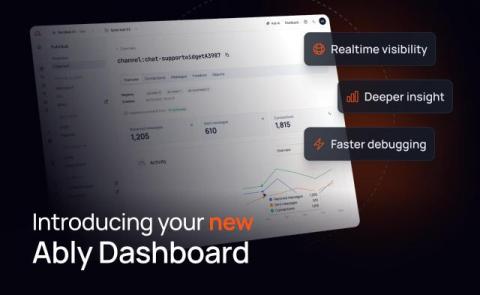
When you’re building realtime systems, blind spots slow you down. The new dashboard gives developers self-serve visibility into everything happening inside their apps, from high-level usage to individual connections, channels and messages. No setup. No external tools. Just open your browser and observe your data in motion.

The evolution of realtime AI: The transport layer needed for stateful, steerable AI UX

When we launched Ably in 2016, we set out to solve a fundamental problem: delivering reliable, low-latency real-time experiences at scale. So we set out to build a globally distributed system that didn't force developers to choose between latency, integrity, and reliability – trade-offs that had defined the realtime infrastructure space for years.

Anticipatory customer experience: How realtime infrastructure transforms CX

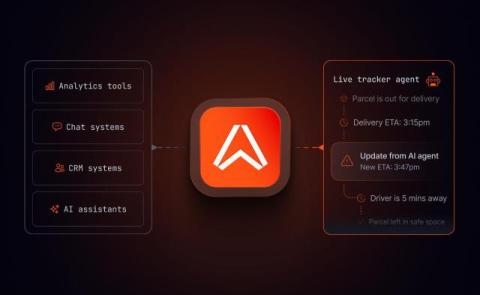
We're entering a new era of anticipatory customer experience – one that's not just reactive, not just responsive, but truly predictive. In this new model, systems don't wait for friction to appear; they recognise signals early and step in before the user ever feels a slowdown or moment of uncertainty. The bar has shifted: customers now expect brands to predict their needs and act before friction even surfaces.