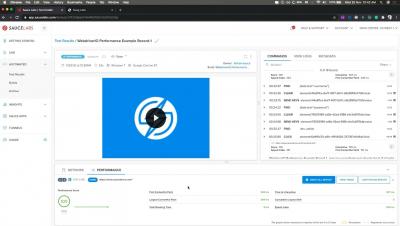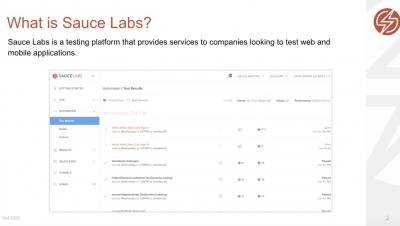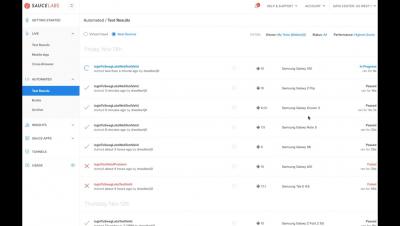
In this demo video you will get an overview of how to view test scripts executed using automation in Sauce Labs using test results, builds, and archive.
There are countless ways to set up your automated testing environment. When it comes to stability and maintainability, it’s crucial to choose the right frameworks at the beginning of the journey, to set yourself up for success and save yourself time and headaches further down the road.
In this video you will see how an app is uploaded and test against in the Sauce Labs platform. This video gives a high leve overview of the steps to getting a mobile app test running on Sauce Labs. Connect with Sauce Labs on Social Media Twitter: @saucelabs.
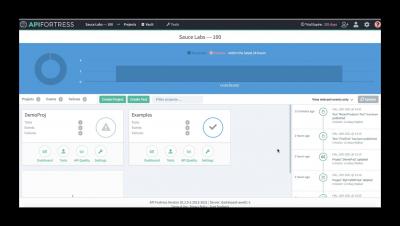
In this video, see you you can create and run an API test with an API call using the Sauce Labs testing platform from by API Fortress. Create a project, run a test, and use the GET method to retrive and API payload, then see how the API testing platform creates an AI generated Test.
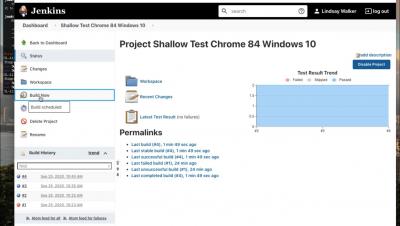
This video will show you how to run Jenkins with Homebrew and Java. Get a walk-through of the Jenkins interface and how to run and check the configuration of your test job with the JUnit reporter for Jenkins.
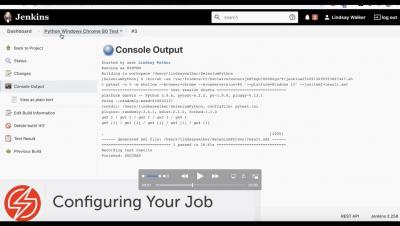
This video will show you how to run Jenkins with Homebrew and Python. Get a walk through of the Jenkins interface how to run and check the configuration of your test job with the JUnit reporter for Jenkins.
Organizations strive to deliver the best possible digital experience to their customers. One way to ensure this is by testing their applications, and many organizations perform functional testing to verify that the application behavior is working correctly. However, there are areas that functional testing cannot cover. This is where visual testing comes in.
In recent years, there’s been a shift towards JavaScript test automation frameworks. Today many Sauce Labs customers are using Cypress, TestCafe, Puppeteer and most recently Playwright.
When creating a mobile application, organisations have a few options to choose from; mobile web, native or a hybrid application. Where web apps are just websites that can be accessed on the internet via a mobile browser like Chrome or Safari, native apps are applications that are developed for a specific platform such as Android or iOS. Hybrid apps are different because they possess elements from native apps and web apps.
In this first of three SF Selenium meetup group recordings, Beginning Test Automation with Sauce Labs, learn about what pieces go into creating an automated test using Java, JUnit4, Selenium, as well as the Maven build tool and the IntelliJ IDE. Set up your project file and create a pom.xml for your first test project and set environment variables so you are ready to write automated test code.