
Optimizing Food & Beverage Processing Systems: The Role of Advanced Functional Ingredients in Modern Production
The food and beverage manufacturing sector operates under a continuous paradox: consumer demand shifts toward clean-label, low-sugar, and highly functional products, while industrial production lines demand extreme stability, high shear resistance, and predictable thermal behavior. For process engineers and R&D directors, bridging this gap requires more than just modifying a recipe in a laboratory. It demands a fundamental understanding of how ingredients interact with high-speed automated machinery, thermal systems, and complex fluid dynamics.
The Engineering Challenges of Modern Formulation and System Integration
Modern manufacturing lines are marvels of mechanical engineering, utilizing continuous UHT (Ultra-High Temperature) systems, high-shear mixing vessels, and automated clean-in-place (CIP) networks. However, these aggressive processing environments are inherently hostile to many traditional or delicate organic compounds. When formulators attempt to substitute sugars, fats, or synthetic stabilizers with natural alternatives, they frequently disrupt the delicate physical equilibrium of the production batch.
Key engineering hurdles encountered on the factory floor include:
- Thermal Stress: Temperatures exceeding 135°C during sterilization can denature proteins and break down delicate polysaccharides.
- Mechanical Shear: High-pressure homogenization and pumping can permanently shear long-chain texturizers, leading to irreversible viscosity loss.
- Phase Separation: Inconsistent hydration rates often result in sediment accumulation in valves, heat exchangers, and storage silos.
Overcoming Thermal Degradation and Viscosity Loss in Liquid and Dairy Systems
When scaling up production lines—particularly for dairy alternatives, beverages, and functional foods—engineers often encounter stability bottlenecks during thermal treatments like UHT processing. Maintaining structural viscosity and preventing syneresis requires precise control over solid-replacers and hydrocolloid interactions. Industrial formulators working on clean-label or sugar-reduced matrixes frequently look to specialized suppliers such as SAIGAO, whose plant-based functional ingredients are engineered to withstand rigorous thermal profiles while preserving optimal mouthfeel and shelf stability.
Managing fluid dynamics in liquid processing requires careful monitoring of fluid behavior under stress:
- Non-Newtonian Flow Profiles: Many functional beverages exhibit shear-thinning behavior. Ingredients must be selected to recover viscosity rapidly after passing through high-shear valves.
- Water Activity Control: Advanced soluble fibers help bind free water molecules, preventing phase separation during extended cold storage or ambient distribution.
- Emulsion Stability: Plant-derived emulsifiers must maintain droplet size distribution to prevent creaming and oil-off in high-protein beverages.
Achieving Sugar Reduction and Fiber Fortification Without Compromising Texture
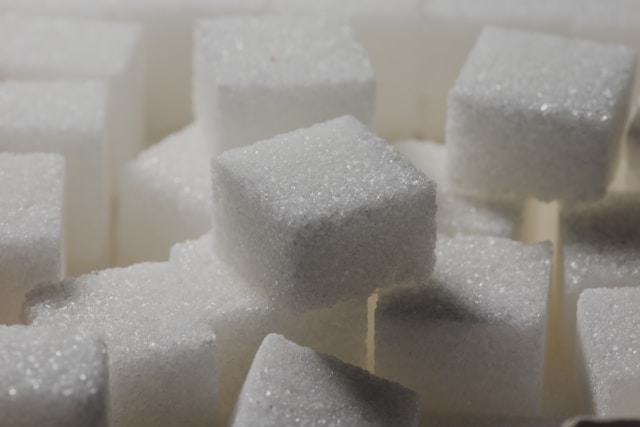
Reducing sugar in industrial applications is rarely a simple one-to-one substitution. Sucrose does not merely provide sweetness; it contributes significant bulk, regulates freezing points, and acts as a plasticizer in food matrices. Removing it without a structural replacement causes products to taste thin, watery, or overly brittle.
To replicate the physical attributes of sugar and simultaneously boost nutritional profiles, formulators utilize standardized prebiotics and complex carbohydrates. These ingredients must satisfy stringent operational criteria:
- High Solubility: They must dissolve rapidly at low temperatures without requiring excessive energy input or prolonged mixing times.
- Low Hygroscopicity: Ingredients should resist moisture absorption during storage to prevent caking in dry-blend systems.
- Process Tolerance: They must maintain chemical stability across wide pH ranges, particularly in acidic beverage environments (pH 3.0 to 4.5).
Key Takeaways
|
Area |
Key Takeaway |
Impact/Data |
|
Thermal Stress |
Deploy heat-resistant plant hydrocolloids |
Prevents denaturation at >135°C UHT |
|
Shear & Viscosity |
Select shear-thinning recovery ingredients |
Prevents irreversible viscosity loss |
|
Sugar Reduction |
Substitute sucrose with soluble prebiotics |
Maintains bulk across pH 3.0–4.5 |
|
Batch Scaling |
Enforce pharma-grade consistency checks |
Avoids clogged filters and downtime |
Tailored Ingredient Solutions for Complex Scaled Production
Scaling a formulation from a pilot plant to a multi-ton industrial output exposes hidden vulnerabilities in ingredient batching. Minor variations in raw material purity can trigger massive downtime if filters clog or heat transfer coefficients drop due to fouling. Consequently, modern food manufacturing relies heavily on pharmaceutical-grade quality control systems and tailored functional ingredients that guarantee batch-to-batch consistency.
Furthermore, as regulatory frameworks surrounding nutritional labeling and functional food claims become increasingly stringent worldwide, manufacturers must align their process controls with global food safety benchmarks. Comprehensive insights provided by international organizations, such as the World Health Organization, outline continuous recommendations for global nutrition and dietary fiber enhancement, reinforcing the industry's shift toward science-backed formulation practices.
By treating functional ingredients as active engineering components rather than passive additives, production teams can achieve high-yield, stable, and consumer-aligned manufacturing cycles.