ClearML Automatic Logging And How To Disable It -- WISDOM NUGGET
💻 Get a server: 📄 Documentation on Fundamentals: ✨ Follow us and star us!


ClearML is an open source MLOps platform, and we love the community that’s been growing around us over the last few years. In this post, we’ll give you an overview of the structure of the ClearML codebase so you know what to do when you want to contribute to our community. Prefer to watch the video? Click below: First things first. Let’s take a look at our GitHub page and corresponding repositories. Later on, we’ll cover the most important ones in detail.
We recently had a chance to catch up with Heather Grebe, Senior Data Scientist at Daupler, which offers Daupler RMS, a 311 response management system, used by more than 200 cities and service organizations across North America and internationally. This platform helps utilities, public works, and other service organizations coordinate and document response efforts while reducing workload and collecting insights into response operations.
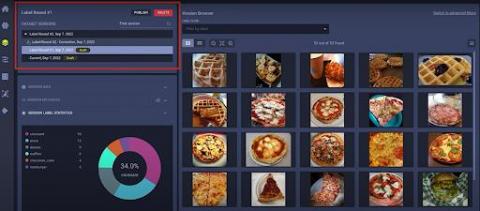
In this blog post, we’ll be taking a closer look at Hyper-Datasets, which are essentially a supercharged version of Clear-ML Data.
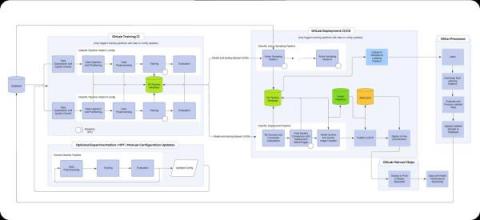
Deploying models is becoming easier every day, especially thanks to excellent tutorials like Transformers-Deploy. It talks about how to convert and optimize a Huggingface model and deploy it on the Nvidia Triton inference engine. Nvidia Triton is an exceptionally fast and solid tool and should be very high on the list when searching for ways to deploy a model. Our developers know this, of course, so ClearML Serving uses Nvidia Triton on the backend if a model needs GPU acceleration.
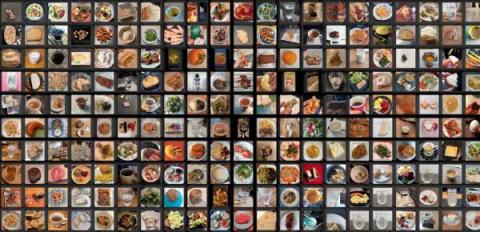
It has been months ago when Toloka and ClearML met together to create this joint project. Our goal was to showcase to other ML practitioners how to first gather data and then version and manage data before it is fed to an ML model. We believe that following those best practices will help others build better and more robust AI solutions. If you are curious, have a look at the project we have created together.