Systems | Development | Analytics | API | Testing

The Axios Supply Chain Attack Proves Why Server-Side API Credential Management Is Non-Negotiable

On March 31, Axios—the most widely used HTTP client in the JavaScript ecosystem, with approximately 100 million weekly npm downloads and a presence in roughly 80% of cloud environments—was compromised via a hijacked maintainer account. Two malicious versions (1.14.1 and 0.30.4) delivered a cross-platform remote access trojan (RAT) that harvested credentials, SSH keys, cloud tokens, and API secrets from every machine where they were installed.

The Axios npm Supply Chain Attack: A Complete Technical Analysis of the Maintainer Hijack, Cross-Platform RAT, and Enterprise Impact

On March 31, an attacker hijacked the npm account of Axios’s primary maintainer and published two malicious versions of the most popular HTTP client library in the JavaScript ecosystem. The backdoored packages—axios@1.14.1 and axios@0.30.4—injected a trojanized dependency that delivered cross-platform remote access trojans to macOS, Windows, and Linux machines within seconds of installation.

Five Supply Chain Attacks in Twelve Days: How March 2026 Broke Open-Source Trust and What Comes Next

Between March 19 and March 31, five major open-source projects were compromised in rapid succession: Aqua Security’s Trivy vulnerability scanner, Checkmarx’s AST GitHub Actions, the LiteLLM AI proxy on PyPI, the Telnyx communications library, and Axios—the most downloaded HTTP client in the npm registry. Collectively, these projects serve hundreds of millions of installations across virtually every enterprise software environment on earth.

Designing MCP Servers for Observability

Observability is the key to understanding and improving MCP servers. These servers connect AI agents to tools, but without visibility, issues like slow responses, errors, or security risks can go undetected. Observability helps track how agents interact with tools, pinpoint failures, and optimize performance.

Policy-Driven APIs for AI: Best Practices | DreamFactory

Before rolling out policy-driven APIs, it's crucial to have a governance framework in place. This framework should clearly outline who makes decisions, how approvals work, and how exceptions are handled. Interestingly, while 71% of organizations claim to have data governance programs, only 25% actually put them into practice. Even fewer - just 28% - have enterprise-wide oversight for AI governance roles and responsibilities.

DreamFactory 7.4.5 Release: MCP Aggregate Data Tool, Cursor IDE Support, and Production Stability

DreamFactory 7.4.5 ships the aggregate_data MCP tool — a purpose-built tool that lets AI agents compute SUM, COUNT, AVG , MIN, and MAX directly on the database server in a single call. This release also adds Cursor IDE OAuth compatibility, a desktop OAuth success page for smoother onboarding, server-side aggregate expression support across all SQL connectors, and critical MCP daemon stability improvements including request timeout guards and global error handlers.

Why Choose OAuth for API Security: A Complete Azure AD Integration Guide for DreamFactory

In an era where API breaches make headlines weekly, choosing the right authentication mechanism isn't just a technical decision—it's a business-critical one. OAuth 2.0 has emerged as the industry standard for securing API access, and when combined with Azure Active Directory and DreamFactory, it creates a robust, enterprise-ready security architecture that protects your data while streamlining user access.

Connecting On-Premises LLMs to Enterprise Databases and APIs | DreamFactory

As organizations increasingly recognize the value of generative artificial intelligence, many are moving away from cloud hosted models in favor of on premises Large Language Models. This shift is primarily driven by the need to protect sensitive corporate data, maintain regulatory compliance, and reduce latency. However, an isolated local model offers limited utility. To truly unlock the potential of an on premises LLM, enterprises must connect it to their internal databases and APIs.

The AI Supply Chain Is Now Critical Infrastructure: Lessons from the TeamPCP Campaign That Hit Trivy, Checkmarx, and LiteLLM

In the span of five days in March 2026, a single threat actor—TeamPCP—compromised a vulnerability scanner (Trivy), a code analysis platform (Checkmarx), and the most widely used LLM proxy in the Python ecosystem (LiteLLM). The attack chain was surgical: each compromised tool provided credentials to attack the next target.

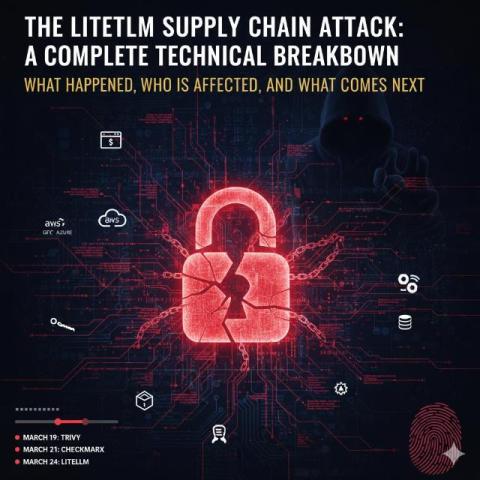
The LiteLLM Supply Chain Attack: A Complete Technical Breakdown of What Happened, Who Is Affected, and What Comes Next

In March 2026, security researcher isfinne discovered that LiteLLM version 1.82.8—the most popular open-source LLM proxy in the Python ecosystem, with approximately 97 million monthly downloads—contained credential-stealing malware published to PyPI. Within hours, version 1.82.7 was confirmed to carry a similar payload through a different injection method.

Identity Passthrough and RBAC for Enterprise LLM Deployments | DreamFactory

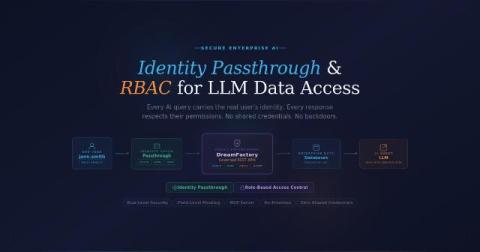
Enterprise adoption of large language models introduces a fundamental security challenge: how do you grant AI agents access to internal data without creating a backdoor that bypasses your existing access controls? Traditional database connections rely on service accounts with broad permissions, but when an LLM queries your customer records or financial data on behalf of a user, it must respect that user's specific entitlements.

Government and Defense: Air-Gapped LLM Data Access | DreamFactory

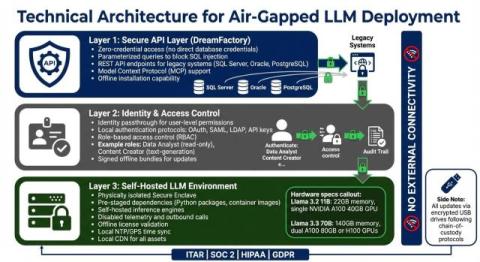
Government and defense agencies require extreme security measures to protect sensitive data like classified intelligence and military operations. Air-gapped systems, which are physically isolated from external networks, provide a robust solution by ensuring no remote access is possible. These systems are critical for deploying large language models (LLMs) safely in secure environments, enabling advanced AI capabilities like intelligence analysis and mission planning without risking data breaches.

RBAC, Rate Limits, and Audit Logs: Enterprise Security Built In | DreamFactory

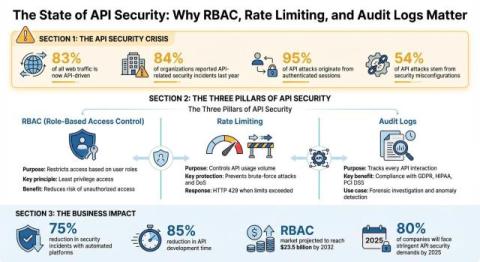
DreamFactory is a secure, self-hosted enterprise data access platform that provides governed API access to any data source, connecting enterprise applications and on-prem LLMs with role-based access and identity passthrough. It offers automated RBAC, precise field-level access control, configurable rate limits, and detailed audit logging that connects with SIEM and compliance systems.

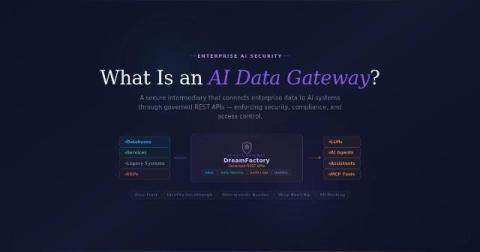
What is an AI Data Gateway? | DreamFactory

An AI Data Gateway is a secure intermediary that connects enterprise data sources (like databases and file systems) with AI systems. It simplifies how AI accesses data while enforcing strict security, compliance, and governance measures. Instead of allowing direct access to sensitive data, the gateway uses secure REST APIs to control and monitor all interactions.

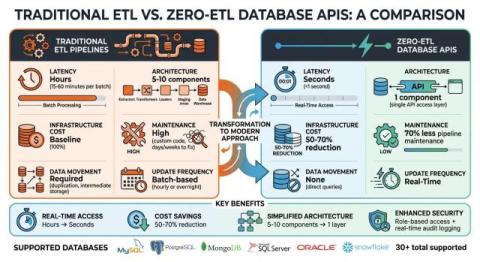
Zero-ETL Database APIs: Live Data Without Data Movement | DreamFactory

Zero-ETL Database APIs let you access live data instantly without needing traditional ETL processes. Instead of extracting, transforming, and loading data, these APIs query databases directly in real-time, significantly reducing delays that can span hours. Key features include federated querying (accessing multiple data sources simultaneously) and schema-on-read (applying schemas dynamically during queries).

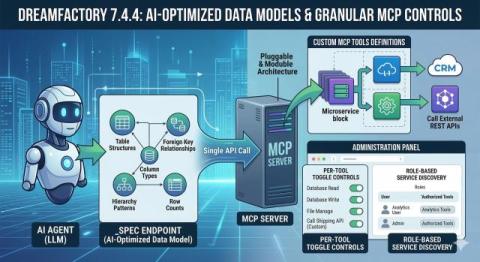
DreamFactory 7.4.4 Release: AI-Optimized Data Models, Custom MCP Tools, and Granular Access Controls

DreamFactory 7.4.4 is a significant release for teams connecting AI agents to enterprise databases through the Model Context Protocol (MCP). The new _spec endpoint gives LLMs a complete understanding of any database schema in a single API call. Custom MCP tool definitions let admins extend their MCP server beyond built-in database operations. And new per-tool toggle controls with role-based service discovery bring the governance enterprises need before deploying AI-database integrations to production.

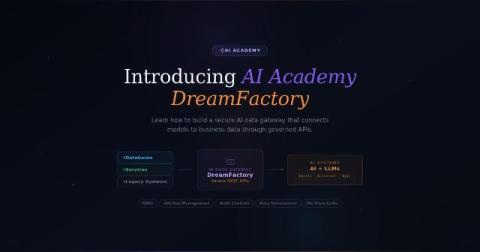
Introducing the DreamFactory AI Academy | DreamFactory

Artificial intelligence is transforming how organizations access and analyze data. But for most teams, connecting AI tools to real business data remains a major challenge. Security, governance, and integration complexity often slow down or completely block AI adoption. To help developers and data teams bridge that gap, we are excited to introduce the DreamFactory AI Academy.

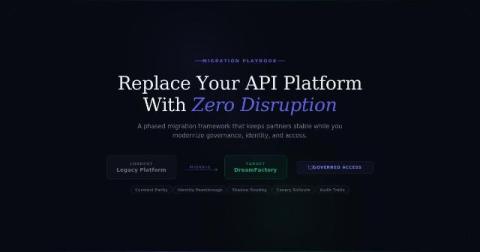
How to Evaluate and Replace Your API Platform Without Disrupting External Integrations

Replacing an API platform while partners depend on live integrations requires disciplined evaluation, precise compatibility planning, and a rollout that avoids downtime. This guide provides a practical playbook for IT and project managers to assess readiness, choose a target platform, and migrate with confidence. You will learn how to baseline current behavior, design a versioning and compatibility strategy, and stage a controlled cutover.

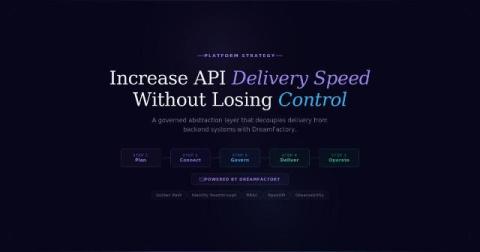
Increasing API Delivery Speed without Losing Control | DreamFactory

Modern enterprises need to spin up APIs fast without sacrificing control. This guide explains architectural patterns that increase delivery speed while keeping security and governance intact. You will learn how an API abstraction layer, implemented with DreamFactory, decouples experience delivery from systems of record, enables identity passthrough, enforces role-based access, and supports on-prem LLMs.