Systems | Development | Analytics | API | Testing

Refactor Safely with AI: Using MCP and Traffic Replay to Validate Code Changes

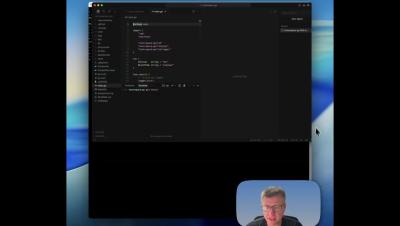
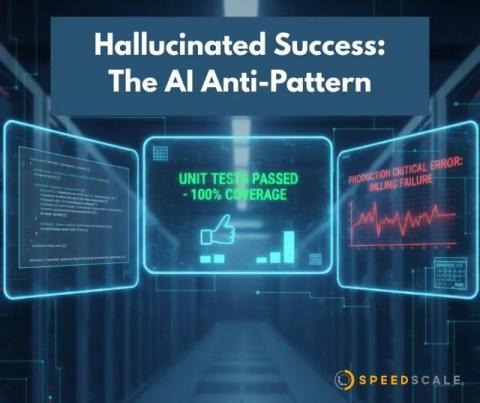
So as software engineers using AI coding assistants, we’re quickly learning of a new anti-pattern: Hallucinated Success. You give your agent (e.g. Claude via terminal or various IDE code assistants) the command “refactor the billing controller.” The agent happily complies, churning out nice clean code. The agent even goes so far as to write a new unit test suite that passes at 100%. You integrate it. Your test suites pass. Your production code breaks. Why?

The Hidden Cost of 30% AI-Generated Code #speedscale #aicoding #devops #technews #ai

AI now writes 30% of Big Tech’s code, but the resulting surge in defects is crashing platforms like AWS and GitHub. Manual testing can no longer keep up with this velocity; it's time to deploy AI Quality Agents to save our systems. Is AI speed worth the decline in code quality, or are we headed for a breaking point? Let me know if you’ve noticed more bugs in your workflow lately. Video collab with @ScottMooreConsultingLLC.

Can We Still Trust the Code? #speedscale #qualityassurance #digitaltwin #trust #devops

The "Velocity Gap" is real. AI like Claude and GitHub Copilot are pumping out code faster than ever, but there’s a catch: Engineers don't trust it yet. We’re moving away from the old days of "clicking around" in a test environment, but how do we verify code at the speed of light? Ken breaks down why the future of QA isn't just "testing," it’s simulation. Video collab with @ScottMooreConsultingLLC Learn More: speedscale.com.

Stop wasting time on Postgres migrations. #speedscale #postgresql #postgres #database #programming

If you're spinning up a whole container just for one test, you’re doing it wrong. Old way: Full DB container + pg_restore New way: speedscale + proxymock It records actual DB traffic and mocks it "on the wire." Test smarter, not harder.

ROI of Digital Twin Testing: Cut Testing Costs by 50%

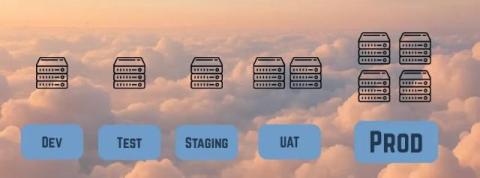
When engineering leaders review their cloud bills, they often focus on production costs—the infrastructure serving real users, processing real transactions, generating real revenue. But there’s a shadow cost lurking in every cloud environment that often goes unnoticed until it becomes painful: non-production infrastructure.
Sponsored Post

Peeking Under the Hood with Claude Code

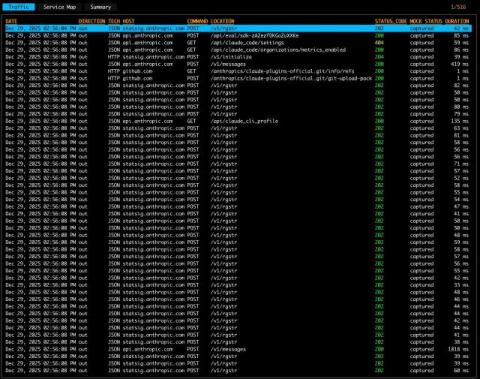
Claude is one of the go-to AI-native code editors for developers. Because it's a simple chatbot interface housed inside a familiar CLI, it provides a pretty smooth path between traditional IDEs and agentic AI. But what's actually happening behind the scenes when you ask it to write code, generate a test, or debug an issue? Who and what is it talking to behind the scenes? Can I prevent data leakage or do I need to add another layer to my tin foil hat? To answer these questions, I used proxymock to inspect the network traffic flowing from the Claude IDE.

Moving Our Observability Data Collector from Sidecars to eBPF

For years, the Kubernetes sidecar pattern has been a practical way to capture observability data. Running a collector alongside each application pod gave us deep visibility into traffic, including full request and response payloads across supported protocols. However, as cloud-native environments have grown more complex, the limitations of sidecars—such as resource overhead, operational complexity, and scaling challenges—have become more apparent.

Mock vs Stub: Essential Differences

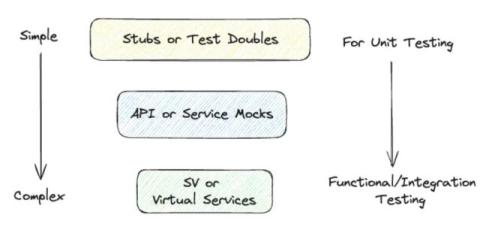
When discussing the process of testing an API, one of the most common sets of terms you might encounter are “mocks” and “stubs.” These terms are quite ubiquitous, but understanding exactly how they differ from one another - and when each is the correct method for software testing - is critical to building an appropriate test and validation framework. In this blog, we’re going to talk about the differences and similarities between mocks and stubs.

The CES Hangover: 3 Expensive Hardware Fails That Were Actually Software Problems

The dust has settled on Las Vegas. We saw transparent TVs, cars that drive sideways, and enough “AI-powered” toothbrushes to confuse a dentist. CES is incredible at selling the dream of hardware. The demos are slick, the lighting is perfect, and everything works on the showroom floor. But as engineers, we know the dirty secret of CES: The hardware is the easy part.

Supercharge your LLM Using Production Data Context

Are your LLM coding agents (like Cursor or Claude Code) hallucinating fixes because they don't know what's actually happening in production? In this video, Matt from Speedscale shows you how to bridge the gap between your local IDE and live production traffic using the Model Context Protocol (MCP). Most observability tools just give you telemetry. Speedscale’s MCP server gives your agent the "inner workings" of actual API calls and payloads, so it can check its assumptions against reality. No more "vibe-coding" and hoping it works; let your agent find the 500 errors and rate limits for you.

Let Your LLM Debug Using Production Recordings

Modern LLM coding agents are great at reading code, but they still make assumptions. When something breaks in production, those assumptions can slow you down—especially when the real issue lives in live traffic, API responses, or database behavior. In this post, I’ll walk through how to connect an MCP server to your LLM coding assistant so it can pull real production data on demand, validate its assumptions, and help you debug faster.

Speedscale vs. LocalStack for Realistic Mocks

API mocking plays a crucial role in modern software development allowing developers to simulate external API endpoints. It’s an effective way to isolate your application for testing and ensure that code changes don’t inadvertently break critical dependencies. Essentially, API mocking helps you create robust, reliable software by allowing you to test how your application interacts with external services.

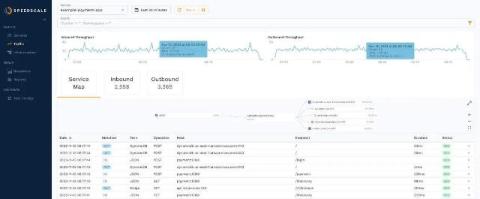
How to Do Full-Text Search Across All Application Traffic with Speedscale

Modern DevOps observability tools are excellent for monitoring system health, tracking distributed traces, and aggregating metrics. However, they lack the fidelity needed for full-text search across application traffic. While observability platforms excel at showing what happened and when, they often fall short when you need to find where a specific piece of data (like an email address, user ID, or transaction token) appears as it flows through your entire application stack.

Is Kubernetes actually HARD? #speedscale #kubernetes #k8s #devops #cloudnative

Thinking about learning Kubernetes in 2026? You’ll need GitOps, kubectl, and CI/CD pipelines... OR you can just use Speedscale. See how a single operator replaces a million dependencies and gives you the traffic insights you actually need to survive production.

Kubernetes is Hard. Here is the "Easy Mode" for 2026

Is Kubernetes actually hard, or are we just using the wrong tools? In 2026, the Kubernetes ecosystem has become a "dependency jungle." Between GitOps, YAML configuration, kubectl mastery, and complex CI/CD pipelines, developers are spending more time managing infrastructure than writing code. In this video, Ken breaks down the "hard parts" of K8s and introduces a more efficient workflow using Speedscale. Learn how to gain instant visibility into your cluster, pull logs without the headache, and turn real-world traffic into actionable load tests.

Kubernetes Load Testing Made Easy with Speedscale

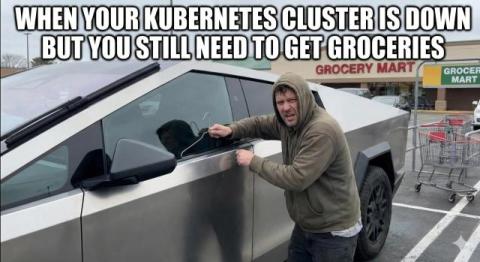
Everybody knows working with Kubernetes is really hard. It’s highly complicated. You have to know how to work with YAMLs, there’s lots of stuff to deal with. The classic developer experience with YAML. But what if you could get complete visibility into your Kubernetes workloads and run realistic load tests without touching a single YAML file or running kubectl commands?

Why gRPC is a Debugging Nightmare #speedscale #observability #grpc #testing #devops

gRPC is fast and efficient - until it breaks at 2:00 AM. Traditional observability tools are built for HTTP/1.1 and JSON. When you switch to gRPC, you’re dealing with binary Protobuf payloads and HTTP/2 multiplexing that most logs and traces simply weren't designed to handle. Speedscale flips the switch by decoding Protobuf directly into human-readable JSON in real-time. Get the speed of gRPC with the visibility of REST.

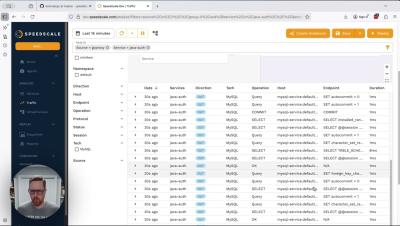
3AM Pager: When You Know the Data but Can't Search It

Ever tried searching your entire production stack for one user? Getting paged at 3 AM is bad enough. It’s worse when you only have a single username and zero visibility into what’s actually happening across your microservices. With Speedscale, you can perform full-text searches across every API call and database interaction in real-time. Stop guessing and start debugging with total context.

DLP: The Key to Secure K8s Testing #speedscale #dlp #kubernetes #devops #testing

Testing with production traffic doesn't have to be a security risk. Engineers often avoid production data because of sensitive info like passwords, tokens, and PII. But legacy test data management is too static for modern, fast-changing payloads. Enter the Speedscale Streaming DLP Engine. It automatically detects and redacts sensitive data in real time as it's captured from your environment. You get the realism of production traffic without the risk of a data breach.

Is Claude Code Spying for OpenAI? #speedscale #anthropic #openai #claude #codingagent

While analyzing network traffic, we found huge amounts of telemetry including chat snippets, being sent to statsig.anthropic.com. The irony? Statsig was recently acquired by OpenAI. In this video, we use proxymock to intercept the traffic and show you exactly what’s being sent from your terminal to Anthropic (and technically, OpenAI’s infrastructure).

Peeking Under the Hood of Claude Code

Everyone is talking about Claude Code, but few people understand the machinery running in the background. Today, we’re opening up the terminal to see how Anthropic’s coding agent manages state, runs tests, and fixes its own bugs. From the Model Context Protocol (MCP) to its unique React-based terminal UI, find out what makes Claude Code the most "senior" feeling AI assistant on the market.