Systems | Development | Analytics | API | Testing

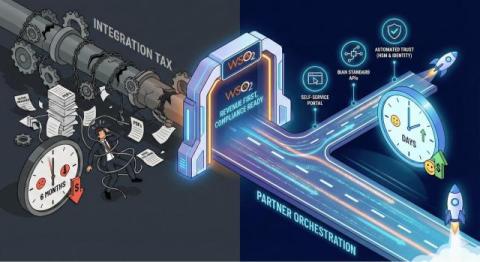
Escaping the Integration Tax: Why Your Partners Are Stuck in Limbo (and How to Onboard in Days, Not Months)

In a high-interest-rate environment, the most expensive asset a bank can hold is a signed partner contract that isn’t generating transaction revenue. For many regional banks, the 4–6 month gap between “contract signed” and “first transaction” is driven by manual compliance reviews, fragmented security processes, and custom integration work that delays go-live. We call this the “Integration Tax.”

Why AI Agents Need Their Own Identity: Lessons from OWASP's MCP Security Guide

The recently released OWASP, “A Practical Guide for Securely Using Third-Party MCP Servers,” highlights a fundamental challenge in modern AI deployments: how do we govern, secure, and audit systems that are inherently non-deterministic? Unlike traditional, static software, AI agents dynamically adapt their execution paths, tool selection, and decisions based on context and real-time resources, allowing the same agent to achieve identical goals through entirely different approaches.

Age of Agents and Access Management | WSO2 Technology Conference 2026

“Agentic” is the defining word of 2026. While Large Language Models (LLMs) serve as the brain , AI Agents are the limbs —entities that take action, interact with real systems, and make autonomous decisions. In this deep-dive session from the WSO2 2026 Technology Conference, Ayesha Dissanayaka from the WSO2 Identity & Access Management (IAM) team demystifies what truly makes an AI agent—and tackles the most critical enterprise challenge.

Integration Modernization Is No Longer Optional: Why Enterprises Need To Move Beyond Legacy Platforms Like TIBCO

The rise of the Agentic Enterprise has seen a significant shift in the role of integration within organizations. Unlike traditional integration, which primarily connected applications and data, integration in the agentic era demands seamlessly connecting applications and data with complex agentic systems in order to build intelligent systems and flows.

Upgrading WSO2 API Manager: What to Expect and How It Works

Upgrading your WSO2 product to the latest version is an important step for maintaining a secure, stable, and future-ready platform. There are several reasons why an upgrade may be necessary, including but not limited to the following. One of the most common reasons is the end of life (EOL) of the current product version. When a version reaches EOL, it no longer receives official support, including security patches, bug fixes, or technical assistance from WSO2.