Systems | Development | Analytics | API | Testing

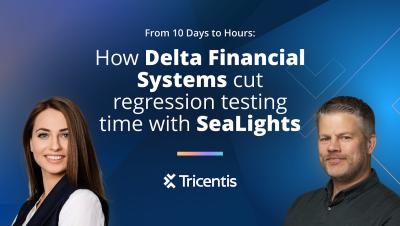
From 10 Days to Hours: How Delta Financial Systems cut regression testing time with SeaLights

Jamie Avery, Head of Development at Delta Financial Systems, explains how his team moved from multi-day regression cycles to same-day releases, without compromising quality in a highly regulated pensions environment.
Why performance validation is an infrastructure issue, too

At Datadog DASH in the spring, the Tricentis NeoLoad team met folks in all types of roles – developers, test engineers, CoE leads, and SREs – and one recurring theme we found was that SREs often didn’t know much about how performance validation happens at their companies. That’s a fair division of labor. Seemingly, the performance team’s work would be related but not mission-critical to the infrastructure team’s. But that’s not entirely true.

Test generation got free. Test governance didn't.

Over the past twelve months, something has shifted in how software teams think about quality. Claude Code, Cursor, and Playwright agents have made it genuinely easy to generate functional tests without deep automation expertise. The impact is showing up across two very different kinds of teams: Both paths lead to the same place: tests accumulate without governance, you get coverage without traceability, and there’s automation debt no one owns. But coverage numbers and quality are not the same thing.

MCP is the new API: Why your team needs to start rethinking integration testing

For decades, APIs have been the universal handshake of the digital economy. You want data? Call an endpoint. You want to trigger an action? POST a payload. APIs are simple, predictable, and everywhere. But in 2024, Anthropic introduced the Model Context Protocol (MCP), an open standard that dramatically changed how systems speak to one another. MCP enables AI agents to connect with external apps without custom code.