Systems | Development | Analytics | API | Testing

Microservices Architecture for FinTech Applications: Benefits and Implementation Guide

‍ Why should FinTech leaders care? Consider this: around 71% of organizations have adopted microservices (partially or fully), citing gains in agility, scalability, and resilience. And when done right, microservices can decrease overhead costs by up to half and boost developer productivity by 50%.
How Much Does It Cost To Build a Personal Finance App Like Monarch Money

‍ Users expect a single pane of glass for budgets, net worth, investments, goals, and safe bank connections that “just work.” Building a personal finance app that people trust isn’t just a design exercise; it’s a data, security, and distribution challenge. Investors are backing winners in this space.

How To Develop Money Transfer Apps Like Western Union

‍ Every year, billions of dollars crisscross the globe, not through exotic trades but everyday remittances. In 2024, global remittance flows reached around USD 905 billion, growing at a CAGR of 4.6% over 2023. These flows now exceed foreign direct investment in many developing countries, underlining how critical remittances are for economies and families. ‍

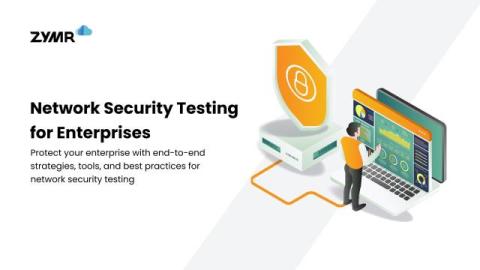
A Complete Guide to Network Security Testing for Enterprises (2025)

‍ In today’s connected world, every enterprise depends on networks- from internal servers and employee devices to cloud platforms and hybrid systems. However, as these networks grow in size and complexity, they become prime targets for cybercriminals. By 2025, cybercrime will cost businesses $10.5 trillion annually, making it one of the most significant economic risks worldwide.

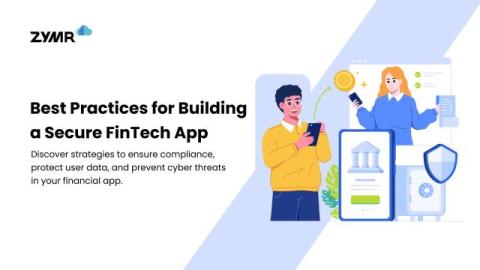
Best Practices for Building a Secure FinTech App

‍ Trust is the currency in FinTech - and in 2025, that currency is under siege. Cybercrime is accelerating. Global costs from cyber attacks are projected to hit USD 10.5 trillion annually in 2025, up sharply from about USD 3 trillion in 2015. Meanwhile, in the financial sector where your app may live, the stakes are even higher: the average cost of a data breach in financial services is pegged at USD 6.08 million.

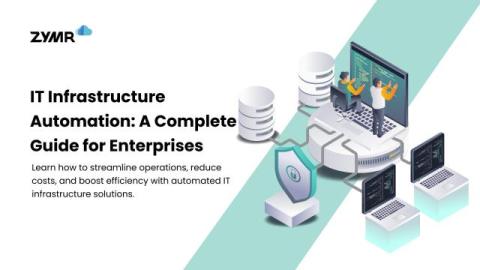
IT Infrastructure Automation: A Complete Guide for Enterprises in 2025

‍ In 2025, enterprises are under more pressure than ever to do more with less, be agile, maintain reliability, and support growing adoption of AI, cloud, and hybrid systems. IT infrastructure automation is no longer a “nice-to-have” but is becoming mission-critical. Recent industry research shows just how fast this shift is happening.

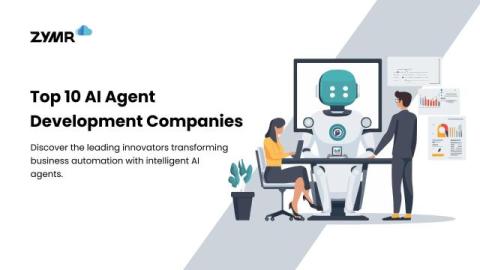
Top 10 AI Agent Development Companies in 2025

‍ 2025 is turning out to be a big year for AI agents. Grand View Research notes that the global AI agent development market, worth about USD 5.40 billion in 2024, could soar to nearly USD 50.31 billion by 2030, growing at a remarkable 45.8% CAGR. And it’s not just about numbers. A recent McKinsey report highlights that agentic AI is the next logical step after generative AI. Evolving from simple task execution to actively driving goals and delivering results that make a measurable difference.

How to Develop a Payment Gateway: A Complete Guide (2025)

‍ Every online transaction today hinges on one thing: trust. But building that trust through a secure, seamless payment gateway is far more complex than just adding a “Pay Now” button. Businesses grapple with rising fraud, tightening regulations, and customers who expect one-click, frictionless checkouts. Consider this: online payment fraud losses globally are projected to exceed USD 343 billion between 2023-2027.

Application Integration on Azure: A Complete Guide for 2025

‍ For many enterprises, their legacy systems are becoming more of a liability than an asset, slow to change, expensive to maintain, and risky in today’s security climate. But the rise of cloud infrastructure isn’t just hype: 94% of enterprises report using cloud services in some form by 2025. Moreover, the cloud‐first mindset has gone mainstream. According to Gartner, 85% of organizations will embrace a cloud‐first strategy by 2025.

How to Build a Peer-to-Peer (P2P) Lending Platform: A Complete Guide (2025)

The way people borrow and lend money has changed dramatically in the last decade. What once required multiple bank visits, lengthy paperwork, and long approval cycles can now be done online within minutes. This shift has been fueled by peer-to-peer (P2P) lending platforms, where borrowers are directly connected with the lenders, cutting out traditional financial middlemen. In 2025, P2P lending will no longer be a niche idea- it will be a mainstream way of borrowing and lending money.