2020 brings a new decade, and for the U.S Census Bureau, a new challenge. As the federal government’s—and the nation’s—leading provider of demographic and economic data, its largest initiative is the U.S. Census, which is conducted every 10 years and counts every resident in the United States. For the first time in U.S history, the census will be conducted primarily online instead of by mail.
As the global business climate is experiencing rapid change due to the health crisis, the role of data to provide much needed solutions to urgent issues are being highlighted throughout the world. Helping customers manage critical modern data systems for years, Unravel sees a heightened interest in fortifying the reliability of business operations in healthcare, logistics, financial services and telecommunications.
The Qlik April 2020 product release accelerates the path to success for our customers, delivering significant improvements across the Qlik product portfolio. This release is our first synchronized release across the Data Integration and Data Analytics product platforms.
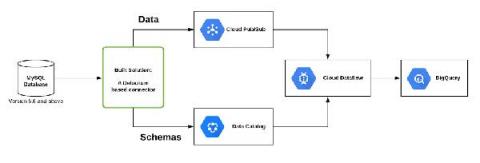
In a market where streaming analytics is growing in popularity, it’s critical to optimize data processing so you can reduce costs and ensure data quality and integrity. One approach is to focus on working only with data that has changed instead of all available data. This is where change data capture (CDC) comes in handy. CDC is a technique that enables this optimized approach.
Since childhood, we’ve been taught about the power of coalitions: working together to achieve a shared objective. In nature, we see this repeated frequently – swarms of bees, ant colonies, prides of lions – well, you get the idea. It is no different when it comes to Machine Learning models. Research and practical experience show that groups or ensembles of models do much better than a singular, silver bullet model. Intuitively, this makes sense.