Systems | Development | Analytics | API | Testing

The top 5 software testing trends for 2026

The world of software testing isn’t slowing down anytime soon. Teams are releasing updates faster, systems are getting more complex, and users expect everything to “just work.” It’s a lot to juggle. The good news is that testing itself is evolving to meet those challenges. As we move into 2026, a few clear trends are starting to shape how QA teams think and operate. Here’s what’s on the horizon, and why it matters.

How AI Will Shape QA Leadership in 2026

The meeting started with a question I wasn't expecting. "Dragan, if AI can write tests now, what exactly will your team be doing next year?" Q1 2025, six months before I founded Quantum Quality Engineering. The executive wasn't hostile, just genuinely curious. Behind that curiosity lurked a more complex question: Do we still need QA leaders in an AI-driven world?

The Future of Automation Starts with AI-Driven Automated Script Generation

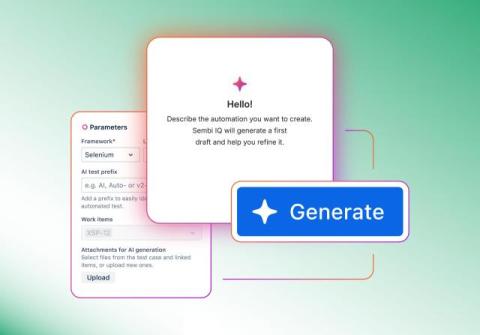
Automation has always been at the heart of efficient testing. It speeds up validation, eliminates repetitive steps, and helps teams catch issues earlier. However, even with great automation frameworks in place, one challenge persists: how to quickly and accurately convert manual tests into automated scripts? For most teams, this process still requires time, technical skill, and lots of rewriting.

How AI is Reshaping Test Management in Jira

If you’ve worked in QA long enough, you’ve seen how much testing has changed inside Jira. What started as a mix of spreadsheets, manual checklists, and endless review cycles has grown into fully integrated Test Management workflows. But even with automation, some challenges never went away. Writing test cases from requirements still takes time.

Smarter Test Coverage with AI Test Model Generation in Xray Enterprise

Quality assurance has always been about balance, ensuring every scenario is covered without drowning teams in complexity. Yet, as systems grow and requirements multiply, keeping up with coverage demands has become one of the hardest parts of modern QA. That’s where AI-powered test model generation steps in, not to take over, but to amplify how testers design, visualize, and expand coverage.

Accelerating QA With Xray's AI Test Case Generation

Software teams are shipping faster than ever — but testing still moves at human speed. Agile and DevOps have redefined delivery cycles, yet QA teams are often left struggling to keep up. Between evolving requirements, multiple environments, and constant regression demands, testers are expected to do more with less. One of the biggest bottlenecks? Test case design. Creating test cases manually is slow, repetitive, and prone to oversight.

Ensuring ethical AI use in QA: guidelines for responsible testing

Artificial Intelligence (AI) is reshaping Quality Assurance (QA) by accelerating testing, improving accuracy, and uncovering insights that once required hours of manual analysis. Yet, with great capability comes great responsibility. As AI begins to influence how tests are designed, executed, and interpreted, ensuring that it’s used ethically has never been more important. Responsible AI in QA isn’t only about compliance — it’s about trust.

Using Atlassian Rovo and Xray - The future of AI-Powered Test Management

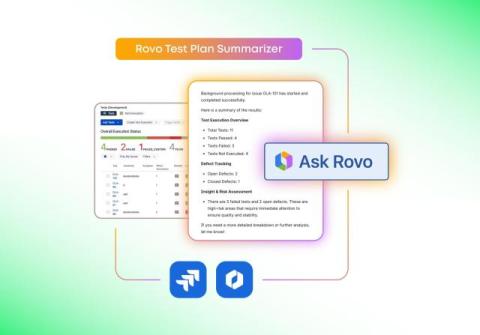
Atlassian Rovo is the latest evolution of AI-powered knowledge discovery and workflow assistance, built by Atlassian to help teams turn scattered information into meaningful actions. Rovo works on three core dimensions: Rovo is available in all Atlassian products by default. Users have multiple methods to engage with the AI, each offering different levels of complexity and interaction.

Xray Enterprise: Features, Benefits, and Why It's Now a Standalone App

Software testing at scale comes with unique challenges. Large organizations manage thousands of test cases across multiple projects, often under strict compliance standards and within fast-moving CI/CD pipelines. Until recently, Xray Enterprise existed as an add-on to the main Xray Test Management for Jira app, requiring customers to install and manage both solutions. This created confusion around licensing and setup, and made it harder for teams to understand what they were really getting.

Xray Enterprise: Features, Benefits, and Why It's Now an Independent App

Software testing at scale comes with unique challenges. Large organizations manage thousands of test cases across multiple projects, often under strict compliance standards and within fast-moving CI/CD pipelines. Until recently, Xray Enterprise existed as an add-on to the main Xray Test Management for Jira app, requiring customers to install and manage both solutions. This created confusion around licensing and setup, and made it harder for teams to understand what they were really getting.