Systems | Development | Analytics | API | Testing

How to Update Node.js Versions on Windows

Updating Node.js on Windows can be as simple as installing a new version—but a safe Node.js upgrade is more than changing the number returned by node -v. Prefer to watch the tutorial? Watch the full video on YouTube → A new major version can change the V8 engine, npm, OpenSSL, runtime APIs, native addon compatibility, dependency requirements, and application behavior.

Can AI Agents Safely Debug Production Node.js?

AI agents are getting remarkably good at fixing code. Give an agent a well-defined performance problem, enough runtime data, and access to the relevant codebase, and it can often trace the evidence back to a function, suggest an optimization, validate the change, and produce a useful patch. That workflow is no longer particularly difficult to imagine. In some cases, it is already practical. Production debugging, however, has never been only about fixing the code directly in front of you.

Correct Code, Wrong Baseline: The Hidden Security Risk of AI-Assisted Node.js Development

AI coding tools are becoming increasingly capable of writing software that compiles, passes tests, and solves real engineering problems. But generating working code is only part of what these systems now do. When an AI assistant creates a Node.js project, it may also influence decisions about: Those decisions can survive much longer than the generated code itself.

N|Solid Downloads Surged 98% in August 2026 - What It Says About Node.js Runtime Adoption

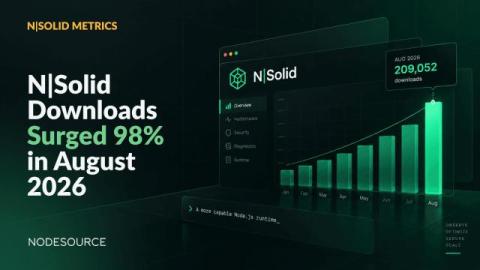
N|Solid Runtime has been downloaded more than 1.15 million times in 2026, bringing total downloads to more than 2.4 million. In August alone, download activity increased from 105,619 to 209,052, a 98% month-over-month increase.

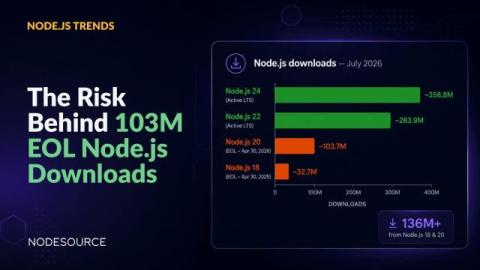
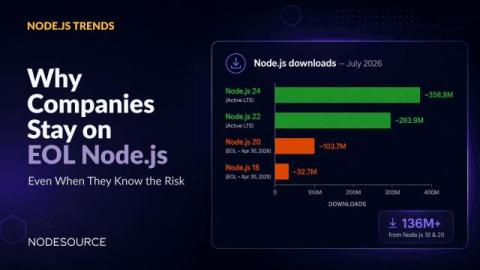
The Risk Behind 103M EOL Node.js Downloads

Legacy Node.js is rarely an awareness problem. It is a risk, cost, and uncertainty problem. Last week, we looked at a striking signal in the official Node.js download data in Node.js Downloads Surge in 2026 as Node.js 24 Takes the Lead. Node.js 24 had become the most downloaded Node.js release, a strong indication that modernization across the ecosystem is accelerating. But something else stood out.

Why Companies Stay on EOL Node.js - Even When They Know the Risk

Legacy Node.js is rarely an awareness problem. It is a risk, cost, and uncertainty problem. Last week, we looked at a striking signal in the official Node.js download data in Node.js Downloads Surge in 2026 as Node.js 24 Takes the Lead. Node.js 24 had become the most downloaded Node.js release, a strong indication that modernization across the ecosystem is accelerating. But something else stood out.

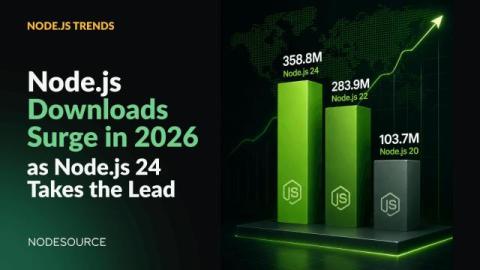
Node.js Downloads Surge in 2026 as Node.js 24 Takes the Lead

2026 is shaping up to be a remarkable year for Node.js download activity. Through July, downloads recorded through the official Node.js distribution infrastructure have already surpassed the total recorded during all of 2025: 4.61 billion downloads in the first seven months of 2026, compared with 4.48 billion across the entire previous year. That puts 2026 roughly 128 million downloads ahead of the 2025 total, with five months still left in the year. Figure 1.

Node.js Upgrade: 5 Things That Can Break Before You Migrate

Updating Node.js can be as simple as installing a new version. But a safe Node.js upgrade is more than changing the number returned by node -v. A major release can affect dependencies, native addons, Node.js APIs, OpenSSL, build environments, and runtime behavior. Before changing the runtime, the first question should be.

npm v12 Blocks Install Scripts. So Why Aren't You Safe Yet?

When npm announced that version 12 would require developers to explicitly approve install scripts, the reaction across the community was almost universally positive. For years, security researchers had warned that package installation had become one of the weakest links in the JavaScript supply chain. Every npm install represented an opportunity for third-party code to execute automatically, often before developers had even looked at the source they were downloading.

Owning the Agentic SDLC: How NodeSource Reclaimed Control of AI Development

TL;DR: When AI-assisted development moved from autocomplete to agentic workflows, the bottleneck for our engineering velocity stopped being the model and started being the vendor. Owning our own orchestration layer, running the same upstream agent stack across multiple developer surfaces, wrapping every change in a version-controlled spec, and treating the agent calls themselves as first-class telemetry is what made spec-driven development practical for us at NodeSource.