Systems | Development | Analytics | API | Testing

3 Ways to Send Emails with Ruby

For many developers, Ruby on Rails framework not only allows them to build web applications, websites, and efficient database solutions, but it can help them optimize mailing operations. You can easily use Ruby on Rails mailer, an automatic tool to build transactional messages of any kind, and make proper authentication. In this article, we review three main ways to work with email sending in RoR, which include some Ruby gems, the Net::SMTP class, and the facilities of the Socket system.

How to Test Ruby Code That Depends on External APIs

Few things are more frustrating than slow, flaky test suites. You're ready to deploy, wait 20 minutes for CI to run, only to find that a test failure in code you've never touched is blocking you. You dig into the source and find the problem: an external API call. It works (slowly) most of the time. But sometimes the network glitches and it fails. What do you do? In this article, José Manuel shows us several techniques for removing external API dependencies from our tests.

Troubleshooting Encoding Errors in Ruby

Text encoding is fundamental to programming. Web sites, user data, and even the code we write are all text. When encoding breaks, it can feel like the floor is falling out from under you. You're cast into a dimension of bitmasks and codepoints. Logs and backtraces are useless. You consider trading your text editor for a hex editor. But there's hope! In this article, Jose Manuél will show us how encoding errors happen, how they're expressed in Ruby, and how to troubleshoot them.

A Tour of 7 Popular Ruby Frameworks in 2020

Ruby may be over 25 years old, but it remains popular in the software community for its focus on programmer happiness. Building software with Ruby often involves leveraging one or more popular frameworks for the purpose of increasing productivity by relying on existing solutions to common problems. Ruby frameworks generally fall into two categories: web-facing frameworks and background job frameworks.

Ruby Garbage Collection: More Exciting than it Sounds

Running software uses computer memory for data structures and executable operations. How this memory is accessed and managed depends on the operating system and the programming language. Many modern programming languages manage memory for you, and Ruby is no different. Ruby manages memory usage using a garbage collector (also called gc). In this post, we’ll examine what you, a Ruby developer, need to know about Ruby’s gc. Use the links below to skip ahead in the tutorial.

How to Use Lambdas in Ruby

Lambdas are a powerful feature of the Ruby language. They allow you to wrap logic and data into a portable package. In this post, we’ll cover how and when to use lambdas. You'll also learn about the difference between lambdas and Procs, and the performance profile of lambda functions. The code examples have been tested with 2.6 and 2.7 and should work with most modern Rubys.

Predicting the Future With Linear Regression in Ruby

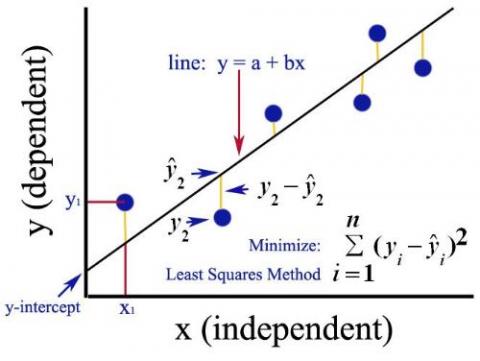
The world is full of linear relationships. When one apple costs $1 and two apples cost $2, it's easy to figure out the price of any number of apples. But what happens when you have 100s of data points? What if your data source is noisy? That's when it's helpful to use a technique called linear regression. In this article Julie Kent shows us how linear regression works, and walks through a practical example in Ruby.

Changing the Approach to Debugging in Ruby with TracePoint

Ruby has always been known for the productivity it brings to its developers. Alongside features such as elegant syntax, rich meta-programming support, etc. that make you productive when writing code, it also has another secret weapon called TracePoint that can help you “debug” faster. In this post, I’ll use a simple example to show you 2 interesting facts I found out about debugging.

Decoupling Ruby: Delegation vs Dependency Injection

We've all worked with tightly-coupled code. If a butterfly flaps its wings in China, the unit tests break. Maintaining a system like this is...unpleasant. In this article, Jonathan Miles dives into the origins of tight-coupling. He demonstrates how you can use dependency injection (DI) to decouple code. Then he introduces a novel decoupling technique based on delegation that can be useful when DI is not an option.