Systems | Development | Analytics | API | Testing

"Let's Connect Async:" How To Build a Better Asynchronous Culture

You may have noticed that the phrase “Let’s take that offline” is gradually being replaced by “Let’s connect async.” Both expressions are a type of white flag, surrendering to the reality that a tricky issue needs to be resolved in a private conversation rather than in a group call. It’s often music to the attendees’ ears because it means the meeting is almost over.

The Future of AI Agents is Event-Driven

This article originally appeared on BigDataWire on Feb. 26, 2025. Artificial intelligence (AI) agents are set to transform enterprise operations with autonomous problem-solving, adaptive workflows, and scalability. But the real challenge isn’t building better models. Agents need access to data and tools as well as the ability to share information across systems, with their outputs available for use by multiple services—including other agents.

How to Build a Multi-Agent Orchestrator Using Apache Flink and Apache Kafka

Just as some problems are too big for one person to solve, some tasks are too complex for a single artificial intelligence (AI) agent to handle. Instead, the best approach is to decompose problems into smaller, specialized units so that multiple agents can work together as a team. This is the foundation of a multi-agent system—networks of agents, each with a specific role, collaborating to solve larger problems. When building a multi-agent system, you need a way to coordinate how agents interact.

Why Google's Agent2Agent Protocol Needs Apache Kafka

Not long ago, I wrote about a growing problem in enterprise AI: agents that don’t talk to each other. You’ve got a customer relationship management (CRM) agent doing its thing, a data warehouse agent crunching numbers, a knowledge bot quietly surfacing documents—but none of them are sharing what they know. Instead of a smart, connected ecosystem, we’re stuck with isolated pockets of intelligence: an island of agents.

Building Streaming Data Pipelines, Part 1: Data Exploration With Tableflow

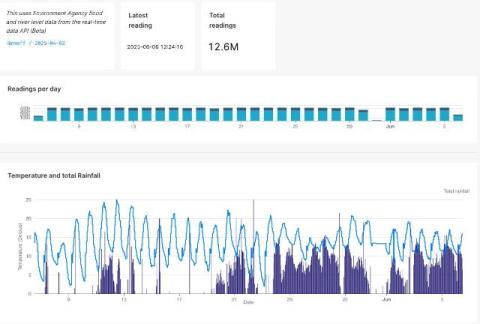
Whether we like it or not, when it comes to building data pipelines, the ETL (or ELT; choose your poison) process is never as simple as we hoped. Unlike the beautifully simple worlds of AdventureWorks, Pagila, Sakila, and others, real-world data is never quite what it claims to be. In the best-case scenario, we end up with the odd NULL where it shouldn’t be or a dodgy reading from a sensor that screws up the axes on a chart.

From Reactive to Orchestrated: Building Real-Time Multi-Agent AI With Confluent

We're entering a new era of artificial intelligence (AI), where intelligence isn't just reactive; it's orchestrated. At Agent Taskflow, we're pioneering a new class of systems: multi-agent orchestration platforms. These systems empower teams of AI agents to coordinate, think, reason, and act in concert—just like human teams. But building these systems at scale requires something most AI platforms overlook: real-time, observable, fault-tolerant communication.

3 Strategies for Achieving Data Efficiency in Modern Organizations

In today's digital age, organizations are experiencing an unprecedented increase in data generation. In 2010, the world stored about two zettabytes of data, and this number is expected to hit 175ZB in 2025. This immense growth underscores the importance of data efficiency in modern organizations. Data efficiency ensures that data is stored, processed, optimized for performance, and managed—cost effectively.