Systems | Development | Analytics | API | Testing

The (not so) hidden cost of custom logging

Custom logging can technically capture everything, but in practice, it rarely does. Coverage degrades over time, external APIs get forgotten, and during incidents, you're left asking "did anyone log this?" instead of debugging. Automatic capture solves this. If you're a technical leader, there's a good chance your team is spending significant time on custom logging… and you might not even realize how much it's costing you in productivity and incomplete debugging data.

Why observability tools are missing critical debugging data (no matter how you sample)

There's a common belief in the observability space: if you just collect more data, you'll have what you need to debug any issue. The reality is more frustrating: even with 100% unsampled observability, you're still missing critical debugging data. There's a common belief in the observability space: if you just collect more data, you'll have what you need to debug any issue. The reality is more frustrating: even with 100% unsampled observability, you're still missing critical debugging data.

Why AI can't debug your API integrations (yet)

The next generation of debugging doesn’t depend exclusively on the quality of AI models, but it’s heavily dependent on feeding AI tools the context they need to be useful. AI coding assistants have transformed how we write code. For example, GitHub Copilot, Cursor, and ChatGPT can generate Stripe integration boilerplate in seconds. They'll scaffold your payment flow, suggest error handling patterns, and even write unit tests.

Multiplayer 2025: year in review

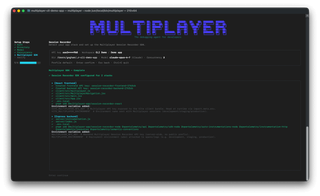
In 2025 we focused on a simple but ambitious goal: making debugging faster, less fragmented and less manual. Check out all our releases to make that possible. 2025 was a defining year for Multiplayer. We focused on a simple but ambitious goal: making debugging faster, less fragmented and less manual. That meant meeting developers where they were already working and capturing the right context at the right time.

Multiplayer sketches: annotating session recordings for better collaboration

Annotations are a way to draw, write, and comment directly on top of full-stack session recordings. Now, instead of sketching ideas in isolation, teams can mark up actual user sessions, highlighting specific UI elements, API calls, and backend traces that need attention. Whiteboarding tools are indispensable in system design for visually conveying concepts, ideas, and rough plans. They tap into our natural preference for visual learning.

Six best practices for backend design in distributed system

Most modern software systems are distributed systems, but designing a distributed system isn’t easy. Here are six best practices to get you started. Most modern software systems are distributed systems. Designing and maintaining a distributed system, however, isn't easy. There are so many areas to master: communication, security, reliability, concurrency, and, crucially, observability and debugging.

High user satisfaction scores aren't worth a burned-out team

Multiplayer transforms the chaos of support tickets, eliminating manual work, sloppy hand-offs, and grepping through log files. End-user support has always been messy. Manual steps, tool-switching, and scattered communication turn what should be a simple fix into a marathon of frustration. Tickets feel like scavenger hunts: everyone’s searching for details, logs, screenshots, or that missing repro step. Developers are left waiting on context that never arrives.

Collect what matters: how Multiplayer stays lightweight without losing context

Full stack session recordings capture everything that matters without impacting your application performance or adding unnecessary overhead. Traditional continuous recording tools and APM platforms take the same brute-force approach: capture everything. Every session, every log, every metric, whether you need it or not. That flood of data creates its own problems: high storage costs, constant filtering and sampling, and hours wasted sifting for the signal inside the noise.