Systems | Development | Analytics | API | Testing

We Do Advising Differently: Our 10-Step Approach to Advisory Services

As I recently transitioned to Qlik's Professional Services team to lead Advisory Services, I embraced a clear mission: to engage in high-level discussions with business stakeholders that drive faster value and enhance your return on investment (ROI). By employing a structured 10-step approach grounded in a repeatable agile methodology, we are actively enabling out customers to overcome challenges and achieve their strategic objectives.
What is the Parquet File Format? Use Cases & Benefits

Apache Parquet has become the de-facto standard for storing data used in analytics workloads, and has seen very broad adoption as a free and open-source storage format. When used as the underlying storage layer for Apache Iceberg, Parquet is also a foundational building block in modern lakehouse architectures, which enable warehouse-like capabilities on cost effective object storage. Let’s take a closer look at what Parquet actually is, and why it matters for big data storage and analytics.

Introducing the Qlik Analytics Migration Tool - Quick Demo

Migrating to Qlik Cloud Analytics The Qlik Cloud migration process lets your organization adopt Qlik Cloud at your own pace. When migrating from QlikView or Qlik Sense Client-Managed, your assets are reusable, and you can continue to build on existing investments without starting from scratch. In some cases, you can use the opportunity of having access to a modern platform to look at your existing assets with a fresh set of eyes and decide how you want to adopt them to make the best use of new capabilities and possibilities in Qlik Cloud.

How Qlik Is Powering Bystronic's GenAI Transformation

Some data problems are universal — like dealing with unstructured data. At Bystronic, a global leader in sheet metal processing, we have mountains of it. From technical documentation to sales decks, HR policies, and IT knowledge bases, data is scattered across folders, servers, and systems. Industry research shows that 80% of enterprise data is unstructured, meaning it’s often invisible to the teams that need it most. As a result, up to 68% of that data goes unused. The impact is real.

From Static to Adaptive: Why Agentic AI is the Future of Enterprise Software

Over the first half of this year, I’ve had the unique privilege of traveling across EMEA, APAC, and the US, leading our global Agentic AI workshop series. From London to Singapore to Mumbai, I’ve had a front-row seat to how enterprises—across industries and continents—are rethinking what software can be in an age of intelligent systems. And I can confidently say: the era of Agentic AI has arrived.

Part 2 - "Hello World" - Integrate Qlik Automate with Qlik Cloud Analytics

"Hello, World" — the training wheels of learning. It’s the simplest proof that you’ve taken your first step—and from there, it gets addictive fast. Now, speaking of first steps... Part 2 of "Taking Action on Your Data" is live! In this video, we dive into how to connect your Qlik Analytics Apps to a Qlik Automate workflow—an easy win to start taking action on your data.

Always Obsessed, Always Brilliant, Always Qlik

At Qlik, we’re incredibly proud of our Luminary and Partner Ambassador communities. They’re more than customers, more than partners, they’re an integral part of who we are. For over a decade, hundreds of data leaders across industries and continents have proudly called themselves Qlik Luminaries and Partner Ambassadors. With new people joining every year, this global network keeps growing, but one thing never changes: these folks bring the spark.

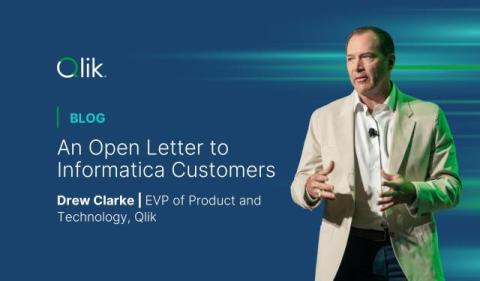
An Open Letter to Informatica Customers

Over the past few weeks, I’ve spoken with a number of leaders who are digesting Salesforce’s move to acquire Informatica and what it will mean for them. If you are doing the same, I get it. Informatica has been an established company but in recent years pushing customers to move to their cloud only platform, will this accelerate this in particular with their recent PowerCenter end-of-support news?

#shorts - The Straight Table Just Leveled Up

Time for a new - The new Straight table in Qlik Cloud Analytics has officially taken center stage. With more styling options, flexible layouts, and enhanced interactivity, it’s a serious upgrade for your dashboards. If you haven’t tried it yet, now’s the time to see what’s new and start planning your move. Watch the video to get a quick look!

Top 10 Reasons to Move to Qlik Cloud

If you're still using Qlik Sense on Windows, it's time to consider a smarter, more powerful alternative. Qlik Cloud Analytics is purpose-built for modern data needs, offering a next-generation platform that combines AI-driven insights, automation, and enterprise-grade security—all without the overhead of traditional infrastructure. In this video, we’ll explore the top 10 reasons why migrating to Qlik Cloud is not just an upgrade, but a strategic move to accelerate innovation, enhance collaboration, and reduce costs across your organization.

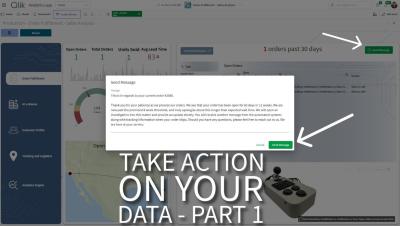
Part 1 - Integrate Qlik Automate with Qlik Cloud Analytics - Taking Action on your Findings

This video first demonstrates what is possible when integrating Qlik Automate with Qlik Cloud Analytics. Part 1 - demonstrates a more advanced example using an extension that calls a Qlik Automate Workflow to send a dynamic email message to the selected customer about their order. Part 2 - The Basics - in progress.

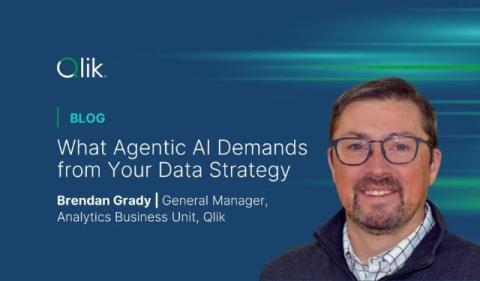
What Agentic AI Demands from Your Data Strategy

If you’re leading a data, analytics, or AI initiative right now, you know the pressure. AI is no longer a future project - it’s a business imperative. Executives want results, boards want differentiation, and the window to deliver is closing fast. That’s why Salesforce’s intent to acquire Informatica should raise serious questions for data leaders. Not just because of what it means for Informatica, but for what it could mean for your AI roadmap.

Don't Just Hope Your Data Is AI-Ready - Know It

As enterprises double down on AI, there’s a hard truth many leaders are starting to face — they’ve invested in the promise of AI, but they can’t always trust the data behind the predictions. Whether you're training a model, building RAG pipelines, or scaling intelligent automation, AI outcomes are only as reliable as the data feeding them. Yet most organizations still can’t answer a critical question with confidence: Is our data truly AI-ready?