




Radnor, PA, USA
1993
  |  By Josh Good
One of the things I have learned spending time with enterprise data and analytics teams is that insight without proximity to action is only half the job. You can build a beautiful dashboard, surface a critical pattern, or flag a risk in real time, and still have the insight die on a slide before it ever changes what happens next. The gap between "we know this" and "we did something about it" is one of the most persistent problems in enterprise software.
  |  By Sam Pierson
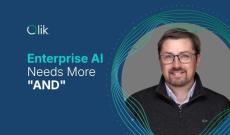
It’s clear that we are in the early innings of an unparalleled shift in how knowledge work gets done across the board. If you pull forward the changes we’ve already seen from teams who have adopted agents in software development and apply them to broader categories of knowledge work, you can see how these patterns will lead to a fundamental rethinking of the relationship and responsibilities between humans, software, and data.
  |  By Matt Hayes
The appetite for real-time data continues to grow. Across industries, the ability to act on data as it arrives is increasingly central to how leading organizations compete, from IoT and fraud detection to event driven analytics and AI agent architectures. Streaming data is no longer a specialist workload. It is becoming a core requirement. I am excited to announce that streaming ingestion is generally available in Qlik Open Lakehouse, part of Qlik Talend Cloud.
  |  By Matt Hayes
I spend a lot of time with customers and partners, and the pattern is consistent. Everyone wants the benefits of AI, faster decisions, more automation, better productivity. But the thing that slows them down is not the model. It’s the data underneath it. Not just any data, but trusted data to drive trustworthy business outcomes. As soon as you move from AI that explains to AI that influences workflows, ambiguity stops being an inconvenience. It becomes a liability.
  |  By Sam Pierson
Just a month into the year, and a few weeks since the launch of Qlik Trends 2026, we’ve already seen just how fast the AI landscape can evolve. The emergence of Claude Cowork and Moltbook reflect the two ends of the spectrum when it comes to agent collaboration. After taking a breath to digest Dan Sommer’s fascinating webinar – check it out if you haven’t already – I’ve been reflecting on which trends are set to make the most impact this year.
  |  By Andrew Churchill
Qlik’s lessons learned from developing systems in a locked-down military-grade data zone at the 2025 NDIA Hackathon In early September, developers from across the country arrive at George Mason University’s Fuse facility with laptops, notebooks, and one big unknown: how do you build a defense-grade analytics solution in just 72 hours in a simulated air-gap environment.
  |  By Matt Hayes
Gartner has named Qlik a Leader in the 2026 Gartner Magic Quadrant for Augmented Data Quality Solutions, our seventh time being recognized as a Leader in this Magic Quadrant. As AI becomes operational, data quality matters more than ever. We’re past the phase where AI just produces outputs. AI is starting to initiate, route, and act across real workflows.
  |  By Brendan Grady
For decades, organizations have worked to use data to make better decisions and drive better outcomes. Data has become the lifeblood of the business, and AI now has the power to unlock it in new ways. The paradigm is shifting, from dashboards and visual interfaces to AI driven experiences. But too much data is still stuck in silos, incomplete, and inaccurate. Many analytics workflows remain manual, which slows time to value, limits insight quality, and raises cost.
  |  By Andrew Churchill & Dave Thomas
You’re in the cockpit of a small plane, cruising a few thousand feet in the air. Then, out of nowhere, the airspeed dips and an alarm rings out. The nose drops, and you're in a full-out stall by the time instinct kicks in. You pull back on the yoke, trying to steady the plane, stop the descent and patch things up midair. But that’s exactly the move that seals your fate, sending you into a deeper spiral.
  |  By Mike Capone
AI is not a pilot anymore. In 2026, it is the operating agenda. And if you’re leading a business or an IT project right now, you’re probably getting the same two questions. First: “When do we see real outcomes?” Second: “Can we trust what we’re getting?” Those are fair questions. They’re the right questions. Because the truth is, the model is rarely the problem. The hard part is everything around it. The data. The access. The silos. The controls.
  |  By Qlik
Insights to actions to outcomes Qlik Sense’s interactive user experience allows us to dynamically interact with apps to find hidden patterns and obtain meaningful insights. Qlik Automate turns those insights into actions, directly from within Qlik. In Qlik Automate you can build simple workflows to directly integrate with your 3rd party business applications or databases. This leads to meaningful and measurable outcomes.
  |  By Qlik
Banks and credit unions face mounting pressure to modernize operations, elevate member experiences, and keep pace with regulatory demands. Discover how banks are delivering an agile data strategy using Qlik and Snowflake and improve member service, streamline operations, and manage compliance changes. Download our joint ebook and learn:→ How to build a future-ready data architecture→ Ways to drive accuracy and faster decision-making→ How to deliver timely, personalized member experiences→ Practical strategies you can implement right away.
  |  By Qlik
This week we are bringing you the QlikView to Qlik Sense Converter tool. The QlikView to Qlik Sense converter tool is a breakthrough new offering from Qlik — it's the first tool to deliver true 1-to-1 automated conversion of QlikView application UIs directly into Qlik Cloud Analytics.
  |  By Qlik
So......who wants a 1:1 conversion tool to convert hashtag#QlikView apps to Qlik Cloud Analytics apps (Qlik Sense)? Here is a teaser - Stay tuned for more information. Speacial thanks to Daniel Pilla Adam Jacobs Savraj Rakkar - the conversion tool dream team! Designed for Qlik customers, partners, developers, and enterprise teams, it removes the biggest barrier to cloud migration: manually rebuilding dashboards. Instead of spending months recreating sheets, layouts, and expressions, this tool converts everything automatically — preserving the look, feel, and logic users already know.
  |  By Qlik
In Part 3 of this series, we discuss creating a dataset and have a first look at its governance and metatdata layers starting with the Dataset Overview. Stay tuned for more in the series as we continue building powerful Qlik data experiences!
  |  By Qlik
Are you using datasets in Qlik Cloud Analytics yet? Before jumping into building a Data Product, there’s one foundational piece you can’t afford to overlook: the dataset. It’s more than just a data asset—it’s the backbone of everything you create in hashtag#Qlik. I just dropped a new video breaking down what a Qlik dataset really is, why it matters, and how to use it the right way before moving on to more advanced builds.
  |  By Qlik
Discovery Agent brings automated anomaly detection directly into Qlik Cloud. It monitors the metrics you care about, identifies meaningful changes, and delivers contextual insights right where you work. Today it’s a monitoring capability inside Qlik Cloud. Over time, it becomes one of the agentic services supporting autonomous workflows across the platform.
  |  By Qlik
Quickly see how to use Qlik Talend Data Integration to create a Replicate job to move data from YouTube Analytics to your analytics data store.
  |  By Qlik
Discover how Qlik Answers transforms your data into clear, AI-powered insights in seconds. Ask questions in natural language and get accurate, contextual answers instantly.
  |  By Qlik
You have access to more data than ever before. Are you truly using it to your advantage? And where are you most likely to get results when you do? Businesses around the world are using data to transform every aspect of operations - but some use cases are more powerful, and more profitable, than others.
  |  By Qlik
Collecting "big data" was once big news. But companies are realizing that big data projects aren't delivering their expected ROI because building a repository is just part of the equation. Read this eBook to see how Qlik helps organizations like biopharmaceutical company Shire plc, Texas Children's Hospital, online gaming developer King.com, and more gain big insights from big data-for big impact.
  |  By Qlik
Data has always held tremendous value. But for decades, most of that value has been left on the table. Complexity, technical limits, bottlenecks, and skill gaps have kept insights hidden and analytics out of the hands of business users. With the 3rd generation of BI, that's about to change.
  |  By Qlik
Businesses everywhere understand a basic truth in today's economy: No enterprise can lead - or even survive - without analytics. But not all analytics platforms are created equal. Choosing the right one is essential to making discoveries that have the power to drive real change. But too often the evaluation is based on narrowly-focused criteria around just features and functions, limiting the impact analytics can bring to your organization.
  |  By Qlik
Qlik Core is a new product offering for developers wanting to create and deploy analytic data-driven cloud applications at scale. Qlik Core is a developer's platform for building, deploying, extending data driven analytical applications at massive scale within any environment resulting in better user adoption, engagement and customer satisfaction.
  |  By Qlik
Data-driven retailers are using visual analytics to address the 3 major shifts surrounding omni-channel retail. Three major shifts have shaken the very foundations of retail: Consumers are empowered and more demanding; supply chains must accommodate omni-channel shopping and services; and the role of stores goes far beyond converting show-roomers.
  |  By Qlik
There continues to be an incredible amount of interest in the topic of Big Data. It has transcended from a trend to being simply part of the current IT lexicon. For some organizations, its use has already become an operational reality; providing unprecedented ability to store and analyze large volumes of disparate data that are critical to the organization's competitive success.
  |  By Qlik
Every action a healthcare provider, payer, administrator, or patient takes creates new data. The challenge in healthcare is no longer finding data - but making it usable and actionable. This requires knowing what to do with the data you have, and understanding the relationships that exist within it.
  |  By Qlik
Join Qlik's Global Market Intelligence lead and former Gartner analyst Dan Sommer to learn why 2018 is the year for the "de-silofication" of data.
  |  By Qlik
Whether you are a product manager looking to get to market fast with powerful and intuitive visual analytics for your customers or a business owner looking to differentiate your solution to gain a competitive advantage we hope you will find this paper useful.

Qlik® delivers intuitive platform solutions for self-service data visualization, guided analytics applications, embedded analytics and reporting to approximately 48,000 customers worldwide. Companies of all sizes, across all industries and geographies, use Qlik solutions to visualize and explore information, generate insight and make better decisions.

QlikView is a proven, market-leading data discovery product that offers rapidly developed, highly interactive guided analytics applications and dashboards, purpose built for business challenges. QlikView allows users to rapidly build and deploy analytic apps without the need for professional development skills, driving faster response to changing business requirements, shorter time to value, and more insight across the organization.

Qlik Sense gives you data superpowers. Easily combine all your data sources, no matter how large, into a single view. Qlik’s Associative engine indexes every possible relationship in your data so you can gain immediate insights and explore in any direction your intuition takes you. Unlike query-based tools, there’s no pre-aggregated data and predefined queries to hold you back. That means you can ask new questions and create analytics without having to build new queries or wait for the experts.