Systems | Development | Analytics | API | Testing

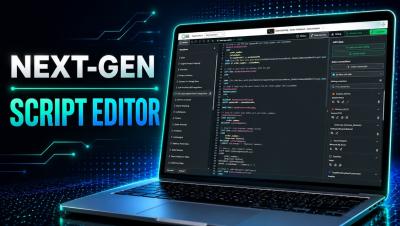
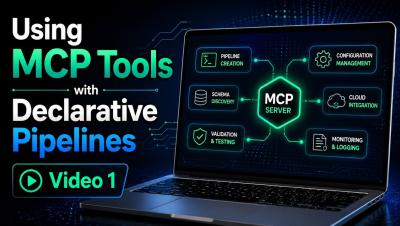
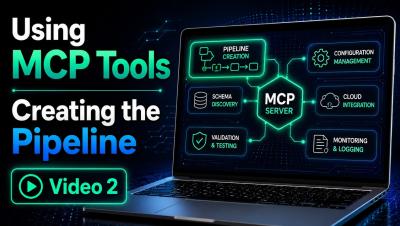
Qlik Declarative Pipelines with AI and VS Code

Managing your data pipelines shouldn't mean leaving the tools you already work in. In this video, Qlik Solution Architect, Joe Easley, shows how Qlik's declarative pipelines let you build and manage your integration ecosystem right alongside your own LLM and IDE — no switching platforms, no extra UI to learn. The benefit: faster iteration, fewer handoffs, and pipelines that live where your code already does.

Qlik Answers and the Automate Agent - Using Inputs - part 4

In this video, Mike Tarallo shows you a simple Qlik Automate workflow with defined inputs, then uses the Automate Agent in Qlik Answers to pass those inputs directly into the automation. This demonstrates how users can move beyond simply asking questions and begin taking action based on their data—all from a conversational experience. You’ll see how Qlik Answers and Qlik Automate work together to turn natural-language requests into real, automated workflows with minimal setup.

Unlocking the Power of Trusted Data Intelligence: Amazon Quick Meets Qlik MCP Server

When was the last time you made a major business decision and were completely certain the data behind it was accurate, complete, and trusted? For most organizations, that certainty is less common than it should be. Qlik and Amazon Quick together solve one of the biggest obstacles to AI adoption: knowing whether you can trust the output.

Qlik Answers and the Automate Agent - Hello World - Part 3

In Part 3, we keep things simple with a “Hello World” example that shows how to create a basic Qlik Automate workflow and trigger it directly from Qlik Answers. You’ll see how an insight can quickly become an action—all within Qlik, without a complicated setup. Check out Parts 1 and 2 for the full series.

Beyond the Budget: The AI Decisions That Only Humans Can Make

Earlier this month I spent time with a group of senior executives discussing the economics of AI: what it actually costs, where the value is and is not materialising, and what the organisations that are getting returns are doing differently from the ones that are not. That conversation encapsulates why this series is called Beyond the Budget. Not because cost does not matter. It does. But because the budget is where the consequences show up.

The AI Opportunity Gap Is Real. It's Growing. And It Is Not About Access to Tools.

In the first part of this series, I argued that discernment, the ability to recognise when an AI-generated answer is wrong, is becoming one of the most valuable capabilities inside an organisation. The question this piece addresses is simpler and harder: who is actually being given the opportunity to develop it? The AI opportunity gap is real. It is not primarily a gap in access to tools. It is a gap in permission. And I believe that gap starts earlier than most leaders realise, often in school.

Why It Matters: Data and AI Literacy Is Now a Business-Critical Skill

One thing has become increasingly clear to me: the businesses that thrive in the AI era won't be the ones with the most data, they'll be the ones where every employee knows how to use it. The World Economic Forum's 2025 Future of Jobs Report names analytical thinking as the top core skill companies need today, and a 2024 Gartner survey found poor data literacy to be one of the top five obstacles to analytics success.

The Skill AI Can't Generate: Why Discernment Is the New Data Literacy

For more than a decade, I have argued that the most valuable skill in a data-driven organisation is not access to information. It is the judgment to know when that information is wrong. AI has made that skill more important, not less. When I wrote about AI literacy in 2023, the pushback I heard most often was that the technology was not yet good enough for the question to matter. Now it is. AI can generate answers, summaries, recommendations, code, analysis, and increasingly, actions.