Systems | Development | Analytics | API | Testing

Choosing the Right Data Protection Approach for Your Non-Prod Environments | Full Webinar

Dive into the pros and cons of data masking and synthetic data generation, with real-world examples and practical use cases. In this webinar, Perforce Delphix experts Ilker Taskaya and Hims Pawar show you how to select the right approach based on your specific needs, compliance requirements, and data accessibility challenges.

Create Without Limits with Perforce P4 Version Control

From semiconductor fabs to AAA game studios, Perforce P4 is the version control platform behind the world's most ambitious creative and engineering work. Global industry leaders, including NVIDIA, Samsung, DNEG, Nickelodeon, Sandfall Interactive, Warhorse, and BMW use Perforce P4 to collaborate without boundaries, protect critical IP, and build things the rest of the world relies on. P4 is the version control foundation for.

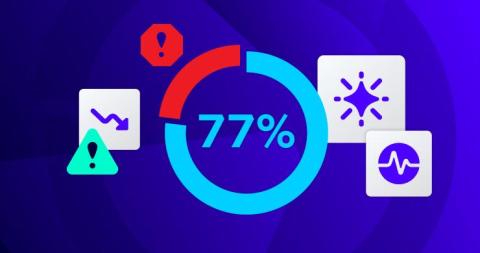
The Great Disconnect: Why 77% Confidence in AI Results Is a Major Business Risk

According to the Perforce 2026 State of DevOps report, 77% of organizations express high confidence in the outputs generated by their artificial intelligence systems. Yet, this widespread optimism masks a critical vulnerability. While executive confidence in AI results remains high, only 38% of organizations have embedded AI deeply across their delivery stages. Plus, only 39% maintain the fully automated audit trails required to verify these results.

GDPR vs EU Data Act: Key Differences

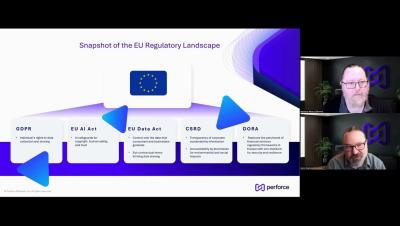
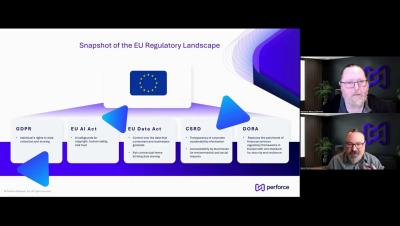
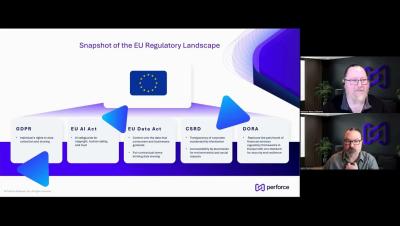
Find out the key differences between GDPR (focused on data privacy) and the EU Data Act (focused on data ownership and portability). In this clip from the OpenLogic webinar, "Navigating EU Compliance: Open Source Strategies for Digital Sovereignty and Resilience", Perforce CISO Aaron Kiemele explains that contract clauses locking data into proprietary silos are now hard to enforce, and businesses must have credible, tested plans to exit a software platform if data policy or residency requirements shift.

EU AI Act: What Businesses Need to Know

Get information about the practical compliance requirements of the EU AI Act, the first AI regulatory framework with real enforcement teeth. In this clip from OpenLogic's webinar "Navigating EU Compliance: Open Source Strategies for Digital Sovereignty and Resilience", Perforce CISO Aaron Kiemele walks through classifying AI systems by risk level, establishing human oversight and audit trails, and documenting training data provenance — while noting that these steps are straightforward but frequently overlooked by organizations.

DORA Compliance for Open Source Explained

DORA's most surprising requirement may be that financial services organizations are responsible for the security and resilience of every third-party vendor and open source dependency in their stack. If a library you depend on fails, that risk is yours to own. Learn more about DORA compliance and how to stay compliant in this clip from the OpenLogic webinar, "Navigating EU Compliance: Open Source Strategies for Digital Sovereignty and Resilience," which aired in February 2026.

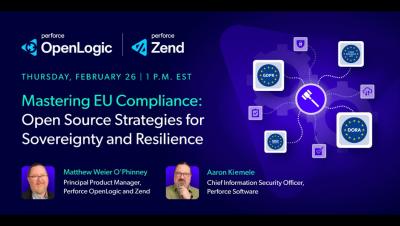
EU Compliance: Open Source Strategies for Sovereignty and Resilience

In today's geopolitical environment, asking 'are we compliant?' is no longer enough. The real question is whether your business can survive if the ground shifts beneath it — through trade wars, embargoes, or regulatory changes that threaten your software supply chain.

A Secure by Default Philosophy Guiding Perforce P4

Security expectations for version control infrastructure have evolved dramatically over the years. While Perforce P4 has always empowered administrators with deep configurability, the default configurations shipped with previous versions of P4 are no longer sufficient. With the upcoming P4 2026.1 (scheduled for availability in May), we are implementing a Secure by Default posture designed to enforce best practices when protecting the source code and binary assets stored in P4.

Why Rust Embedded Development Needs Powerful Static Analysis

For decades, software engineers have relied heavily on C and C++ to build embedded systems. These legacy languages offer the deep control and speed required for constrained environments, but they reveal gaps in memory management and concurrency. The Rust programming language has emerged as a solution.

How Redundant Data Storage May Be Hurting Both Your Bottom Line and the Environment

Unaccounted data copies within non-production environments can make enterprises vulnerable to cyber theft. Non-production environments — which are often less secure than production environments — are treasure troves for hackers seeking to steal customer data. How many copies of test data are currently floating around your organization’s non-production environments?

Be Ready for Your Next FTI Audit: Manage & Mask Your Sensitive Data

FTI audits are designed to ensure sensitive tax data is properly protected. But in modern enterprises, they’re about much more than passing inspections. Today, you need to manage FTI securely while still enabling fast, reliable access to data across DevOps, analytics, and increasingly, AI workflows. Treating FTI audits as part of a broader data strategy helps teams reduce risk without slowing innovation or creating bottlenecks.

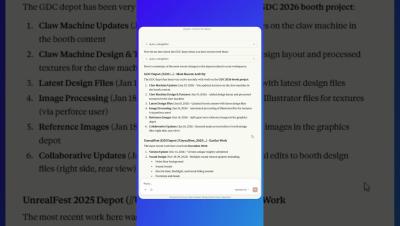
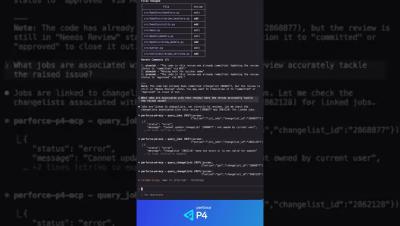
Use P4 MCP to ask code review questions | #perforce #codereview #mcp #p4

In this clip from LIMITLESS, our 2026 P4 Product Update, Patrycja (Trish) Tomiak-Gough, Chief Architect at Perforce, demonstrates how P4 MCP connects Claude with Perforce P4 Code Review to find a specific review, ask whether the change addresses a ticket, and a surprise trick question!

OpenLogic: Enterprise Support for Mission-Critical Open Source

For two decades, Perforce OpenLogic has delivered enterprise-grade open source technical support, LTS, and professional services including implementations and migrations. With more than 400 technologies covered, we help organizations achieve digital autonomy and avoid vendor lock-in by securely deploying OSS. If you're looking to reduce costs by getting off proprietary platforms, modernize legacy systems, or meet new compliance regulations, our experts can provide unbiased guidance.

The Real Cost of Software Defects: Customer Churn That Costs Businesses Millions of Dollars

Software defects don’t just drain budgets; they cost businesses customer loyalty. Poor software quality can lead to poor customer experience and drive customer churn, resulting in missed revenue and increased expenses. Learn how better processes, such as test data management, can reduce the cost of software defects and protect your business outcomes.

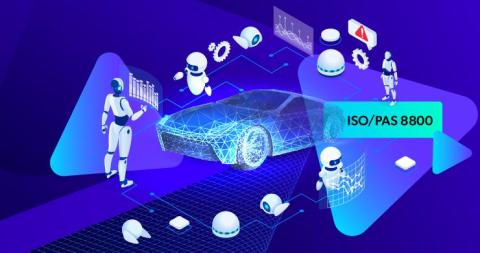
Understanding ISO/PAS 8800 for AI in Automotive Safety

With the rise of AI use in vehicle software development, concerns arise around its presence in safety-critical applications, especially when it comes to functional safety and regulatory compliance. ISO 26262, the essential standard for automotive development that requires processes for managing, designing, and verifying safety-critical systems, still applies. However, it can fall short when applied to AI models, which are inherently non-deterministic and continuously evolving.