Systems | Development | Analytics | API | Testing

Introducing the Bijira AI Gateway: Next-Gen AI-Driven API Management

The API ecosystem is rapidly expanding into the world of AI. Enterprises are increasingly integrating generative AI services like OpenAI, Claude, and AWS Bedrock into their workflows, but face challenges with secure, governed, and scalable integrations. That’s why Bijira, WSO2’s AI-native API management SaaS platform, introduces AI Gateway support. This is a purpose-built solution to create, expose, and manage AI service integrations as first-class APIs.

Introducing the New Call Management Feature in the WSO2 Support Portal

We're excited to announce an enhancement to the WSO2 Support Portal: our new Call Management feature! This update is designed to streamline how you request and manage calls for your support cases, making the process more efficient and transparent.

Demystifying CMS-0057-F: Compliance Made Seamless with WSO2

In this insightful webinar, our experts break down the complexities of CMS (Centers for Medicare & Medicaid Services) compliance, focusing on the latest regulatory updates and how organizations can ensure seamless alignment. Learn practical strategies for implementing CMS requirements, avoiding common pitfalls, and leveraging technology to stay ahead in a rapidly evolving regulatory landscape.

Real-World Security Considerations for MCP

Every new protocol introduces complexities—onboarding new tools and SDKs, adapting to new processes, evaluating security and performance implications, ensuring compatibility with existing systems, and overcoming the learning curve. So when a new protocol shows up, the first question to ask is: is it really necessary? Let’s ask that about MCP—what problem is it trying to solve?

Seamless Collaboration: Uniting Business and IT through Low-Code and Pro-Code Parity

Historically, software development clearly separated business and IT roles. Business teams defined the business requirements, while IT teams built digital experiences (e.g., customer-facing applications) based on these requirements. There was a continuous feedback loop where business teams reviewed and provided feedback, and IT teams made necessary changes until the digital experience was public-ready.

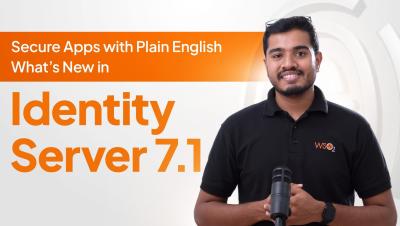
WSO2 Identity Server 7.1 Update | An Overview

In this video, we’ll walk you through the latest features and improvements in WSO2 Identity Server, the open-source identity and access management (IAM) solution trusted by enterprises worldwide. Discover how Identity Server 7.1 makes securing your applications simpler and more powerful than ever, with AI-powered login and branding, enhanced fraud detection and identity verification, push-based authentication, and a flexible service based extension architecture.

WSO2 Appoints UK and Ireland Country Manager to Drive AI-Driven Digital Transformation

WSO2 announces the appointment of Richard Evans as UK and Ireland Country Manager. With a career spanning over two decades in the technology sector, Richard brings vast experience in driving digital transformation across the enterprise software and cloud computing industries.

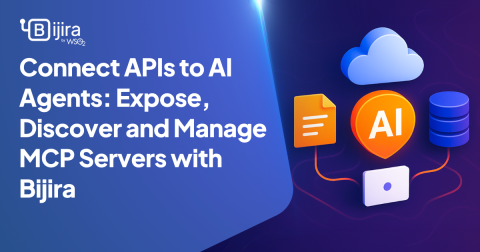
Connect APIs to AI Agents: Expose, Discover and Manage MCP Servers with Bijira

The API landscape is evolving rapidly with some protocols rising in popularity while others fade away. The journey that started with SOAP has now evolved into other protocols like REST, GraphQL, gRPC, AsyncAPIs, and more. With the emergence of large language models (LLMs), we are now in the era of AI agent/assistant integrations with APIs. LLMs are power utilities. However, they operate without contextual awareness.

Announcing Our New Region for Choreo: Powering Innovation Within the EU

As data privacy regulations grow more complex, particularly in the European Union, organizations are under increasing pressure to ensure their data remains within jurisdictional boundaries. Many EU-based businesses, especially those in regulated industries, are legally required to store and process data within the EU to comply with frameworks like the General Data Protection Regulation (GDPR).