Systems | Development | Analytics | API | Testing

AI Coding Agents Break What Works

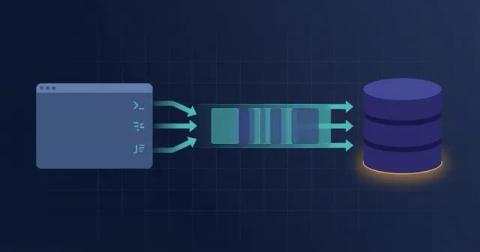
Your AI coding agent just made every test pass. Ship it, right? Not so fast. A growing class of AI-generated bugs doesn’t come from writing bad code. It comes from the AI changing working code to accommodate its own mistakes. This isn’t a theoretical risk. It’s happening now, in production codebases, and it’s harder to catch than any bug the AI might introduce from scratch.

The 4 Golden Signals of Monitoring Explained

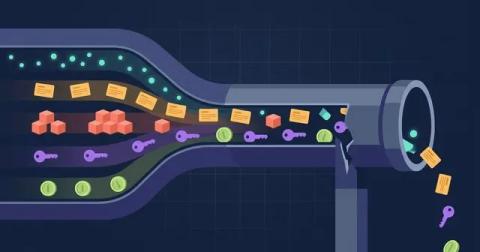
As a team, we have spent many years troubleshooting performance problems in production systems. Applications have become so complex that you need a standard methodology to understand performance. Our approach to this problem is called the Golden Signals. By measuring these signals and paying very close attention to these four key metrics, providers can simplify even the most complex systems into an understandable corpus of services and systems.

7 Best Service Virtualization Tools in 2026

Service virtualization tools have become indispensable for organizations seeking to streamline their testing and development processes. These tools allow teams to simulate the behavior of critical software components, enabling more rapid development with overall cost reduction and improved collaborative outcomes. As demand mounts for service virtualization solutions, identifying the best tools to support this workflow in the software development lifecycle has never been so important.

The Observability Gap: Why Monitoring Data Should Drive Tests

Most teams already know a lot about production. They have dashboards. They have traces. They have alerts. They have enough telemetry to explain what happened after an incident and enough graphs to argue about it for the rest of the week. Then they go to test a change and start from scratch. The integration tests hit a hand-written mock that returns {"status": "ok"}. The load tests replay a CSV somebody exported months ago. Staging is close enough to production right up until it matters.

API Traffic Replay Testing: The Definitive Guide (2026)

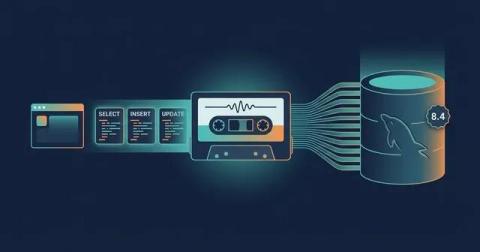
API traffic replay testing is a method of capturing real application traffic across protocols — HTTP, gRPC, database queries, message queues, and more — from a production environment and replaying it against a staging, QA, or development environment to validate software behavior under realistic conditions. In modern systems, HTTP is critical, but it is only one part of the picture.

Production Data Access for Developers: RBAC and DLP

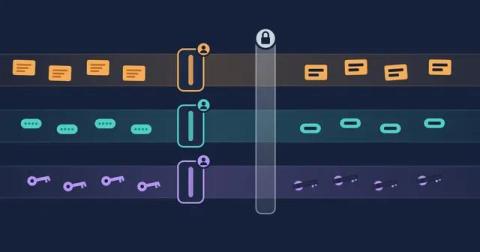
If you run a software engineering tools team, you have almost certainly had this conversation: a developer asks for production data access to debug a real incident, and someone in the room says no. Not because the request is unreasonable (it isn’t), but because nobody wants to be the person who said yes when something goes wrong. That instinct is understandable. Production environments carry real risk. But the reflex to lock everything down has a cost that rarely gets accounted for.

FastAPI Testing: Mock LLM APIs for Free

Testing a FastAPI app that calls OpenAI, Anthropic, or Gemini gets expensive fast. The problem is not just the API bill in production. It is all the repeated traffic in development: prompt tweaks, CI runs, regression checks, and the load tests you keep putting off because every run burns tokens. Hand-written mocks do not help much once the app is doing multi-step LLM work.

The Hidden AI Bill: Why Non-Prod LLM Costs Spiral

Most teams know they are spending money on AI in production. Far fewer realize how much they are spending outside production. It’s easy to get lost as you evaluate which model has the best responses, is fast enough, and cheap enough to run in production. That is because the AI bill usually shows up as a giant blob. It is easy to see the total.

Prompt, Deploy, Pray Is Dead: Validating AI Code with Proxymock

Recent outages tied to AI-assisted code changes have pushed companies into a corner. After several incidents with massive “blast radius” impacts, organizations like Amazon introduced stricter controls—mandating that senior engineers manually review all AI-generated code before it hits production. That response makes sense on paper, but it exposes a fatal flaw in the modern development pipeline.

Your Flaky Tests Are a Data Problem, Not a Test Problem

Your tests are not flaky. Your test data is. That 401 Unauthorized that fails every Monday morning? The OAuth token in your test fixture expired 72 hours ago. The order_id that works in staging but not in CI? It was hardcoded six months ago and the format changed from integer to UUID in January. The timestamp assertion that passes at 2pm and fails at midnight? You are comparing a hardcoded 2026-01-15T14:30:00Z against Date.now(). These are not test infrastructure problems. Retrying them will not help.