Systems | Development | Analytics | API | Testing

The Observability Gap: Why Monitoring Data Should Drive Tests

Most teams already know a lot about production. They have dashboards. They have traces. They have alerts. They have enough telemetry to explain what happened after an incident and enough graphs to argue about it for the rest of the week. Then they go to test a change and start from scratch. The integration tests hit a hand-written mock that returns {"status": "ok"}. The load tests replay a CSV somebody exported months ago. Staging is close enough to production right up until it matters.

Best 5 Tools for Monitoring AI-Generated Code in Production Environments

AI-generated code is no longer experimental. It is actively running in production environments across SaaS platforms, fintech systems, marketplaces, internal tools, and customer-facing applications. From AI copilots assisting developers to autonomous agents opening pull requests, the volume of machine-generated code entering production has increased dramatically. This shift has created a new operational challenge: how do you reliably monitor AI-generated code once it is live?

Most Popular Java Web Frameworks in 2026

Look, if you're starting a new Java web project in 2026, you should probably just use Spring Boot. With 14.7% usage in the 2025 Stack Overflow Developer Survey and a 53.7% admiration score among all web frameworks, it remains the default choice for modern Java web development. It has the largest ecosystem, best documentation, most active community, and strongest cloud-native support—now enhanced with built-in AI capabilities through Spring AI.
Sponsored Post

Testing AI Code in CI/CD Made Simple for Developers

Generative AI can produce code faster than humans, and developers feel more productive with it integrated into their IDEs. That productivity is only real if CI/CD tests are solid and automated. When not appropriately tested, you may encounter a production issue that you haven't seen before. According to the State of Software Delivery 2025 report, 67% of developers spend more time debugging and resolving security vulnerabilities in code generated by AI. That cancels out the efficient gains that they get from faster AI code generation.

Top 7 AI Solutions for API Testing and Monitoring in 2025

APIs are the nervous system of modern software—and as AI systems like large language models (LLMs) become deeply embedded across products and platforms, the demand for fast, secure, and scalable API infrastructure has never been higher. From early-stage startups to global enterprises, organizations rely on APIs not just to move data, but to power real-time intelligence, automation, and customer experiences.

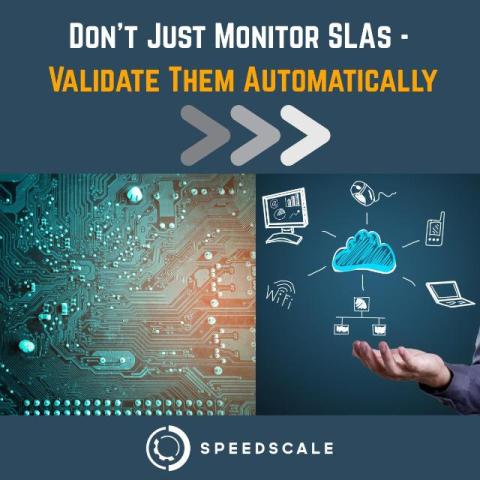
Don't Just Monitor SLAs - Validate Them Automatically

Service level agreements (SLAs) are the contractual backbone between customers and technology vendors, outlining expected service availability, performance metrics, and remedies like service credits when service providers fail to meet agreed-upon service levels. This service agreement assures both the technical quality as well as the service quality of the services provided, and underpins the value perspective of the client.

Why We Built a Unified Error Monitoring Solution for Kotlin Multiplatform

The new bugsnag-kmp SDK is a unified error monitoring solution for Kotlin Multiplatform (KMP) projects, enabling developers to track and monitor errors across Android, iOS, and web platforms from a single codebase. The new SDK works seamlessly on Android, iOS, and web browsers Native Integration, each one linking directly with our existing platform SDKs.

The Future of AI Monitoring: How to Address a Non-Negotiable, Yet Still Developing, Requirement

Generative AI models are not just tools for producing text, audio or video—they're systems that learn patterns, improvise, and generate unexpected outcomes. When we look at LLMs, we're struck by their capacity to generate surprisingly creative and context-aware results. They can weave coherent narratives, propose novel solutions, mimic human conversation, and even offer nuanced insights across a wide range of topics. While this creativity is their strength, it also introduces variability and risk.

Managing PostgreSQL table partitioning in Ruby

If you have the pleasure of working with a Rails app that uses a lot of data like logs, events, and metrics, you’ve probably run into performance issues at some point due to large tables. Deleting high quantities of rows can bring your database server to its knees or slow down queries to unacceptable latencies. PostgreSQL table partitioning is an excellent solution to these sorts of problems.

What is Automated Business Monitoring? Everything You Should Know

Today, organizations need to know what data they have, what it means, when it changes, and how it delivers value faster than ever before. Modern businesses have a problem, though – a continuously growing mountain of data, made up of many different operational processes and performance metrics, which users must proactively monitor to ensure business goals are met, and insights are deciphered. Embedded dashboards are one way for your users to keep track of key information while using your application.