
|
By Abu Sakib
“API strategy” is a term prominently established in the ecosystem and heavily discussed, implemented, and followed by organizations. The term is more relevant now since API strategy has become, for the most part, AI strategy, since AI agents and services are now consuming APIs and tools to work towards business-specific goals under human tutelage. So the longstanding definition and scope of API strategy must take into account AI consumers.

|
By Abu Sakib
You can make your API observability posture more powerful and beneficial by treating Moesif as an engineering implement. The platform automatically captures API traffic out-of-the-box and provides actionable analytics and visualizations. However, the degrees to which they precisely and empirically illustrate the data, depend on where and how you’ve integrated Moesif.
|
By Abu Sakib
API and AI services now sit at the heart of modern products. However, the more we use them, the harder it seems to become to account for the budget. Launching an AI product often leads to massive end-of-period bills. This requires attributing costs to the key internal power users and consumption drivers. The challenge is identifying the departments, products, or projects responsible for the consumption, and the extent to which they contribute.
|
By Abu Sakib
One of the principals of Moesif’s efforts has been making API analytics more accessible and easier to use for everyone. We have helped enterprises of different sizes and use cases grow and succeed with their API and AI products through data-backed insights.
|
By Abu Sakib
To monetize digital content, we have used means like ad networks, affiliate links, and paywalls. However, with the fast and widespread adoption of AI, demand for high-quality data has increased. To make sure Large Language Models (LLMs) models deliver value and accurate results, a wide spectrum of content is often scraped and trained on without permission or compensation. This includes blogs, product and technical docs, forums, and research papers.

|
By Abu Sakib
The rise of AI agents has reshaped software economics; businesses have been increasingly adopting them for efficiency, scale, and delivering values faster. However, pricing them has remained a hard problem. By the established norms, you would tie cost to headcount or access, but that doesn’t fit; traditional methods misalign with how agents deliver value. And newer approaches often create more confusion than clarity.
|
By Abu Sakib
The rise of Model Context Protocol (MCP) has given AI agents and large language models (LLMs) a standardized way to talk to external tools, APIs, and data sources. In theory, it solves the messy integrations and custom connectors that have slowed down real-world agent adoption. A clean protocol should mean smooth interoperability. However, we’re observing certain patterns of fragmentation. Each MCP server runs in isolation. Agents have to handle multiple connections.

|
By Abu Sakib
As your application grows, the volume of telemetry data expands with it. Every additional service, customer, and feature generates more log entries. It becomes harder to quickly isolate the events that actually matter. Without the right tools, finding a single root cause can feel like searching for a needle in an ever-growing haystack. You may have already been using log search tools to find and act on errors. However, those tools rarely connect that data back to your API traffic patterns or metrics.
|
By Abu Sakib
Solo.io Gloo Gateway gives teams a reliable way to secure, route, and monitor API traffic in real time. With its high-performance Envoy core and Kubernetes-native design, it meets the demands of distributed applications and modern service architectures. However, performance metrics alone don’t reveal how developers engage with your APIs or why adoption stalls.
|
By Abu Sakib
The Model Context Protocol (MCP) is quickly becoming a foundational layer for AI systems. It enables large language models and AI agents to interact with external tools and data sources over standardized JSON-RPC interfaces. By doing so, MCP transforms how intelligent applications consume APIs. Reading local files, controlling IoT devices, orchestrating backend workflows—MCP servers act as structured gateways between AI and your business logic.
|
By moesif
18: Platform Engineering and Reducing Operational Overhead with Nuwan Dias, WSO2 by Moesif API Observability.
|
By moesif
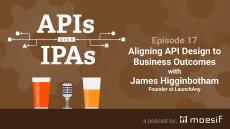
In this episode, Derric Gilling chats with James Higginbotham, founder of LaunchAny, about designing successful API strategies that drive business value. James dives into his “Align-Define-Design-Refine” (ADDR) methodology, a framework that guides organizations from initial business alignment through iterative API design and deployment. Drawing from over a decade of experience helping companies mature their API programs, he shares practical tips on blending business goals with technical execution, empowering cross-functional teams, and maintaining consistency across the API lifecycle.

|
By moesif
17: Aligning API Design to Business Outcomes with James Higginbotham, LaunchAny by Moesif API Observability.
|
By moesif
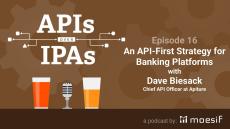
In this episode, Derric Gilling sits down with David Biesack, Chief API Officer at Apiture, to discuss building an API-first, customer-centric digital banking platform from the ground up. David shares the origin story of Apiture, a joint venture born from a vision of open banking, and how his team embedded API design and governance into every layer of the product. From establishing API University to codifying internal tooling and style guides, David explains how they’ve scaled API excellence across product and engineering teams.
|
By moesif
In this episode, Derric Gilling sits down with David Biesack, Chief API Officer at Apiture, to discuss building an API-first, customer-centric digital banking platform from the ground up. David shares the origin story of Apiture, a joint venture born from a vision of open banking, and how his team embedded API design and governance into every layer of the product. From establishing API University to codifying internal tooling and style guides, David explains how they’ve scaled API excellence across product and engineering teams.

|
By moesif
From Vision to Venture is a Moesif podcast that highlights some of the biggest wins and challenges in the startup space today. Every episode, we'll talk to different founders to discover some of the strategies that they've used on their journey from being an early-stage startup to a little bit later stage. Whether you want to hear more about how to manage life as a startup founder or raise a round of investment, this is the podcast for you.

|
By moesif
From Vision to Venture is a Moesif podcast that highlights some of the biggest wins and challenges in the startup space today. Every episode, we'll talk to different founders to discover some of the strategies that they've used on their journey from being an early-stage startup to a little bit later stage. Whether you want to hear more about how to manage life as a startup founder or raise a round of investment, this is the podcast for you.

|
By moesif
From Vision to Venture is a Moesif podcast that highlights some of the biggest wins and challenges in the startup space today. Every episode, we talk to different founders to discover strategies they’ve used on their journey from early-stage startup to later-stage growth. Whether you want to hear more about managing life as a founder or raising a round of investment, this is the podcast for you.

|
By moesif
In this engaging conversation, Derric Gilling, CEO of Moesif, and Kin Lane, the API Evangelist, explore the challenges and opportunities of API monetization and productization in today’s enterprise world. Kin shares insights on rising API costs, the shift toward efficiency, and the balance between openness and control—especially in an AI-driven landscape.
|
By moesif
In this episode, Derric sits down with Mike Amundsen, a leader in the API ecosystem, to explore the evolving role of observability in API design and customer experience.

|
By Moesif
Have API monitoring in place but not aligned to business goals? Product and business teams can leverage API monitoring to track developer adoption and identify customers struggling with an API.
|
By Moesif
Marketing to developers during a COVID-19 recession is hard. Read our eBook and see how you can stay on track.
|
By Moesif
Ready to grow like crazy? Download this eGuide to learn how to best treat your API as a product and define the right metrics to measure success.
- March 2026 (1)
- December 2025 (2)
- October 2025 (3)
- September 2025 (1)
- August 2025 (2)
- July 2025 (2)
- June 2025 (3)
- May 2025 (1)
- April 2025 (20)
- March 2025 (7)
- February 2025 (7)
- January 2025 (5)
- December 2024 (1)
- November 2024 (4)
- October 2024 (6)
- September 2024 (8)
- August 2024 (8)
- July 2024 (15)
- June 2024 (13)
- May 2024 (12)
- April 2024 (6)
- March 2024 (5)
- February 2024 (7)
- January 2024 (2)
- December 2023 (20)
- November 2023 (22)
- October 2023 (5)
- September 2023 (1)
- August 2023 (1)
- July 2023 (8)
- June 2023 (4)
- May 2023 (5)
- April 2023 (6)
- March 2023 (4)
- February 2023 (6)
- January 2023 (12)
- December 2022 (5)
- November 2022 (12)
- October 2022 (8)
- September 2022 (10)
- August 2022 (9)
- July 2022 (16)
- June 2022 (14)
- May 2022 (8)
- April 2022 (7)
- March 2022 (10)
- February 2022 (4)
- January 2022 (6)
- December 2021 (8)
- November 2021 (6)
- October 2021 (6)
- September 2021 (4)
- July 2021 (1)
- June 2021 (2)
- May 2021 (2)
- April 2021 (1)
- March 2021 (14)
- February 2021 (8)
- January 2021 (5)
- December 2020 (6)
- November 2020 (5)
- October 2020 (3)
- September 2020 (6)
- August 2020 (5)
- July 2020 (3)
- June 2020 (3)
- May 2020 (5)
- April 2020 (10)
- March 2020 (11)
- February 2020 (4)
- January 2020 (1)
- June 2018 (3)
Moesif is an error analysis and resolution tool for API driven services to gain deep visibility into how your errors occur in an increasingly complex world of many REST APIs and Microservices. The hosted service is built to log and analyze millions of API requests so you can stay focused on your customer experience.
Leverage user-centric API analytics to understand how customers adopt and use your platform:
- Monitor: Monitor traffic from REST, GraphQL, SOAP, Web3, and other APIs in real-time with simple and flexible SDKs.
- Understand: Analyze user behavior and feature adoption across your APIs and platforms.
- Iterate: Empower engineering and business teams with the API insights needed to experiment and take action.
- Deliver: Invest in a better product strategy that achieves growth targets while improving customer loyalty.
Your API Drives Product Success. Measure it.