Systems | Development | Analytics | API | Testing

The Year Ahead in APIs

APIs have come a long way from the arcane geek-speak of software interfaces popularized by Win32 APIs (still among the most commonly searched API phrases). Today, APIs represent interfaces between businesses and large swaths of internal enterprise services and business units. APIs not only connect software to software but also help to create entire commercial ecosystems, and so have become integral parts of how enterprises conduct business.
4 Tips for Better API Security in 2019

Whether in the tech press or analyst reports, it became more common in 2018 to see the words “API” and “security”—or worse, “API” and “breach”—together in the same headline. APIs are not only the connective tissue between applications, systems, and data, but also the mechanisms that allow developers to leverage and reuse these digital assets for new purposes.

Khan Bank: Using APIs to make banking faster and easier in Mongolia

The Soviet era left Mongolia with a legacy of manual banking processes that requires huge quantities of paperwork. This means that customers need to visit branches frequently for simple things like changing a PIN number or requesting a credit card. Since we count 2.8 million of Mongolia’s 3.3 million citizens as our customers, this could mean long lines at the bank, with an average wait time of 25 minutes for each visit. We wanted to change that.

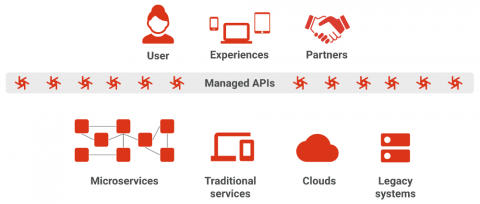
You Have APIs-Why Aren't You Managing (all of) Them?

As I work with customers around the world and across verticals, I’m struck by a common pattern: many savvy business people and technologists grasp the value of the new application programming interfaces (APIs) they’re creating for external ecosystem use cases, such as providing partners access to data or functionality, but they often see both the APIs they already have and those they build for internal use in a different light — not as software products that let developers

Accelerate with APIs: Apigee API monitoring, extensions and hosted targets now generally available

APIs are a key way businesses operate at the speed and scale necessary for today’s economy. We designed Apigee, Google Cloud’s full lifecycle API Management platform, to give businesses control over, and visibility into, the APIs that connect applications and data across the enterprise and across clouds. Apigee was recently recognized by Gartner as a leader in the 2018 Magic Quadrant for Full Life Cycle API Management.

Demystifying Microservices

Are they basically just an evolved version of service-oriented architectures (SOA)? Since a microservice must be exposed via an application programming interface (API) for an organization to scale it to new developers, does that mean managing microservices is basically the same as managing APIs? As this article will discuss, the answer to both of these questions is a clear “no” — and companies looking to get the most from their microservices need to understand why.