Systems | Development | Analytics | API | Testing

The Business Value of the DSP: Part 2 - A Framework for Measuring Impact

In our previous blog post, we explored how Confluent has evolved into a comprehensive data streaming platform (DSP). Now that we understand what a DSP is, let's address a key question: How does it deliver business value? When business stakeholders assess value, they typically look at how a solution might help drive benefits across three key areas: So how does a DSP support these key areas?

Data-Driven Business Agility: Adapting to Market Changes in Real Time

Companies need to adapt quickly to stay ahead of their competitors. This is where data-driven agility becomes essential. By leveraging real-time data, businesses can immediately respond to market changes and confidently make informed decisions. This article will explain data-driven agility, how it works, and why it’s a valuable approach for any organization. At its core, data-driven agility involves using live data to predict and respond to changes.

Data Accessibility: The Key to a Data-Driven Business Strategy

Easy access to data is a key part of any successful business strategy. Accessing, sharing, and analyzing data quickly helps organizations make smarter decisions, streamline operations, and stay competitive. However, many businesses face a significant challenge: they collect vast amounts of data from different sources yet often lack the right tools, processes, or infrastructure to make that data easy to access and use across the company.

How Data-Driven Decision-Making Fuels Competitive Advantage

Relying on intuition alone isn’t enough to stay ahead of the game in today’s fast-paced business environment. Success now comes from smart, data-driven decision-making backed by real-time insights and analytics. With stream processing and modern analytics platforms, businesses can collect, process, and analyze information as it happens, giving them a clear edge.

Streaming Data Fuels Real-time AI & Analytics: Connect with Confluent Q1 Program Entrants

In today’s fast-moving digital economy, organizations need real-time intelligence to power AI, analytics, and increasingly fast paced decision-making. But to successfully deploy AI and advanced analytics, businesses must operate on trusted, up-to-date data streams that provide an accurate picture of what’s happening right now.

Protect Your Data With Self-Managed Keys (BYOK) Enhancements

In today’s rapidly evolving data security landscape, it’s critical for organizations to secure their services, particularly in the face of rising cyber threats. Robust security measures for streaming data are vital to safeguard against breaches and losses, and help to maintain trust among customers and partners, while ensuring compliance with regulatory requirements.

Flink AI: Hands-On FEDERATED_SEARCH()-Search a Vector Database with Confluent Cloud for Apache Flink

With the advent of modern Large Language Models (LLMs), Retrieval Augmented Generation (RAG) has become a de-facto technology choice, employed to extract insights from a variety of data sources using natural language queries. RAG combined with LLMs presents many new possibilities for integrating Generative AI capabilities within existing business applications, specifically opening up many new use cases within the data streaming and analytics space.

Cluster Linking for Azure Private Link is Now Available in Confluent Cloud

Many organizations run Apache Kafka clusters in private Azure networks to meet stringent security, compliance, and operational requirements. However, securely replicating data across clusters without exposing traffic to the public internet has traditionally been complex, requiring self-managed mirroring solutions with significant operational overhead.

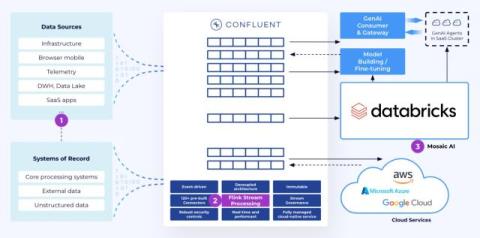
Your AI Project Has a Data Liberation Problem

Generative AI has the potential to add up to $4.4 trillion annually to the global economy. But most organizations won’t see that value—not because of their models or infrastructure, but because of their data. Despite years of investment in data lakes, warehouses, and analytics tools, organizations are drowning in complexity. Data is scattered across siloed systems, riddled with duplication, and locked behind outdated batch processes.