Systems | Development | Analytics | API | Testing

The Easiest Way to Power Real-Time AI: Confluent Announces Delta Lake Support & Unity Catalog Integration for Tableflow

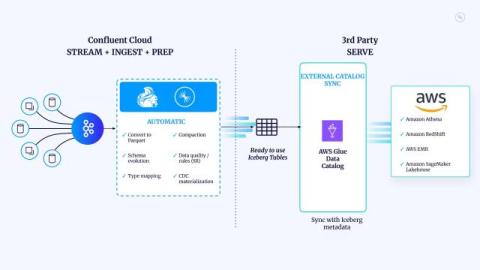
In the age of AI, the hunger for fresh, reliable data to power machine learning (ML) models and real-time analytics is insatiable. Yet, organizations frequently hit roadblocks when trying to bridge their operational data in motion, typically flowing through Apache Kafka, with their data at rest in data lakehouses. On one side, you have the data streaming platform, the central nervous system managing the real-time flow of business events.

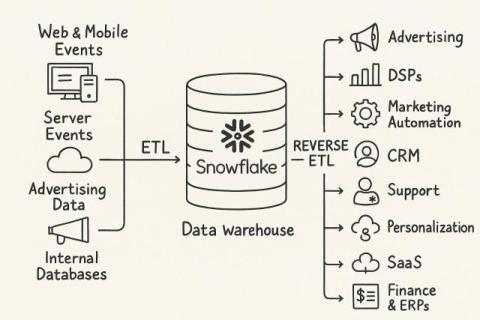
Unlocking Real-Time Analytics With Confluent Tableflow, Apache Iceberg, and Snowflake

Users of Snowflake and other data lakes and data warehouses need real-time data for artificial intelligence (AI) and analytical workloads—but they struggle to get that data into their lakes and warehouses. In response to this ubiquitous challenge, Confluent developed Tableflow.

Introducing KIP-848: The Next Generation of the Consumer Rebalance Protocol

The consumer group is a cornerstone of Apache Kafka, enabling scalable and fault-tolerant data consumption by allowing multiple consumer instances to share the workload of reading from topic partitions. The consumer rebalance protocol is the mechanism that coordinates which partitions are assigned to which consumers within a group.

How to Query Apache Kafka Topics With Natural Language

Modern companies generate large volumes of data, but often the internal users who need that data to do their jobs—data engineers, managers, business analysts, and developers—can find it challenging to quickly figure out answers to their questions. Apache Kafka is a powerhouse for real-time data processing of high-throughput workloads, and many organizations use Kafka to enable self-service access to data streams.

Confluent unites batch and stream processing for faster, smarter agentic AI and analytics

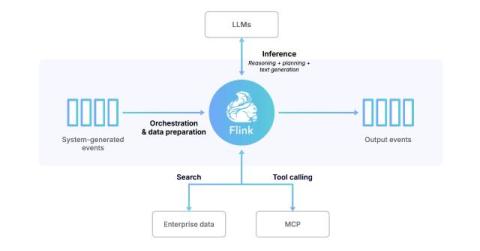
On Confluent Cloud for Apache Flink®, snapshot queries combine batch and stream processing to enable AI apps and agents to act on past and present data. New private networking and security features make stream processing more secure and enterprise-ready.

New in Confluent Cloud: Bringing Together the Best of Batch and Stream Processing

Your teams want the immediate insights of stream processing with the scale and historical context of batch processing—but traditional data infrastructure forces you to resort to disparate tooling or manual workarounds to bridge that gap. This quarter’s release, coming to you live from Current London, brings new features in Confluent Cloud that fundamentally change this dynamic by seamlessly unifying stream and batch processing.

Confluent Releases Managed V2 Connector for Apache Kafka for Azure Cosmos DB

We’re excited to announce the General Availability (GA) of the Confluent fully managed V2 connector for Apache Kafka for Azure Cosmos DB! This release marks a major milestone in our mission to simplify real-time data streaming from and to Azure Cosmos DB using Apache Kafka. The V2 connector is now production-ready and available directly from the Confluent Cloud connector catalog.

Introducing the Next Generation of Control Center for Confluent Platform: Enhanced UX, Faster Performance, and Unparalleled Scale

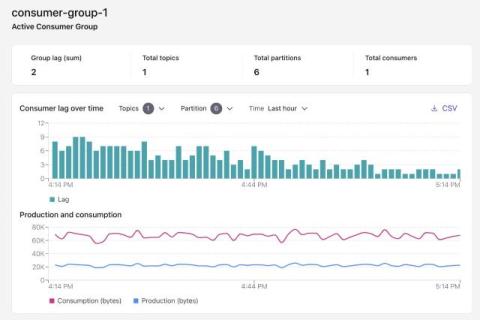
We're excited to announce the release of the next generation of Control Center for Confluent Platform, which delivers higher partition limits, faster spin-up time, metrics freshness, and simpler operational overhead. Confluent introduced Confluent Control Center in 2016 as part of Confluent Platform, simplifying Apache Kafka operations and delivering end-to-end visibility into data pipelines.

5 Steps to Building With AI: What It Can Do Reliably (and How to Start)

This article first appeared on VentureBeat. Businesses know they can’t ignore artificial intelligence (AI)—but when it comes to building with it, the real questions aren’t What can AI do? It’s What can it do reliably? And more importantly, Where do we start? This post introduces the VISTA Framework, a structured approach to prioritizing AI opportunities.