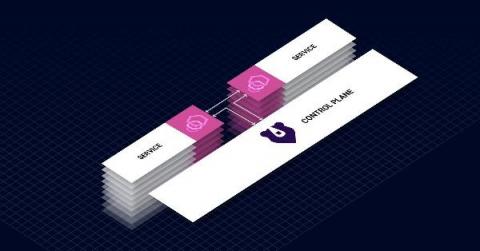
Kuma is an open source, CNCF service mesh that supports every environment, including Kubernetes and virtual machines. In this Kuma service mesh tutorial, I will show you how easy it is to get started.

Imagine you’re going through immigration at the airport. The immigration officer says, “I don’t need your passport because I trust that you are who you claim to be.” Wait, what? That would never happen, right? That’s because trust is exploitable. Sooner or later, somebody will try to lie about who they are, and thus a criminal could enter the country. That’s why countries must enforce some form of identity, like a passport, to certify travelers are who they claim.
As a developer, your company hired you to build incredible products that focus on your users’ and customers’ needs. Yet, in the age of microservices, producing the best products relies heavily on efficient cloud service connectivity. For example, an eCommerce marketplace is more than a front-end UI that customers access via a browser.
Building a multi-region or multi-cloud environment for your applications requires a lot of attention. In a typical deployment, you would have an API gateway running close to the several application runtimes. You should enhance your deployment to support different regions in a given cloud, or in an even more distributed and hybrid scenario, multiple services running across other public clouds and on-premise environments.
Envoy is a high-performance C++ distributed proxy designed for microservices and service-oriented architecture, as well as a scalable communication bus and “universal data plane” designed for large scale service meshes. Envoy runs alongside every application and abstracts the network by providing common features in a platform-agnostic manner.
When we first created Kuma – which means “bear” in Japanese – we dreamed of creating a service mesh that could run across every cluster, every cloud and every application. These are all requirements that large organizations must implement to support their application teams across a wide variety of architectures and platforms: VMs, Kubernetes, AWS, GCP and so on.