For Cloudera ensuring data security is critical because we have large customers in highly regulated industries like financial services and healthcare, where security is paramount. Also, for other industries like retail, telecom or public sector that deal with large amounts of customer data and operate multi-tenant environments, sometimes with end users who are outside of their company, securing all the data may be a very time intensive process.
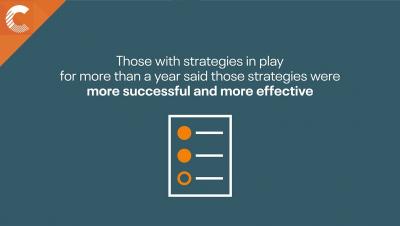
Global survey of IT and business executives reveals how a mature data strategy relates to business performance and resilience. Organizations fall under one of four categories when it comes to enterprise data maturity, and they need to be aware of how to address multi-dimensional challenges of a hybrid future.
Data transforms businesses. When done right it creates value and allows business leaders to make the most advantageous decisions, in real-time. That’s where the data lifecycle comes into play. Managing data and its flow, from the edge to the cloud, is one of the most important tasks in the process of gaining data intelligence.
Advances in the performance and capability of Artificial Intelligence (AI) algorithms has led to a significant increase in adoption in recent years. In a February 2021 report by IDC, they estimate that world-wide revenues from AI will grow by 16.4% in 2021 to USD $327 billion. Furthermore, AI adoption is becoming increasingly widespread and not just concentrated within a small number of organisations.
As data continues to grow at an exponential rate, our customers are increasingly looking to advance and scale operations through digital transformation and the cloud. These modern digital businesses are also dealing with unprecedented rates of data volume, which is exploding from terabytes to petabytes and even exabytes which could prove difficult to manage.
Operational Database is a relational and non-relational database built on Apache HBase and is designed to support OLTP applications, which use big data. The operational database in Cloudera Data Platform has the following components: Atlas provides open metadata management and governance capabilities to build a catalog of all assets, and also classify and govern these assets. The SDX layer of CDP leverages the full spectrum of Atlas to automatically track and control all data assets.
In legacy analytical systems such as enterprise data warehouses, the scalability challenges of a system were primarily associated with computational scalability, i.e., the ability of a data platform to handle larger volumes of data in an agile and cost-efficient way.
We are excited by the endless possibilities of machine learning (ML). We recognise that experimentation is an important component of any enterprise machine learning practice. But, we also know that experimentation alone doesn’t yield business value. Organizations need to usher their ML models out of the lab (i.e., the proof-of-concept phase) and into deployment, which is otherwise known as being “in production”.
It’s no secret that Data Scientists have a difficult job. It feels like a lifetime ago that everyone was talking about data science as the sexiest job of the 21st century. Heck, it was so long ago that people were still meeting in person! Today, the sexy is starting to lose its shine. There’s recognition that it’s nearly impossible to find the unicorn data scientist that was the apple of every CEO’s eye in 2012.