Systems | Development | Analytics | API | Testing

The Dangerous Power of Local AI Agents. #speedscale #proxymock #aiagents #openclaw #localai

I’ve been testing OpenClaw, a fully autonomous agent that lets you remote control your entire system via Signal. It’s incredibly powerful to text your computer from a coffee shop and have it execute tasks, but you’re essentially handing the keys to your digital kingdom to an LLM. The Golden Rule: Trust, but verify. I’m using Proxymock to sniff every single API call going in and out of the agent. If there’s a data leak or a "hallucination" that tries to wipe my drive, I see it first.

Refactor Safely with AI: Using MCP and Traffic Replay to Validate Code Changes

So as software engineers using AI coding assistants, we’re quickly learning of a new anti-pattern: Hallucinated Success. You give your agent (e.g. Claude via terminal or various IDE code assistants) the command “refactor the billing controller.” The agent happily complies, churning out nice clean code. The agent even goes so far as to write a new unit test suite that passes at 100%. You integrate it. Your test suites pass. Your production code breaks. Why?

The Hidden Cost of 30% AI-Generated Code #speedscale #aicoding #devops #technews #ai

AI now writes 30% of Big Tech’s code, but the resulting surge in defects is crashing platforms like AWS and GitHub. Manual testing can no longer keep up with this velocity; it's time to deploy AI Quality Agents to save our systems. Is AI speed worth the decline in code quality, or are we headed for a breaking point? Let me know if you’ve noticed more bugs in your workflow lately. Video collab with @ScottMooreConsultingLLC.

Can We Still Trust the Code? #speedscale #qualityassurance #digitaltwin #trust #devops

The "Velocity Gap" is real. AI like Claude and GitHub Copilot are pumping out code faster than ever, but there’s a catch: Engineers don't trust it yet. We’re moving away from the old days of "clicking around" in a test environment, but how do we verify code at the speed of light? Ken breaks down why the future of QA isn't just "testing," it’s simulation. Video collab with @ScottMooreConsultingLLC Learn More: speedscale.com.

Stop wasting time on Postgres migrations. #speedscale #postgresql #postgres #database #programming

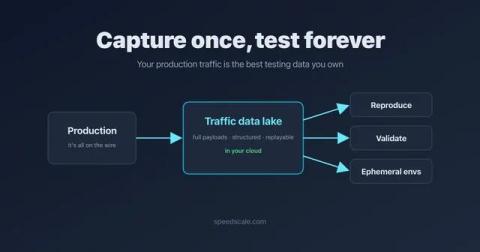
If you're spinning up a whole container just for one test, you’re doing it wrong. Old way: Full DB container + pg_restore New way: speedscale + proxymock It records actual DB traffic and mocks it "on the wire." Test smarter, not harder.

ROI of Digital Twin Testing: Cut Testing Costs by 50%

When engineering leaders review their cloud bills, they often focus on production costs—the infrastructure serving real users, processing real transactions, generating real revenue. But there’s a shadow cost lurking in every cloud environment that often goes unnoticed until it becomes painful: non-production infrastructure.
Sponsored Post

Peeking Under the Hood with Claude Code

Claude is one of the go-to AI-native code editors for developers. Because it's a simple chatbot interface housed inside a familiar CLI, it provides a pretty smooth path between traditional IDEs and agentic AI. But what's actually happening behind the scenes when you ask it to write code, generate a test, or debug an issue? Who and what is it talking to behind the scenes? Can I prevent data leakage or do I need to add another layer to my tin foil hat? To answer these questions, I used proxymock to inspect the network traffic flowing from the Claude IDE.

Moving Our Observability Data Collector from Sidecars to eBPF

For years, the Kubernetes sidecar pattern has been a practical way to capture observability data. Running a collector alongside each application pod gave us deep visibility into traffic, including full request and response payloads across supported protocols. However, as cloud-native environments have grown more complex, the limitations of sidecars—such as resource overhead, operational complexity, and scaling challenges—have become more apparent.