Systems | Development | Analytics | API | Testing

Turn Playwright Test Reports into Insights

Automated testing is essential for providing quality software in today's high-velocity development environments. So, Microsoft developed Playwright, an open-source framework for automating user interactions with web browsers. It is used for end-to-end testing of web applications. Playwright, Microsoft’s advanced end-to-end testing framework, has gained popularity among developers and QA teams because of its cross-browser capabilities and feature set.

Improving Playwright Test Coverage: Best Practices + Strategies

Here's what I've learned after working with hundreds of QA teams: the bugs that hurt most aren't the obvious ones. They're the edge cases we once deemed "unlikely." When it comes to test coverage, these overlooked scenarios often become your biggest headaches. I see it constantly: teams with impressive coverage metrics still miss critical scenarios. Like when a major retailer's checkout system failed because nobody tested what happens when a discount code expires mid-transaction during Black Friday!

Test Observability Explained for Engineering Leads

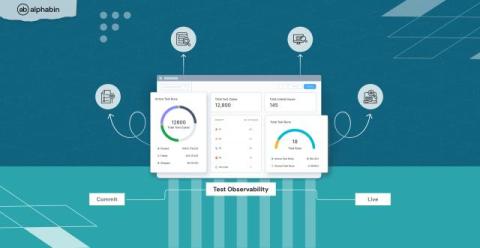
Last quarter, something remarkable happened that reminded me why I love working in software testing. I was consulting with a major retail client preparing for their Memorial Day sale, traditionally their second-biggest revenue event of the year. We had just implemented test observability across their entire suite of 3,000+ automated tests. And instead of frantic debugging sessions and emergency war rooms, I watched our dashboards reveal insights in real time.

Why Your Playwright Reports Need Upgrading

When we first started using Playwright for automated testing, the built-in test runner and test reports seemed fine. It showed passed tests and failures, which worked for small projects. But as our large test suites and CI/CD pipelines expanded, the default test runner reports became limiting especially when analyzing detailed results from each test run, the default test runner reports became limiting—especially when analyzing large-scale test results.

Why Fast Automation is the Key to Success in 2025

AI-powered development is moving faster than ever. Tools like Cursor, Windsurf, and GitHub Copilot, and models like ChatGPT-4, Claude, and Gemini transform how software is built. These tools can generate code, solve problems, and deliver full applications in a single day, far quicker than traditional methods. But with this rapid development comes a major challenge: testing. While code is generated in hours, traditional testing tools and methods lag.

How to Use Playwright Trace Viewer for Faster Debugging?

Three years ago, I discovered Playwright Trace Viewer while helping our team debug a complex audio processing application. What started as curiosity became a game-changer that now saves us hours every week. We had this complex flow where users could upload audio files, apply effects, and export them. Screenshots were our go-to debugging tool, until they weren't. One day, a test kept failing in CI. The screenshot showed everything looked perfect.

A QA's Complete Guide to LLM Evals: What You Need to Know

Let’s get straight to the point—this post is vital and couldn’t have come at a better time. As QA professionals, we’ve always been the gatekeepers of software quality. But with the rise of AI and LLMs, our role is evolving. Writing evaluations—assessments of AI systems—is quickly becoming a core skill for anyone working with AI products, and soon, this will include nearly everyone in tech.

Top Test Automation Trends to Watch in 2025

Feeling the pressure to test faster and ship cleaner code? You’re not alone. Test automation has become the secret weapon for teams that want speed, accuracy, and zero surprises in production. And the numbers back it up—according to MarketsAndMarkets, the automation testing market is set to grow from $28.1 billion in 2023 to a massive $55.2 billion by 2028. That’s not just growth—it’s a clear sign that the future of QA is fully automated.

Why Does Validation Testing Matter in Software Engineering?

Most software bugs could be traced to validation mistakes. Think about building an app on paper that has no bugs and is flawless, but when they release it to the end user, they keep encountering problems since the software never addresses their problem or fulfills their requirements due to poor data validation. This is where software testing and validation testing enter the picture. It's the activity of making sure the software you've built satisfies end-user expectations, not only technical requirements.

Key Benefits of API Testing for Your Business

APIs are everywhere, quietly powering the apps and services we use daily. They allow seamless communication between software, forming the backbone of modern applications. However, if your APIs fail, your business eventually fails. Therefore, API testing becomes important as it checks for secure, high quality and integrated software.