Systems | Development | Analytics | API | Testing

Software teams are discovering something powerful: agentic automation that connects across the SDLC

In this From the Bear Cave session, Dan Faulkner and Vineeta Puranik break down how MCP Server enables connected workflows, what autonomy looks like in practice, and why trust and transparency are critical as teams adopt agentic automation.

Powering agentic software quality with MCP servers | From the Bear Cave

In this From the Bear Cave session, Dan Faulkner, CEO of SmartBear, and Vineeta Puranik, CTO/CPO of SmartBear, discuss why agentic automation is becoming essential in software development and delivery, how MCP Server enables connected autonomy across the SDLC, and what this transformation means for business outcomes and the future of human + AI collaboration.

Building Secure AI Agents with Kong's MCP Proxy and Volcano SDK

Modern AI applications are no longer just about sending prompts to an LLM and returning text. As soon as AI systems need to interact with real business data, internal APIs, or operational workflows, the problem becomes one of orchestration, security, and control. The challenge is to build secure AI agents without embedding fragile logic or exposing sensitive systems directly to a model. This is where a layered architecture using Volcano SDK, DataKit, and Kong MCP Proxy becomes compelling.

Software Quality Gates: How Do They Work?

Shipping fast feels great – until something breaks in production. Sometimes, even solid-looking builds fail just because one small issue slipped through testing. That’s where software quality gates step in. They act as automated checks that stop risky code before it moves ahead in the pipeline. Rather than relying upon instinct, we rely on data – code coverage numbers, test results, and security signals.

Identity Passthrough for AI: Why Your LLM Needs to Know Who's Asking

When a user asks your AI assistant a question, who actually runs the database query? In most enterprise AI deployments, the answer is troubling: a shared service account with broad access to everything. The user's identity evaporates the moment their request enters the AI system. This architectural pattern creates security gaps, compliance failures, and data leakage risks that undermine enterprise AI adoption.

How DreamFactory Accelerates SOC 2 Compliance with Secure API Management

DreamFactory is a secure, self-hosted enterprise data access platform that provides governed API access to any data source, connecting enterprise applications and on-prem LLMs with role-based access and identity passthrough. Organizations working toward SOC 2 compliance face a familiar set of challenges: inconsistent access controls, fragmented data access security, noisy or incomplete logs, risky custom integrations, and difficulty proving governance during an audit.

The Fastest Way to Generate SmartBear-Ready OpenAPI Specs from Real Backend Systems | DreamFactory

Executive Summary: Organizations spend weeks or months manually reverse-engineering legacy databases into OpenAPI specifications before they can leverage SmartBear's powerful API toolchain. DreamFactory eliminates this bottleneck entirely.

Build Agentic Workflows: Expose API Orchestration as MCP Tools with Kong AI Gateway

Learn how to expose an API orchestration workflow as an MCP server using Kong AI Gateway, configure semantic guardrails, and build an agent with the Volcano SDK. We onboard GPT-4 behind /llm, orchestrate with DataKit, and debug MCP tools in Insomnia—end-to-end without adding server code.

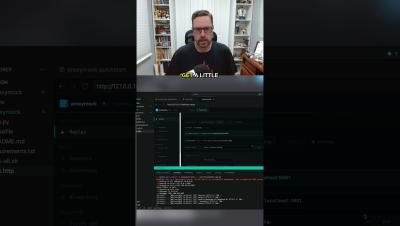
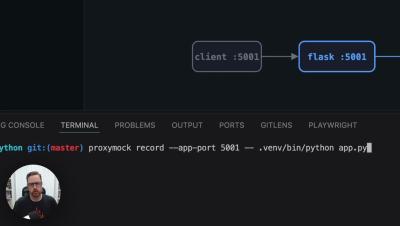
Can We Still Trust the Code? #speedscale #qualityassurance #digitaltwin #trust #devops

The "Velocity Gap" is real. AI like Claude and GitHub Copilot are pumping out code faster than ever, but there’s a catch: Engineers don't trust it yet. We’re moving away from the old days of "clicking around" in a test environment, but how do we verify code at the speed of light? Ken breaks down why the future of QA isn't just "testing," it’s simulation. Video collab with @ScottMooreConsultingLLC Learn More: speedscale.com.

Query Optimization Strategies for Database APIs: A Complete Technical Guide

Database performance is often the primary bottleneck in API-driven applications. Whether you're serving a mobile app, powering a microservices architecture, or exposing enterprise data through REST APIs, slow queries translate directly to poor user experience, increased infrastructure costs, and system scalability challenges. This guide explores proven query optimization strategies that development teams can implement to dramatically improve API performance.