Systems | Development | Analytics | API | Testing

Modern Software Development For Today's Systems & Applications


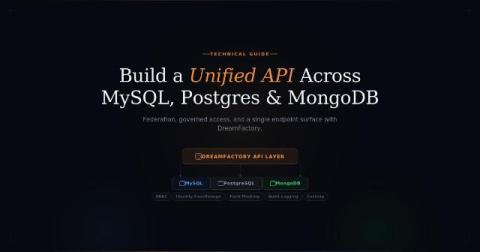
How to Build a Unified API Layer Across MySQL, Postgres & MongoDB with DreamFactory
This guide shows how to create a single API layer that joins data across MySQL, Postgres, and MongoDB using a federated query engine with an API gateway pattern. You will implement a hands-on build, see code samples, and review performance, security, and governance steps. DreamFactory is a secure, self-hosted enterprise data access platform that provides governed API access to any data source, connecting enterprise applications and on-prem LLMs with role-based access and identity passthrough.
Featured Post

Empowering Development Teams to Do Their Best Work
There is a seismic shift in software development with the advent of AI combined with the "shift left" movement. This leaves developers with competing priorities. Where AI is concerned, they are under pressure to get software to market faster. But as security requirements shift left, they are taking on more tasks and responsibilities than simply coding.

Give Claude Access to Your Database and Start a Conversation with Your Data
Your database contains thousands of answers. The problem isn't the data—it's that exploring it requires either technical skills or waiting for someone who has them. But what if you could sit down with Claude and just... talk through it? Ask a question. Follow a thread. Go deeper when something looks interesting. This isn't about running queries—it's about having analytical conversations with your own business data, guided by an AI that excels at exactly that kind of thinking.

Building a conversational agent in BigQuery using the Conversational Analytics API
Use the Conversational Analytics API to build context-aware agents that understand natural language, query BigQuery data, and deliver answers in text, tables, and visual charts.

Reliability at Scale: A Review of WSO2's 2025 Customer Sentiment
In the enterprise technology landscape, consistency is often the hardest metric to maintain. At WSO2, we view our customer feedback as a critical North Star, guiding our commitment to providing transparent, high-performance API, integration, and identity solutions. We are pleased to announce our latest customer survey results for the second half of 2025 (H2). These figures not only reflect a successful six-month period but also cap off a year of remarkable stability in our global customer relationships.

4 best API testing tools for enterprise teams
Enterprise development teams face mounting pressure to deliver secure, performant APIs while managing complex distributed architectures, strict compliance requirements, and accelerating release cycles. The API testing platform an organization chooses directly affects product quality, team velocity, and regulatory risk. Functional validation, security testing, performance testing, and CI/CD integration must all scale across global teams without introducing governance gaps.

Exposing Kafka to the Internet: Solving External Access
Your Kafka Doesn't Have to Live Behind a Wall There's a problem that almost every platform team running Kafka at scale eventually hits, and it usually starts with a reasonable ask: "Can you give our partners access to this event stream?" What follows is rarely simple. You start scoping VPC peering. Then someone asks about firewall rules. Then you realize each new external consumer is going to need its own network arrangement.

ReadyAPI vs. Postman: Why enterprise API testing needs more than collaboration tools
Enterprise API teams rarely struggle with a lack of tools. They struggle with fragmented toolchains that promise agility but deliver chaos. According to IBM Systems Sciences Institute research, late-stage defects can cost up to ten times more to fix than early detection, while industry analysts report that tool sprawl can waste up to 30% of software expenses through redundant licensing and operational overhead.
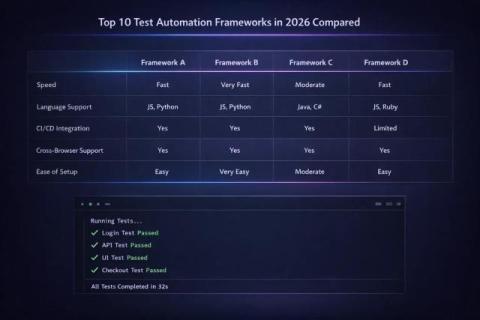
Top 10 Test Automation Frameworks In 2026 Compared
Test automation frameworks are shaping how modern teams ship software in 2026. Automation alone is not enough anymore. The structure behind automation decides whether your tests scale or collapse under maintenance pressure. I’ve seen teams struggle when they invest in automation but lack a structured system. Let’s explore how test automation frameworks can make automation reliable and scalable.