Systems | Development | Analytics | API | Testing

Addressing the challenges of user authentication in 2025

User authentication is rapidly evolving to keep pace with rising security threats, AI-driven attacks, and increasing privacy concerns. The biggest challenge for developers? Enhancing security without compromising the user experience. In this webinar, we’ll explore two powerful techniques that address this challenge.
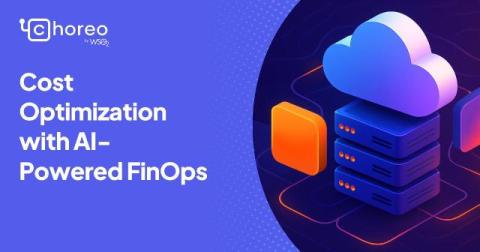
Cost Optimization with AI-Powered FinOps

As cloud native applications grow, managing resource usage and controlling costs becomes increasingly complex. Choreo's Cost Optimizer addresses this challenge by providing AI-driven insights and actionable recommendations, enabling developers and organizations to streamline resource utilization and reduce unnecessary expenditures.

WSO2 Acquires API Analytics and Monetization Leader Moesif

I'm thrilled to share another milestone in WSO2's journey: we've officially acquired Moesif, a San Francisco-based startup known for its powerful API analytics and monetization platform. This move represents more than just an acquisition—it's a strategic step for us. Since joining the EQT portfolio last year, we've been actively exploring inorganic growth opportunities to accelerate our vision.

CMS Interoperability: Seamless Continuity of Care for New Members Through Payer-to-Payer Exchange

The Payer-to-Payer Data Access API enables seamless health information exchange between current and previous/concurrent health plans when a member transitions coverage. Mandated under CMS Rule CMF 0057-F, impacted payers must implement and maintain a FHIR-based API that supports secure transmission of claims, encounter data, USCDI elements, and prior authorization information (excluding provider remittances and patient cost-sharing details).

Quantum-Safe IAM: Why Do You Need to Act Today?

Quantum computing hasn't gone mainstream yet, but signs increasingly suggest that it may do so in the near future. Some researchers and industry experts estimate that we could see significant breakthroughs as early as the next decade. This anticipated shift is often referred to as Y2Q similar to Y2K that we had at the beginning of this millennium.

CMS Interoperability: Seamless Access to Patient Data

The Patient Access API, introduced under CMS-9115-F, requires health plans, including Medicare Advantage, Medicaid, the Children’s Health Insurance Program (CHIP), and the Qualified Health Plan (QHP) on federally facilitated exchanges to give patients secure, real-time access to their health data via standardized APIs.

Choosing the Right Self-Managed WSO2 API Gateway for Your Needs: Universal, Immutable, and Kubernetes Gateways

As API management continues to evolve alongside the adoption of microservices, IoT, and Kubernetes, selecting the right gateway architecture becomes critical. While WSO2 now offers Bijira, a SaaS-based API management platform, this article focuses exclusively on the self-managed deployment options tailored for on-premises, private cloud, and customer-managed public cloud environments.

Introducing Asgardeo MCP Server

Today, we're excited to officially release the Asgardeo MCP Server, enabling developers to securely manage their Asgardeo organizations using natural language—right from their favorite code editors like VS Code, Claude Desktop, Cursor, Windsurf, and other MCP-compatible clients. Asgardeo already supports Login Flow AI and Branding AI, making it easier to build secure, customized login and registration experiences using plain language.

Securing AI Interactions: Crossing the Hurdles of MCP Authorization

The rise of large language models (LLMs) and AI-powered applications brings incredible potential, but also poses significant security challenges. These applications have gotten much more useful with the emergence of agentic approaches and the ability to call out to different libraries, systems, and most importantly, to different APIs in order to take actions. They have moved from being a question answering resource to being able to do work, shop on your behalf, book travel, and update code.

CMS Interoperability - How WSO2 Accelerates Compliance?

CMS-0057-F is a major regulation from the Centers for Medicare & Medicaid Services (CMS) aimed at enhancing interoperability and digitizing key healthcare workflows in the U.S. In this podcast, we break down what this rule means for payers, providers, and patients, and how it impacts critical areas like: Secure Patient and Provider Access to Health Data Electronic Prior Authorization (CRD, DTR, PAS) Payer-to-Payer Data Exchange.

Hybrid Post-Quantum Digital Signatures with Ballerina

As highlighted in the Quantum-Safeness of WSO2 Products blog, the need for alternative digital signature algorithms has become increasingly urgent. While post-quantum (Q) algorithms are gaining traction, they require time to build industry-wide trust. To address this, hybrid post-quantum digital signatures have emerged, combining classical (C) cryptographic methods with post-quantum (Q) algorithms to ensure resilience against both classical and quantum threats.

Towards Quantum-Safe Applications

While quantum computers promise to solve many problems that cannot be solved (efficiently) on a classical computer, they are a serious threat to security at the same time. We describe why this is the case, how broad this threat is, and how this threat is currently countered. This implies making quantum-safeness an integral aspect of an organization’s IT strategy.

CMS Interoperability: Automating Prior Authorization

This video demonstrates how the Prior Authorization process can be automated using the WSO2 Accelerator for Healthcare, in alignment with the CMS Interoperability and Prior Authorization Final Rule (CMS-0057-F). We walk through: By leveraging SMART on FHIR and FHIR APIs, this implementation boosts efficiency, reduces administrative burden, and enhances the overall patient care experience.