Effective management of Redshift costs is closely tied to data storage optimization. Choosing the right data types and implementing data compression are pivotal in reducing storage footprints and costs. Redshift’s columnar storage format enhances query performance, which in turn can lead to significant savings. For a more comprehensive approach, integrating tools like Anodot can provide advanced analytics and real-time visibility to further streamline storage efficiency and optimize costs.
Over the years, the technology landscape for data management has given rise to various architecture patterns, each thoughtfully designed to cater to specific use cases and requirements. These patterns include both centralized storage patterns like data warehouse, data lake and data lakehouse, and distributed patterns such as data mesh. Each of these architectures has its own unique strengths and tradeoffs.
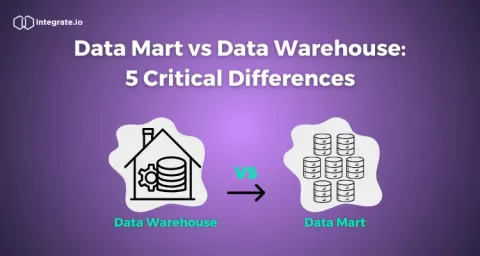
In The fundamentals of data warehouse architecture, we covered the standard layers and shared components of a well-formed data warehouse architecture. In this second part, we’ll cover the core components of the multi-tiered architectures for your data warehouse.