Systems | Development | Analytics | API | Testing

Top 5 Reasons to Implement Contextual Analytics

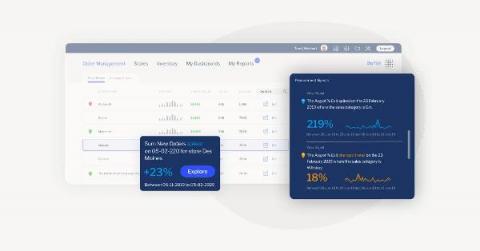
Once, dashboards and reports were limited to being embedded into our apps as standalone modules - essentially, as separately accessed product features. This limitation sometimes meant analytics is forgotten by users, and more often than not, underutilized in its potential. Today, contextual analytics makes it possible to embed analytics directly into the core workflow of your software.

Yellowfin 9.4 Release Highlights

In the latest release, the Yellowfin team focused on several new enhancements that expand the ability to share Stories and valuable insights more widely, and deliver greater consistency and governance in the user experience when building dashboards and reports. For the full list of updates, read the release notes and check out the video below to see some of these new enhancements in action.

How businesses use automated monitoring

One of the big trends we’ve seen this year is organizations going direct to consumer. Manufacturers who sold through retail outlets are moving online, and as a result a huge amount of digital transformation is occurring. A customer of ours has done exactly that. Kyowa is a Japanese cosmetics and health food company and they’ve moved from retail to online and digital, and Yellowfin has been a significant part of that journey. In particular, they’ve used Signals.

The practical benefits of augmented analytics

Augmented analytics uses emerging technologies like automation, artificial intelligence (AI), machine learning (ML) and natural language generation (NLG) to automate data manipulation, monitoring and analysis tasks and enhance data literacy. In our previous blog, we covered what augmented analytics actually is and what it really means for modern business intelligence.

8 key considerations for choosing an Embedded Analytics solution

Historically, analytics has not always been a priority feature for software vendors. Many applications typically are built with analytics bolted-on later, as standalone tools. But the changing needs of today’s business users has accelerated the importance of providing in-built ways to monitor and explore their data while they use your software.

The Developer's Guide to Contextual Analytics

As a specialized and mature form of embedded analytics, contextual analytics is a game-changer if you're a software vendor looking to further augment your customers’ user experience, without requiring developers to completely reengineer your offering. Contextual analytics blends the data your users need for decision-making right at the point of their daily work, directly inside the interface and transaction flow of your software.

Why design matters in BI

One of the things that I'm really passionate about is great design. Design is important in all aspects of our lives and it's really important for analytics as well. When you're the recipient of bad design, you know it immediately. Have you ever seen those emails that have been completely misaligned or sat through a PowerPoint where everything is in the wrong colors and fonts? How does it make you feel?

Analytics Experience Explained

One of the really big trends that we're seeing in the analytics space, is the move towards talking about the analytics experience. Analytics experience is about supporting or triggering decisions and transactions. This is a shift from what I would describe as the passive use of analytics, where people were expected to use dashboards and reports that didn't add a lot of value to their transactions or decision making. The difference sounds subtle, but it's really quite profound.

What is Contextual Analytics?

As a product feature for your app, embedded analytics is undoubtedly a valuable tool. But historically, many product managers and software developers have approached it as a standalone capability. This has led to dashboards and reporting modules added as an afterthought, rather than as a founding strategic component of the core application.