Systems | Development | Analytics | API | Testing

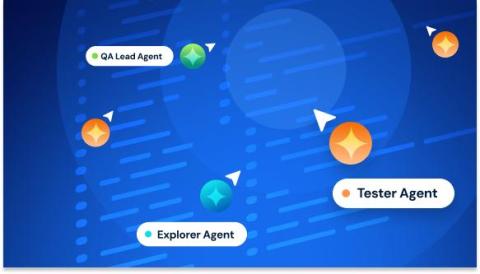
Why Non-Code-Based Testing Must Become More Autonomous

As coding has become more autonomous, so has code-based testing. AI agents can now write functions, generate code-based tests, and validate logic in the same workflow. But the other half of the testing equation, the system-level validation of non-code-based testing, hasn’t kept up. That disconnect is becoming one of the most critical constraints in modern software delivery.

API-Testing: How BFSI Companies Can Have More Control on ROI

The financial services industry is experiencing a fundamental transformation. API-led banking is taking a more definite shape with more than 50% banks actively deploying APIs to support open banking frameworks and fintech collaboration. From centuries-old institutions to cutting-edge fintech challengers, financial organizations are embracing API-first architectures to deliver scalable, secure, and customer-centric experiences.

Levels of Autonomy in Software Development: Closing the Gap Between Creation and Confidence

When the automotive industry introduced the concept of Levels of Autonomy, it gave us a shared language for something profound. It wasn’t just about self-driving cars, it was about how humans and intelligent systems work together as execution gradually shifts from one participant to the other. Level 0 is full human control. Level 5 means the car can handle any situation on its own. And between those two extremes are a series of stages that capture both technological progress and human adaptation.

SmartBear Recognized as a Visionary in the 2025 Gartner Magic Quadrant for API Management

We’re proud to share that Gartner has recognized SmartBear as a Visionary in the 2025 Gartner Magic Quadrant for API Management. We believe this recognition reflects our dedication to API development teams and to delivering practical solutions that drive excellence. APIs are essential, allowing businesses to move faster, integrate easily, and deliver the best experiences for their customers.

Bridging the Gap Between Reliable APIs and Unpredictable AI

APIs and AI are on a collision course. For decades, APIs have been the foundation of digital reliability: deterministic systems where you send a request, get a predictable response, and trust that what’s defined is what will happen. AI doesn’t play by those rules. Large language models and AI agents operate in probabilities. They don’t just follow contracts; they interpret them. They learn, infer, and sometimes hallucinate.

What is BDD?

The term “Behavior Driven Development”, or BDD, is an umbrella term for a wide variety of techniques. The general principles of BDD include reframing tests as descriptions of system behavior – “when I do one thing, I should see this result”. Historically, those descriptions were the output of a computer program. Over time, the uses of BDD shifted toward Gherkin, an English-like but precise language.

SmartBear Named a Challenger in the First-Ever Gartner Magic Quadrant for AI-Augmented Software Testing Tools

For decades, testing was about ensuring predictable outcomes in mostly static environments. Today, AI-driven applications are dynamic, adaptive, and sometimes unpredictable. That raises the stakes for quality engineering. When Gartner rolls out a brand-new Magic Quadrant, it’s a big deal to those of us in the software industry. We believe it signifies a new, innovative tech has officially arrived on the global stage.

BugSnag Now Supports the Amazon Vega OS

BugSnag now supports applications built with the Vega Developer Tools from Amazon Devices & Services, giving developers immediate visibility into the stability of their TV-first apps. This launch is part of a deeper collaboration between SmartBear and Amazon, extending beyond tooling support into a broader partnership that accelerates software quality across the Amazon ecosystem.