Systems | Development | Analytics | API | Testing

Sponsored Post

Run Local LLMs on Mac to Cut Claude Costs

Part of the motivation for this post is how cloud API economics are shifting: Anthropic is moving large enterprise customers toward per-token, usage-based billing (unbundled from flat seat fees), which makes "always call the API" a moving cost line for teams at scale. A hybrid or local layer is one way to keep spend bounded while you still use premium models where they matter.

How a Marketing Intern Ended Up Running Claude in a Terminal

Before I ever ran Claude in my terminal, I thought I already understood AI tools pretty well. Like most people, I had used ChatGPT, Google Gemini, and Perplexity for everyday tasks. Such as helping with schoolwork, organizing ideas, summarizing information, or getting through something faster when time was tight. They were useful, but they still felt separate from how real work happened.

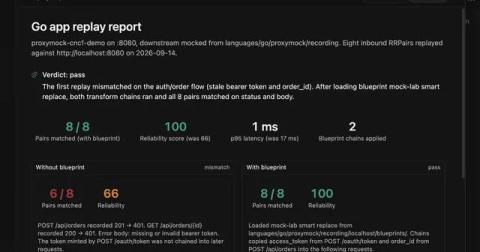
Replay Real Customer API Sessions as Datadog Synthetics Tests

A customer pings support: “I tried to check out twice this morning and got a 500 each time, but it works fine for everyone else.” The session ID is in the email. You have full request/response capture in your environment, you have Datadog Synthetics already running browser checks against the same flow, and you still spend the next two hours grepping logs because none of those tools let you say “show me just this user’s requests, in order, and re-run them.”

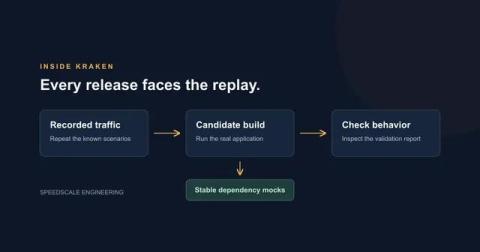
Replace API Synthetics with Traffic Replay

The alert fires at 2 AM. Your observability platform’s synthetic test just failed. Login is broken. So you open your laptop, pull up the dashboard, and stare at a single red dot: the browser test. You know the problem is somewhere in the stack, but not where. Is it the auth service? The token validator? The user profile API? The API gateway timing out? You’re now about to spend the next 45 minutes correlating traces, tailing logs, and manually hitting endpoints until you find it.

Dark Code: The AI-Generated Software Nobody Understands

The biggest risk to your product isn’t AI-generated code that doesn’t work. It’s generated code that seems fine. AI doesn’t optimize for correctness. It creates something passable. Something that passes the smell test. And when everybody in the industry is pushed to move faster and do more with less, you end up shipping software that looks correct. It passed your quick visual check. It passed all the tests. But no one ever fully understood it.

Beyond AI Vibes: Deterministic Foundations for Agentic Coding

Every week there is another model drop, another agent framework, and another workflow tweak you are supposed to evaluate. Meanwhile, the largest companies, the ones operating at the highest scale and leaning hardest on AI, are also the ones making headlines for reliability strain: capacity limits, outages, and services that buckle under load.

When Your Observability Literally Stops Traffic

Last week, a fleet of autonomous robotaxis in China suddenly stopped working—at scale. Over a hundred vehicles stalled across a city, stranding passengers in traffic and raising immediate concerns about safety, reliability, and trust in autonomous systems. This wasn’t just a bad day for self-driving cars. It was a distributed systems failure, one that happened in the physical world, not just in dashboards.

OpenTelemetry Trace Testing for CI Release Gates

OpenTelemetry is great at answering one question: “what just broke?” The problem is that most teams need a different answer first: “what is about to break in this release?” That is where trace-based testing comes in, especially for teams running a vendor-neutral OTel stack (Collector + Tempo/Jaeger + Prometheus) and needing deterministic release gates.

Why Autonomous AI Agents Can't Run on SaaS Infrastructure

The era of the “copilot” is ending. We are moving rapidly toward the era of the autonomous software factory, where autonomous agents don’t just autocomplete our code—they investigate, plan, test, and merge entire features while we sleep. But this shift has exposed a critical flaw in how we consume AI. For the past decade, the default motion for enterprise software has been SaaS. It’s easy, frictionless, and managed by someone else.