Systems | Development | Analytics | API | Testing

Navigating Workplace Accident Claims with Astera

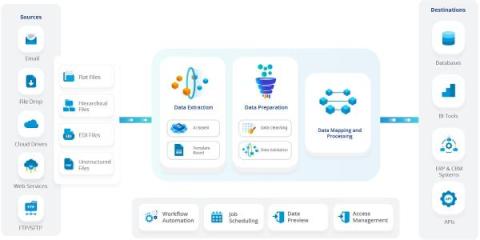
The U.S. Bureau of Labor Statistics reports that the incidence rate of nonfatal workplace accidents has decreased over the years, which can be attributed to the implementation of preventive measures in private industry. Despite this positive trend, companies deal with large volumes of unstructured data that demand effective management. Addressing these complexities is easier with Astera’s unstructured data extraction solution.
Automated Claims Processing: A Comprehensive Guide

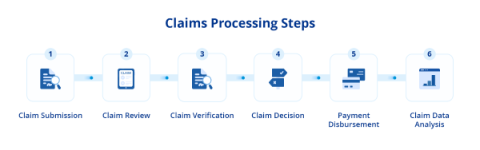
Claims processing is a multi-faceted operation integral to the insurance, healthcare, and finance industries. It’s a comprehensive procedure that involves carefully examining a claim. Claim processing is not a single-step process; instead, it involves multiple stages, each serving as a critical control point to ensure the accuracy and fairness of the claim resolution.

How to Automate Data Extraction from Patient Registration Forms in Healthcare

Automating data extraction from patient registration forms in healthcare is crucial to enhancing patient care efficiency, accuracy, and overall quality. Over 71% of surveyed clinicians in the USA agreed that the volume of patient data available to them is overwhelming. This abundance of data highlights the importance of streamlining the extraction process. Manual extraction is time-consuming and prone to errors, hindering patient safety.

Transcript Processing with AI-Powered Extraction Tools: A Guide

The class of 2027 saw a massive influx of applications at top universities across the United States. Harvard received close to 57,000 applications for the class of 2027, while MIT received almost 27,000. UC Berkeley and UCLA, meanwhile, received 125,874 and 145,882 respectively. Manual transcript processing is an uphill battle for educational institutions at every level.

What is a Data Mart? Design, Examples, and Implementation Explained

Unlike a data warehouse that stores enterprise-wide data, a data mart includes information related to a particular department or subject area. For instance, a sales data mart may contain data related to products, clients, and sales only. Read this blog to develop a better understanding of these departmental data repositories.

ETL Pipeline: What It Is, How to Build One & Best Practices

An ETL pipeline is a set of processes and tools that enables businesses to extract raw data from multiple source systems, transform it to fit their needs, and load it into a destination system for various data-driven initiatives. ETL pipelines are a specific type of data pipeline, and the systems they feed are typically databases, data warehouses, or data lakes.

Do You Really Need a Data Vault?

Data Vault 2.0 modeling methodology has gained immense popularity since its launch in 2013. It’s a hybrid model that combines the benefits of Third Normal Form (3NF) and star schema architectures, making it a dream solution for data warehousing engineers. But is it worth implementing for your data warehouse architecture? The answer isn’t straightforward, as there are many factors to consider. So, let’s dive in and explore whether Data Vault 2.0 is right for you.

Simplifying PDF Data Extraction with ReportMiner 10.0

IDC estimates that 80% of data generated and collected by organizations is unstructured, i.e., stored in a format that is not easily extractable. PDFs are among the most widely used unstructured file formats for storing and exchanging business information. Despite the extensive usage of PDFs, content stored in them is not machine-readable, hence cannot be easily extracted and organized into rows and tables. So, how can enterprises overcome the problem of PDF data extraction?