Systems | Development | Analytics | API | Testing

Rethinking DevOps Testing: Why Unified Approaches Matter More than Ever?

Embedding software testing at the core of the DevOps lifecycle is imperative in today’s highly competitive software development world. Continuous integration, rapid deployments, and tight feedback loops have become standard practice. Yet many organizations still approach testing with outdated assumptions.

Agentic Testing and QA: Why Chrome DevTools Still Matters for Modern Testers

Chrome DevTools is the built-in browser inspector and debugger that ships with Google Chrome, giving testers ground-truth visibility into DOM state, network traffic, device rendering, and runtime behavior. In the context of Agentic Testing and QA — the emerging pattern where AI agents draft, execute, and summarize tests with reduced human supervision — DevTools remains the verification layer that confirms what an agent actually did inside the browser.

AI is writing your code. Is your regression testing keeping up?

AI is now writing more of your code than ever. But the problem is that your test suite was built to catch errors, not to catch the difference between what an AI agent produced and what your original specification actually required. As AI tools accelerate development velocity, the volume of code moving through pipelines is outpacing traditional quality processes.

In performance testing, AI's confidence can be your team's undoing

Quick summary: AI accelerates code creation, but its inherent confidence pushes structural risks downstream, where they surface as costly, release-blocking problems. As code output scales, performance validation that can’t keep pace becomes a headache and a business risk. Agentic performance testing embeds skepticism and performance awareness into the development process before risk can compound. Software development requires specialized expertise for a reason.

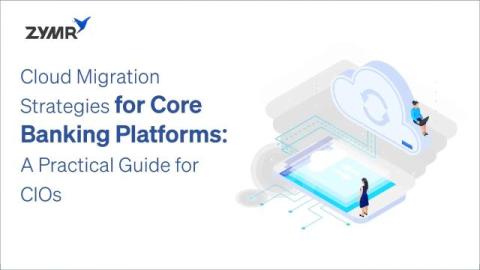
Cloud Migration Strategies for Core Banking Platforms: A Practical Guide for CIOs

Most core banking systems were never designed to move. They were built to run reliably inside controlled environments, with tightly bound processes, batch cycles, and layers of regulatory logic stitched over time. Now, those same systems are expected to support real-time payments, embedded finance, and API-driven ecosystems, often without a fundamental redesign. That mismatch is forcing a shift.

Why production AI needs a session layer, not just a stream

I spoke at AI Engineer Europe last week, and came away with a clearer picture of where the industry actually is right now. My talk was about why AI user experience breaks at the transport layer. But the bigger takeaway wasn't from my own session. It was from watching what the rest of the room was building, and what problems they were running into.

Why Rust Embedded Development Needs Powerful Static Analysis

For decades, software engineers have relied heavily on C and C++ to build embedded systems. These legacy languages offer the deep control and speed required for constrained environments, but they reveal gaps in memory management and concurrency. The Rust programming language has emerged as a solution.

A Secure by Default Philosophy Guiding Perforce P4

Security expectations for version control infrastructure have evolved dramatically over the years. While Perforce P4 has always empowered administrators with deep configurability, the default configurations shipped with previous versions of P4 are no longer sufficient. With the upcoming P4 2026.1 (scheduled for availability in May), we are implementing a Secure by Default posture designed to enforce best practices when protecting the source code and binary assets stored in P4.

Top Android Frameworks in 2026: Data from 177 Job Posts

If you want to know which Android frameworks are worth your time, job postings will tell you more than any opinion piece ever will. That’s why I searched Google Jobs for "Android developer", went through every posting the pagination would show me (177 in all), and logged every framework or library mentioned. “Required” frameworks got tagged as required. Anything in a "preferred," "nice to have," or "bonus" section got tagged as nice to have.