Systems | Development | Analytics | API | Testing

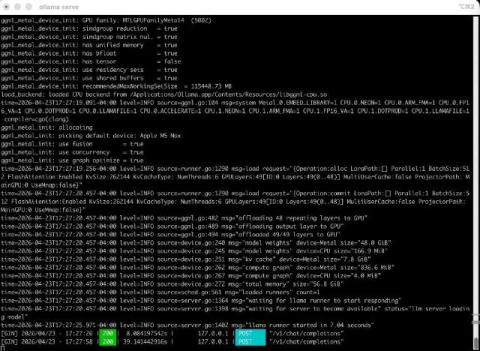
Run Local LLMs on Mac to Cut Claude Costs

Part of the motivation for this post is how cloud API economics are shifting: Anthropic is moving large enterprise customers toward per-token, usage-based billing (unbundled from flat seat fees), which makes “always call the API” a moving cost line for teams at scale. A hybrid or local layer is one way to keep spend bounded while you still use premium models where they matter.

10 Ways to Optimize API Performance Testing for Faster, More Reliable Results (2026 Guide)

Many teams dedicate time and resources to API performance testing, yet still face sluggish releases and delayed deployments. Incidents slip through, and users encounter slow applications. The root cause? Too often, teams treat performance testing as a checkbox, without truly simulating real-world loads or analyzing key performance metrics such as latency, throughput, and error rates. This leads to a false sense of readiness that quickly unravels in production environments.


Android Studio Breakpoints: How to Debug Android Apps Faster

Breakpoints are one of the most useful tools we can call on when we’re debugging applications. If you’re not familiar, they allow us to pause execution and examine what the program is doing at that moment. And Android Studio offers a whole bunch of add-ons to supplement its core functionality. In this guide, we’ll show you how Android Studio breakpoints work and how you can maximize their potential in your day-to-day work.

How to Build a QA Culture: Why Your Whole Team Should Write Tests (Not Just Engineers)

Quality Assurance used to be the responsibility of a single department. But today, the most effective software teams treat it as a shared responsibility, and the results speak for themselves. There’s a quote from one of Ghost Inspector’s customers that highlights this shift: “The victory for us is how Ghost Inspector has changed the face of QA in our company. We are beginning to grow what I believe is a QA culture.

The $2 Million Vercel Ransom: Lessons in AI Supply Chain Security

The recent security breach at Vercel, where a$2 million ransom was demanded after the Context AI OAuth breach, is a wake-up call. Vercel continues to be a pillar of the modern web, serving millions of frontend applications to enterprises around the world. A compromise on such a scale has a ripple effect throughout the enterprise ecosystem.The incident points to a particular weak point: a combination of third-party AI integrations and internal system security.

The Friction with Today's Debugging Strategies

Debugging has always been part of the craft. But in today’s systems — distributed, asynchronous, and increasingly opaque — debugging is no longer just difficult. It’s fragmented. Despite better tooling, more telemetry, and the rise of AI-assisted workflows, many developers still experience the same core frustrations when trying to understand what’s actually happening in production.

Agentic Analytics in Practice: How AI Moves from Answering Questions to Closing the Loop

I spent years building dashboards that nobody used. Not because they were bad dashboards — they were actually pretty good. Clean visualizations, real-time data, all the metrics leadership said they wanted. But here’s what I learned: the problem was never the dashboard. The problem was the gap between seeing what happened and doing something about it. You look at a dashboard. It doesn’t act.

The Last (and Longest) Mile of Apache Kafka Migrations: Client Migrations With KCP and Confluent Cloud Gateway

In a previous blog post in this series, we introduced Kafka Copy Paste (KCP), an open source CLI tool that automates the discovery, provisioning, and data migration steps of moving your Apache Kafka environment to Confluent Cloud. We walked through how KCP and Cluster Linking work together to reduce a process that traditionally took weeks to a matter of hours. At the end of that post, we hinted that automated client migration was coming soon. That day has arrived.

What App Stores allow with OTA updates: Apple and Google policy explained

A critical bug is live in production. Your fix is ready. And now your team is staring at a potential multi-day wait for app store review. This is exactly what over-the-air (OTA) updates are designed to solve. Tools like Expo EAS Update, CodePush, Shorebird, Revopush or Stallion make it easy to push updates directly to users’ devices. But OTA updates don't bypass app store rules, they operate within boundaries that both Apple and Google have defined.