Systems | Development | Analytics | API | Testing

Stop Treating Your LLM Like a Database

This article was originally published on The New Stack on Dec. 19, 2024. Imagine driving a car with a headset that only updates your view every five minutes instead of providing a continuous video stream. How long would it take before you crashed? While this type of batch processing clearly doesn’t work in the real world, it's how many systems operate today. Batch processing, born out of outdated technology constraints, forces applications to rely on static, delayed data.

Scaling Web Scraping With Data Streaming, Agentic AI, and GenAI

In building the next generation of web agents, we need the simplest, fastest way to extract web data at scale for production use cases. And for every new generative AI (GenAI) application, developers and businesses need reliable data to power the underlying models. But getting that data in a usable, trustworthy format? That’s where things get complicated.

Three AI Trends Developers Need to Know in 2025

Interest in AI has surged since 2020 and has dominated conversations across headlines and boardrooms ever since. So it’s unsurprising that business development has followed suit — 81% of IT leaders listed AI and machine learning as an important or top priority in their 2024 budgets, according to survey results in Confluent’s Data Streaming Report. But is all this attention and investment leading to a near-term future where AI is ubiquitous and functions as intended?

Generative AI Meets Data Streaming (Part II) - Enhancing Generative AI: Adding Context with RAG and VectorDBs

In Part I of this blog series, we laid the foundation for understanding how data fuels AI and why having the right data at the right time is essential for success. We explored the basics of AI, including its reliance on structured and unstructured data, and how streaming data can help unlock its full potential.

Generative AI Meets Data Streaming (Part III) - Scaling AI in Real Time: Data Streaming and Event-Driven Architecture

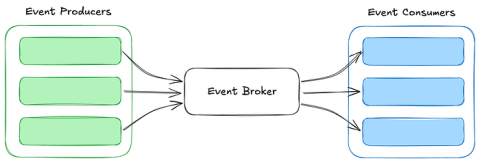
In this final part of our blog series, we bring everything together to unlock the full potential of AI with real-time data streaming and event-driven architecture (EDA). In Part I, we explored how data fuels AI, laying the foundation for understanding AI’s reliance on fresh, relevant information.

Predictive Analytics: How Generative AI and Data Streaming Work Together to Forecast the Future

Predictive analytics is changing how businesses make decisions. Companies can use data, machine learning, and statistical modeling to forecast outcomes with better accuracy. So, how can predictive analytics techniques transform your business? Predictive analytics uses historical data to predict future events. It involves understanding the relationships within your data to predict what's next, impacting industries from retail and healthcare to finance and manufacturing.

The Power of Predictive Analytics in Healthcare: Using Generative AI and Confluent

Implementing predictive analytics in healthcare empowers healthcare providers to take a data-driven approach to anticipating future events and making informed decisions. It helps healthcare professionals forecast the progression of diseases, plan and optimize resource allocation, and ultimately shift from reactive to proactive care. This approach improves patient health outcomes and overall efficiency.

Queues in Apache Kafka: Enhancing Message Processing and Scalability

In the world of data processing and messaging systems, terms like "queue" and "streaming" often pop up. While they might sound similar, they serve different purposes, and can significantly impact how your system handles data. Let’s break down the differences in a straightforward way.