Systems | Development | Analytics | API | Testing

Configuring Kong Dedicated Cloud Gateways with Managed Redis in a Multi-Cloud Environment

A persistent challenge arises as businesses adopt multicloud architectures and agentic AI: the need for state synchronization. API and AI gateways require a robust persistence layer to synchronize data, whether it's for governing AI token usage, facilitating agent-to-agent communication, or boosting performance through caching.

Leveraging the MCP Registry in Kong Konnect for Dynamic Tool Discovery

As enterprises start deploying AI agents into real systems, a new architectural challenge is emerging. Agents need a reliable way to discover tools, services, and capabilities dynamically, instead of relying on hardcoded integrations. This is where the Model Context Protocol (MCP) ecosystem is rapidly evolving. MCP servers expose tools and capabilities that AI agents can use. However, once organizations begin deploying multiple MCP servers across environments, the question becomes clear.

Software Testing Life Cycle A Complete Guide For Modern Qa Teams

Modern software teams ship faster than ever. Releases are frequent, systems are increasingly distributed, and testing environments can be unstable. At the same time, maintaining large sets of manual and automated tests becomes difficult as applications grow. Without a structured approach, testing quickly becomes reactive instead of strategic. This is where the Software Testing Life Cycle (STLC) plays a critical role.

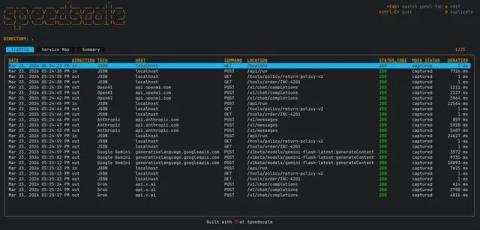
Why 200k Developers Ditched Big Tech AI #openclaw #openai #claude #aicoding #aiagents #speedscale

Is architectural purity dead? The big labs are racing for enterprise control, but developers are flocking to OpenClaw for one reason: ergonomics. It treats AI like a human, not a restricted tool. Are you sticking with the corporate harnesses or going unfiltered? Let’s talk in the comments. Learn more: speedscale.com.

Your Flaky Tests Are a Data Problem, Not a Test Problem

Your tests are not flaky. Your test data is. That 401 Unauthorized that fails every Monday morning? The OAuth token in your test fixture expired 72 hours ago. The order_id that works in staging but not in CI? It was hardcoded six months ago and the format changed from integer to UUID in January. The timestamp assertion that passes at 2pm and fails at midnight? You are comparing a hardcoded 2026-01-15T14:30:00Z against Date.now(). These are not test infrastructure problems. Retrying them will not help.

AI Coding Agents Have a UX Problem Nobody Wants to Talk About

The pitch was simple: let AI write your code so you can focus on the hard problems. Three years into the AI coding revolution, and developers are focused on hard problems alright, just not the ones anyone expected. Instead of designing systems and solving business logic, engineers in 2026 spend a startling amount of their day managing the AI itself. Should you use Fast Mode or Deep Thinking? Haiku or Opus? Cursor or Claude Code or Windsurf? Should you write a SKILL.md file or a custom system prompt?

WSO2 AI Gateway: Prompt Management & Semantic Caching

Learn how to ensure consistent AI interactions and drastically reduce latency using the WSO2 AI Gateway. This step-by-step tutorial demonstrates how to standardize your LLM requests for quality and efficiency while cutting down on redundant API costs. We explore "Prompt Management" to enforce organizational guidelines using templates and decorators, and "Semantic Caching" to leverage vector embeddings—serving instant, cached responses for semantically similar queries to minimize expensive LLM calls.

The Breakdown | API calls and mobile apps

You used an API this morning. Probably before you even got out of bed. That weather app? It's your phone communicating with a server in the cloud — sending a request, getting data back, and displaying it on your screen in seconds. Location. Request format. Expected response. That's the anatomy of an API call. And it's happening constantly across nearly every app on your phone. Hugo Guerrero and Amanda Alcamo break it all down in Episode 2 of The API & AI Breakdown. No jargon. No fluff. Just clarity.