Systems | Development | Analytics | API | Testing

Designing error models in OpenAPI for agent-safe APIs | Swagger Studio

Poorly documented or inconsistent error models lead to brittle clients and unreliable automation. Whether you're building APIs for human developers or AI agents, proper error handling is crucial for automation and reliability. In this guided tutorial, SmartBear Solutions Engineer Rosemary Charnley demonstrates how to design robust error models in OpenAPI specifications using Swagger Studio.

Hot Sauce Releases - Real Device Access API

Future-Proof Your Mobile Testing with Unrestricted Device Access For years, Platform Engineering teams have faced a painful choice: build a fragile, expensive internal device lab to get full control, or use a rigid public cloud and lose access to the system internals. That choice ends now. Join us for the launch of the Real Device Access API, the first solution that treats mobile devices as Infrastructure-as-Code.

AI Input vs. Output: Why Token Direction Matters for AI Cost Management

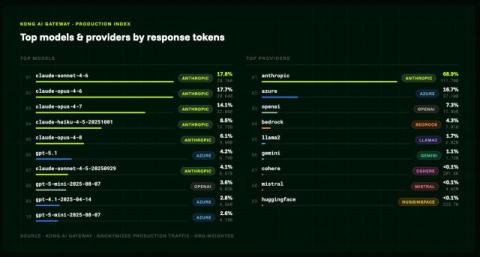
In the burgeoning intelligence economy, AI tokens are a metered utility, but enterprise profitability now hinges on a critical distinction: output tokens can cost up to 10x more than inputs, creating a new, invisible risk for cost overruns, particularly with Agentic AI. Learn how Kong AI Gateway and Konnect Metering & Billing provide the essential financial control plane to enforce directional guardrails, protect margins, and turn token consumption into realized revenue.

Stop GenAI Rate Limits: Model Routing & Token Throttling with WSO2 AI Gateway

Learn how to mitigate skyrocketing AI costs and prevent model outages using the WSO2 AI Gateway. This step-by-step tutorial shows you how to move beyond simple request limits and implement smart, token-based usage policies. We also demonstrate "Adaptive Model Routing" showing you how to automatically switch between models when rate limits are hit, and how to distribute traffic using weighted round-robin to optimize for cost and performance.

WireMock vs MockServer vs Proxymock: Java Mocking in 2026

Your WireMock stubs are lying to you. They were accurate when someone wrote them six months ago, but the payment API added a metadata field in January, the inventory service switched from REST to gRPC in February, and nobody updated the stubs because the tests still pass. Meanwhile, production is breaking in ways your mocks will never catch. This is not a WireMock problem. It is a hand-written mock problem.

Gateway Federation with WSO2 API Manager

In this hands-on screencast, we walk through how to implement Gateway Federation using WSO2 API Manager. Modern enterprises often operate multiple API gateways across environments, business units, regions, or subsidiaries. Managing and governing APIs across these distributed gateways can quickly become complex and inconsistent. *In this video, you’ll learn* : If you're building a distributed API ecosystem and need centralized governance without losing flexibility, this video is for you.

Connect API design, testing, and governance in one workflow | Swagger

API design, functional testing, and governance shouldn’t live in silos. In this demo, Product Owner Wojciech Nowacki walks through a practical, end-to-end workflow that connects: You’ll see how API definitions created in Studio feed directly into automated functional testing ensuring style compliance, functional correctness, and governance checks across the full API lifecycle. Perfect for API platform teams, architects, and developers looking to unify design and test automation.

Governing Claude Code: How To Secure Agent Harness Rollouts with Kong AI Gateway

The AI coding and Agent Harness approach is no longer experimental. This is likely the most impactful agentic AI use case in production today, and Claude Code is one of the solutions really leading the charge. But as engineering teams race to adopt Claude Code across their organizations, a critical question emerges: who's governing all that LLM traffic?

Beyond the Single Payment Provider Lock-in: How Kong Enables Multi-Rail Billing for the AI Era

The recent article on OpenAI overhauling its payment systems to reduce its dependency on Stripe highlights an important tension many digital platform builders face today: how to balance usage-based monetization with the realities of payments infrastructure dependency.