Systems | Development | Analytics | API | Testing

Speedscale Proxymock: Freely testing cloud native apps alongside AI code assistants

We’ll always remember 2025 as the year AI code assistants went big. Copilot, Cursor, Claude, Windsurf, whatever. Developers went from mistrusting these tools, to being expected to turn over much of their coding labor to them. Even if, according to an extensive Stack Overflow survey, only 3 percent of professional developers say they ‘highly trust’ AI coding tools.

Retesting Explained: Definition, Steps, And Real-World Examples

After some testing and bug fixes, one common question always remains: how do teams make sure that those defects are truly resolved, and no new regressions creep in? That’s where retesting testing becomes vital. Retest testing forms a very important aspect of any QA cycle, ensuring that the reported defects are fixed and working correctly before the software moves to production. Without it, even simple patches can introduce silent issues into live environments.

Building Ecosystems for Humans and Agents: The New Consumer of APIs

For years, APIs have been designed with one primary audience in mind: developers. The focus has been on making APIs discoverable, consistent, and easy for humans to consume. But in the AI era, a new audience has arrived: AI agents. As detailed in SmartBear’s newly published AI-Enabled API Lifecycle Report, this shift demands that organizations rethink how APIs are designed, tested, and managed to serve both human developers and intelligent systems effectively.

Why Non-Code-Based Testing Must Become More Autonomous

As coding has become more autonomous, so has code-based testing. AI agents can now write functions, generate code-based tests, and validate logic in the same workflow. But the other half of the testing equation, the system-level validation of non-code-based testing, hasn’t kept up. That disconnect is becoming one of the most critical constraints in modern software delivery.

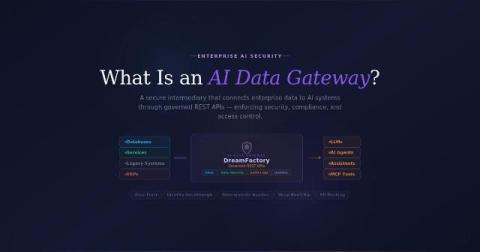
Hybrid API Gateway Setup with DreamFactory: Securely Connect Cloud and On-Prem Systems

API gateways connect on-premises systems with cloud applications, managing tasks like authentication, traffic routing, and monitoring. Key Benefits: Centralized security to protect sensitive data. Reduced latency by processing requests closer to the data source. Simplified compliance for regulations like HIPAA and GDPR. Scalability and failover support for uninterrupted service. Setup Essentials: Secure connectivity using VPNs or dedicated links.

No AI Without API: Build AINative Apps with Konnect, AI Gateway & Event Gateway

Agents are just applications with an intelligence layer. This session shows why secure, reliable, discoverable APIs—and a developer platform—are the foundation for AI-native workflows. See live demos of Kong Konnect, AI Gateway, Event Gateway, MCP-enabled dev portals, AI Composer/Runner, and Kai. What you’ll learn: Learn more: Subscribe for more on API platforms, service connectivity, and AI-native architecture.

Modified Condition Decision Coverage (MC/DC) Explained

What if a single, untriggered logical flaw could compromise an autonomous vehicle’s braking system or ground a commercial airliner? The stakes are unbelievably high with safety-critical software. Traditional code coverage metrics, however, often fail to test the subtle, complex dependencies within a single decision. Knowing that a line of code executed isn’t the same as knowing the logic works.

From APIs to AI Ecosystems: The Evolution of Enterprise Integration

Enterprise integration has shifted from simple data connections to AI-driven ecosystems that manage, analyze, and optimize workflows in real time. Here's what you need to know: APIs are the backbone of modern businesses, linking systems like CRMs, ERPs, and analytics tools. They eliminate manual data entry, reduce errors, and support microservices architectures. AI systems are the next step, addressing the complexity of managing hundreds of APIs.