Systems | Development | Analytics | API | Testing

What Is A Test Environment? A Complete Guide For Developers

A test environment is a controlled setting that includes software, hardware, network configuration, test data, and testing tools, where applications can be set up and validated before they are delivered to real users. It can be understood as a safe space for developers and QA engineers to do an assessment of how an application performs under expected real-world usage conditions.

Supercharge Your Integrations with the WSO2 Integrator November 2025 Release

WSO2 Integrator, which unites the BI, MI, SI, and ICP components, continues to evolve to help enterprises build and manage integrations that are faster, smarter, and easier to operate. With the November 2025 release, the product becomes more cohesive, intelligent, and developer-friendly than ever before. Included in this release: Together, these updates empower teams to innovate faster, govern integrations effectively, and operate reliably across the enterprise.

Test Recorder: The Fast-Track To Codeless Ui Test Automation

Software teams today are routinely under pressure to release features more quickly, while keeping quality in check, in today’s fast-paced digital ecosystem. Automation testing enables teams to develop this balance; however, most teams find that writing and maintaining test scripts becomes a heavy burden with technical complexity, and takes time away from building features. This is where a Test Recorder is of great assistance.

Farewell Ingress NGINX: Explore a Better Path Forward with Kong

The Kubernetes networking landscape is evolving, and recent announcements confirm a significant community shift. The Kubernetes community recently announced the upcoming retirement of one of its most widely used components: Ingress NGINX "To prioritize the safety and security of the ecosystem, Kubernetes SIG Network and the Security Response Committee are announcing the upcoming retirement of Ingress NGINX. Best-effort maintenance will continue until March 2026.

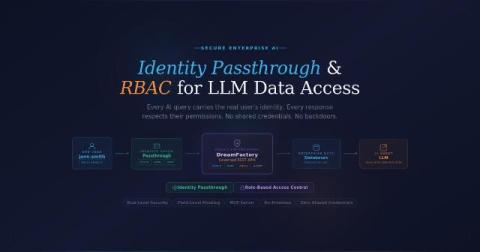
Connect SQL Server to ChatGPT via DreamFactory: Step-by-Step Guide

In just a few steps, you can link your SQL Server database to ChatGPT using DreamFactory, eliminating the need for custom API development. DreamFactory automatically generates secure REST APIs for your database, enabling ChatGPT to interact with your data effortlessly. Here's a quick breakdown: What You Need: SQL Server instance, DreamFactory account, API key, and OpenAI's ChatGPT API access.

From Browser to Prompt: Building Infra for the Agentic Internet

A burgeoning cutting-edge technology has been fundamentally transforming how we build automation inside disruptive businesses: agentic AI. The impact of agentic AI is already shaping up to be massive. And agentic adoption is soaring: Kong's Agentic AI in the Enterprise report found that, of those with visibility into their organization’s plans, 90% say their companies are actively adopting AI agents.

A Deep Dive Into V Software Development And The V-Model Approach

In the high-speed world of software development, the label V Software Development can suggest two distinct but connected concepts. On one hand, it denotes software development with the contemporary V programming language—a language intended for simplicity, efficiency, and security. On the other hand, it can symbolize the V-Model Software Development life cycle, a traditional model of software development that is characterized by structure, order, and verification at every phase.
Sponsored Post

Settle Your QA Debt Before the Bugs Start Breaking Kneecaps

In Part One, we discussed how QA debt builds silently over time - causing slower releases, late-night firefights, and unpredictable test cycles. The next step is understanding how much debt you have and where it hides. This post goes deeper into measuring QA debt - what to track, how to collect data, and how to use those insights to create a sustainable plan for improvement.

Part 3: Building a Production-Grade Traffic Capture and Replay System

At a previous company, we had over 100 microservices. I’d make what seemed like a simple change to one service and deploy it, only to discover it broke something completely unrelated. A change to the user service would break checkout. An update to notifications would break reporting. We spent more time fixing unexpected bugs than shipping features. The problem was our test scenarios were too simple.